

By Julius Peter
The Federal Government has reaffirmed its commitment to consolidating Nigeria’s macroeconomic stability, strengthening fiscal discipline and accelerating sustainable economic growth through coordinated policy implementation and prudent economic management.
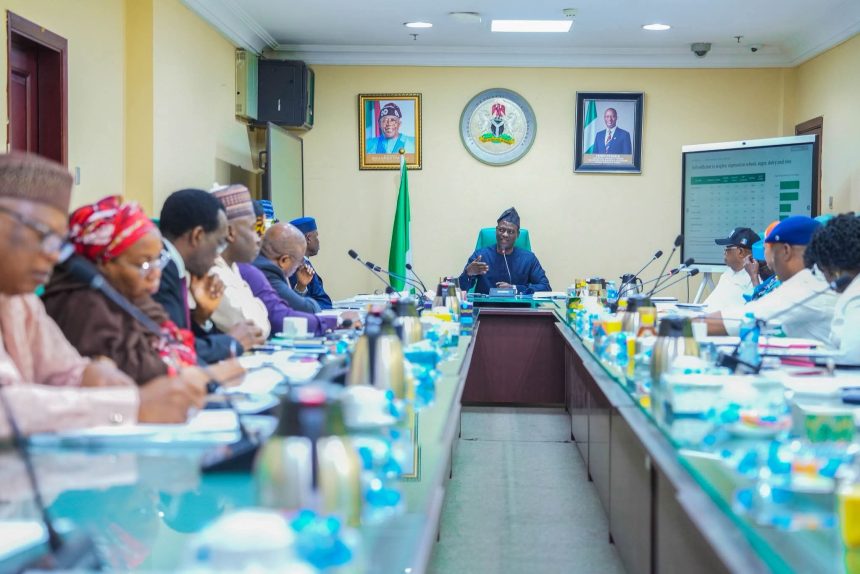
The Honourable Minister of Finance and Coordinating Minister of the Economy, Mr. Taiwo Oyedele, gave the indication while chairing a meeting of the Economic Management Team (EMT) held in Abuja on November 18, 2026.
The meeting, which focused on the country’s economic performance and strategies for sustaining ongoing reforms, reviewed key macroeconomic indicators, fiscal management priorities, food security, energy sector development and the proposed National Development Plan for 2026–2036.
During the meeting, the team examined Nigeria’s economic performance, noting that the economy recorded a real Gross Domestic Product (GDP) growth rate of 4.43 per cent in the second quarter of 2026.
It also reviewed the country’s inflation performance, with headline inflation standing at 14.06 per cent in October 2026, while Nigeria’s external reserves were estimated at approximately $55 billion.
The Economic Management Team also welcomed improvements in the country’s sovereign credit outlook, following positive revisions by international rating agencies, including Moody’s and Fitch, as well as an earlier rating upgrade by S&P Global.
The developments were identified as important indicators of improving investor confidence and the potential benefits of ongoing economic reforms.
However, the team emphasised the need to sustain policy consistency, strengthen institutional coordination and ensure that improvements in macroeconomic indicators translate into tangible benefits for Nigerians.
A major highlight of the meeting was the need to strengthen fiscal management and improve the credibility of Nigeria’s budgetary process.
The team deliberated on the harmonisation of the country’s budget framework, with particular attention to realistic revenue projections, effective expenditure planning and improved coordination among government institutions.
It also considered the transition towards a single annual budget cycle as part of efforts to promote predictability, transparency and discipline in public financial management.
The proposed approach is expected to address challenges associated with overlapping budget cycles, improve implementation efficiency and ensure that government expenditure is better aligned with available resources and national development priorities.
The team further reviewed progress on the 2027 Finance Bill, which is expected to strengthen the ongoing tax reform programme, improve the business environment and encourage increased investment in the productive sectors of the economy.
The proposed legislative framework is also expected to support efforts to improve revenue generation, enhance tax administration and create a more conducive environment for businesses to expand, innovate and generate employment.
On food security, the Economic Management Team recognised the importance of stabilising food prices and improving agricultural productivity as essential components of the government’s broader economic stabilisation agenda.
The meeting examined measures aimed at moderating the prices of staple food items, strengthening agricultural support systems and reducing post-harvest losses across the country’s agricultural value chain.
The team acknowledged that food affordability remains a critical concern for households, particularly vulnerable Nigerians, stressing the importance of addressing supply-side challenges and improving the efficiency of agricultural production, storage, transportation and distribution.
Reducing post-harvest losses was also identified as an important strategy for increasing food availability, improving farmers’ earnings and strengthening the resilience of the agricultural sector.
The discussions underscored the need for coordinated interventions that would enhance agricultural output, improve market access and contribute to a more stable food supply nationwide.
The energy sector also featured prominently in the deliberations, with the team examining strategies to strengthen energy security and improve electricity supply across the country.
Discussions covered gas development, electricity generation and distribution, transmission capacity, metering and the protection of critical energy infrastructure.
The meeting also reviewed the implementation of the power sector’s 90-day action plan, which is designed to address critical operational challenges and improve the performance of the electricity industry.
Particular attention was given to expanding transmission capacity, improving metering systems and strengthening infrastructure protection to ensure more reliable electricity supply to households, businesses and industries.
The emphasis on gas development further reflects the government’s recognition of natural gas as a strategic resource for supporting electricity generation, industrial activities and broader economic expansion.
The team stressed that addressing challenges in the energy sector remains crucial to reducing the cost of doing business, improving industrial productivity and creating an enabling environment for private sector investment.
In another significant development, the Economic Management Team reviewed the draft National Development Plan 2026–2036, which is expected to provide a long-term framework for Nigeria’s economic transformation and sustainable development.
The proposed plan is structured around seven pillars covering critical areas of national development, including macroeconomic stability, energy, industrialisation, infrastructure, governance, security and human capital development.
The framework is designed to provide strategic direction for government policies and programmes over the next decade, while promoting coordinated implementation across different sectors of the economy.
The emphasis on industrialisation and infrastructure development is expected to support economic diversification, expand productive capacity and strengthen the competitiveness of Nigerian businesses.
Similarly, the focus on governance, security and human capital development recognises the importance of strong institutions, a secure environment and an adequately skilled population in achieving sustainable economic growth.
The plan is also expected to provide a platform for aligning government investments and development interventions with clearly defined national priorities.
The meeting reinforced the importance of stronger coordination among government institutions, evidence-based decision-making and transparent economic reporting in the implementation of Nigeria’s economic reform agenda.
The Economic Management Team emphasised that achieving sustainable economic growth requires more than the adoption of individual policies. It demands effective collaboration among relevant ministries, departments and agencies, consistent implementation and continuous assessment of policy outcomes.
The discussions also highlighted the need to ensure that fiscal and monetary policy measures work together to support price stability, investment, productivity and employment generation.
For the Federal Ministry of Finance, the priority remains the consolidation of fiscal credibility, preservation of macroeconomic stability and the creation of conditions that will encourage investment in the real economy.
The ministry is also focused on ensuring that the benefits of ongoing reforms extend beyond improved economic statistics to deliver measurable improvements in the living standards of Nigerians.
The latest Economic Management Team meeting represents part of the Federal Government’s broader efforts to strengthen the foundations of the Nigerian economy through fiscal discipline, policy coordination and long-term development planning.
With improvements recorded in GDP growth, inflation and external reserves, the government is seeking to sustain the momentum through prudent public financial management, improved revenue mobilisation, infrastructure investment and policies that support private sector-led growth.
Nevertheless, translating these macroeconomic gains into improved household welfare, affordable food, reliable electricity, better employment opportunities and increased business productivity remains a critical test of the reform programme.
The government’s renewed emphasis on fiscal discipline, budget credibility, food security, energy development and human capital investment is therefore expected to play a significant role in shaping the country’s economic direction over the coming years.
As Nigeria looks towards the implementation of its proposed 2027 fiscal framework and the National Development Plan 2026–2036, the central objective remains to move from economic reforms to shared prosperity by ensuring that policy decisions produce sustainable outcomes for businesses, households and the wider population.