

By Julius Peter, Abuja
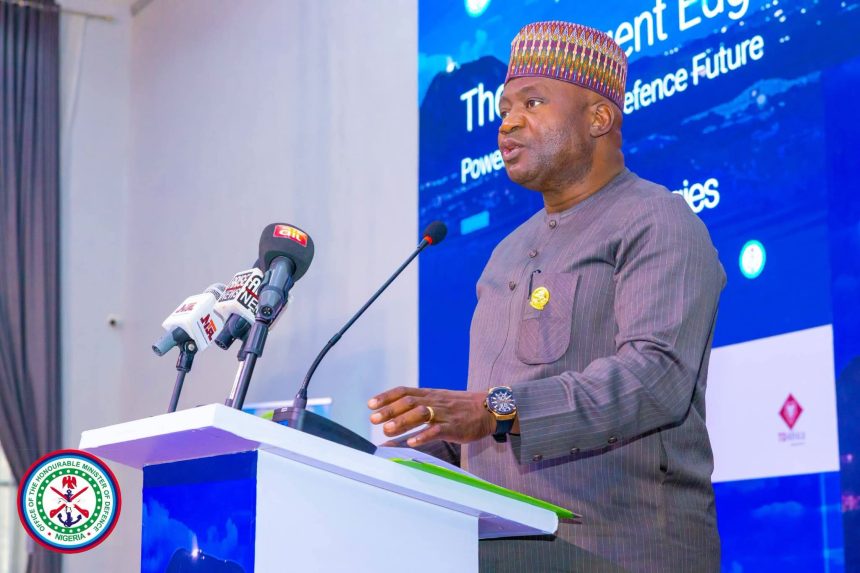
The Minister of Defence, General Christopher Gwabin Musa (Rtd), OFR, has called on defence experts, military leaders and technology stakeholders to develop indigenous technological solutions capable of strengthening Nigeria’s national security and promoting youth empowerment.
Musa said Nigeria must move beyond being a passive consumer of foreign technology and begin to build the local capacity required to develop, operate, maintain and adapt technological systems to meet its unique security challenges.
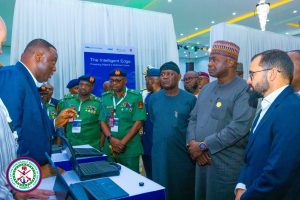
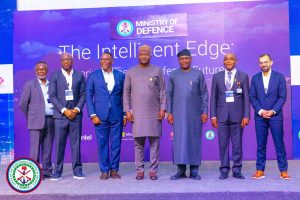
The minister made the call on Tuesday while delivering the keynote address as Special Guest at the opening ceremony of the two-day Ministry of Defence–Dell Technologies Strategic Workshop in Abuja.
The workshop, which is being held at the Armed Forces Officers’ Mess, Asokoro, from November 24 to 25, 2026, is themed, “The Intelligent Edge: Powering Nigeria’s Defence Future.”
According to the minister, the rapid transformation of modern warfare through emerging technologies has made it imperative for Nigeria to embrace digital innovation as a critical component of its defence strategy.
He noted that technology had become indispensable to effective military operations, strategic planning and informed command decision-making.
“Technology is no longer optional; it is an essential pillar for effective military strategy, operations, and informed command decision-making,” Musa said.
He explained that developments in artificial intelligence, data analytics and digital systems were changing the ways security threats are identified, assessed and neutralised, stressing that the Nigerian Armed Forces must be equipped with appropriate tools to respond effectively to evolving threats.
The minister said the adoption of modern defence technology must be accompanied by deliberate efforts to strengthen local technical expertise and reduce Nigeria’s dependence on foreign technological solutions.
Aligning the initiative with President Bola Ahmed Tinubu’s Renewed Hope security vision, Musa urged participants to ensure that international partnerships translate into meaningful knowledge transfer, technical training and sustainable capacity development.
“Our objective must be to progressively build the capacity to operate, maintain, adapt, and where feasible, manufacture technologies tailored to our unique national requirements,” he stated.
He emphasised that Nigeria’s engagement with international technology companies should not be limited to the acquisition of equipment, but should also create opportunities for local engineers, researchers and technology professionals to acquire the expertise needed to sustain and improve such systems.
Musa further stressed that the benefits of defence innovation must extend beyond military formations to contribute to the country’s broader economic and social development.
He said the development of indigenous technological capabilities would create opportunities for young Nigerians to acquire digital skills, participate in the technology ecosystem and become contributors to national development.
According to him, empowering young people with relevant technological skills would not only support the country’s defence requirements but also prepare them for employment and entrepreneurship in an increasingly digital economy.
The minister challenged participants to ensure that the workshop produced practical and measurable outcomes, rather than ending with routine presentations and discussions.
He directed that the joint communiqué to be issued at the conclusion of the engagement must clearly identify Nigeria’s critical technological gaps, priority defence requirements and specific mechanisms for implementing agreed recommendations.
Musa assured participants that the Ministry of Defence would review the workshop’s outcomes with a view to taking immediate steps towards addressing identified challenges.
He said the government expected the engagement to provide a clear roadmap for strengthening the country’s defence technology architecture and improving the operational effectiveness of the Armed Forces.
Earlier, the workshop organiser on behalf of the Ministry of Defence, Air Vice Marshal AS Bulus (Rtd), highlighted the importance of protecting sensitive defence information while adopting modern digital infrastructure to improve military operations.
Bulus said the increasing use of digital technologies in defence operations required robust systems capable of safeguarding classified information, strengthening institutional resilience and enhancing coordination among security agencies.
He noted that the solutions developed during the workshop would be beneficial to the Ministry of Defence and the Nigerian Armed Forces, particularly in addressing emerging operational and technological challenges.
Also speaking, the Country Manager of Dell Technologies, Mr Abimbola Owoeye, called for a fundamental shift in the approach to information and communication technology procurement within the defence sector.
Owoeye advocated a departure from fragmented annual ICT procurement practices towards a coordinated, long-term strategic investment programme supported by strong governance, accountability and measurable performance indicators.
He said a sustainable defence technology framework required proper planning, effective resource allocation and the integration of digital infrastructure into the country’s long-term security objectives.
The Dell Technologies country manager also urged stakeholders to adopt international best practices while ensuring that technological solutions were adapted to Nigeria’s operational environment and specific security needs.
The workshop is expected to provide a platform for defence officials, military personnel and technology experts to examine emerging digital solutions, identify areas requiring urgent intervention and develop strategies for improving Nigeria’s defence capabilities.
The Ministry of Defence commended Dell Technologies and other participating stakeholders for their commitment to advancing the country’s defence architecture.
The ministry expressed optimism that the two-day engagement would generate sustainable, home-grown technological solutions capable of strengthening national security, improving military effectiveness and supporting Nigeria’s broader development objectives.
It added that the workshop’s recommendations would be reviewed for implementation, with emphasis on practical solutions, local capacity development and the establishment of a more resilient and technology-driven defence system.