
By Julius Peter
The Nigeria Customs Service (NCS), in collaboration with the World Customs Organisation (WCO), has concluded the capacity-building phase of its Anti-Money Laundering and Countering the Financing of Terrorism (AML/CFT) Mentoring Mission to Nigeria, with 120 officers and personnel from Customs and partner security agencies trained to strengthen the fight against cross-border financial crimes.
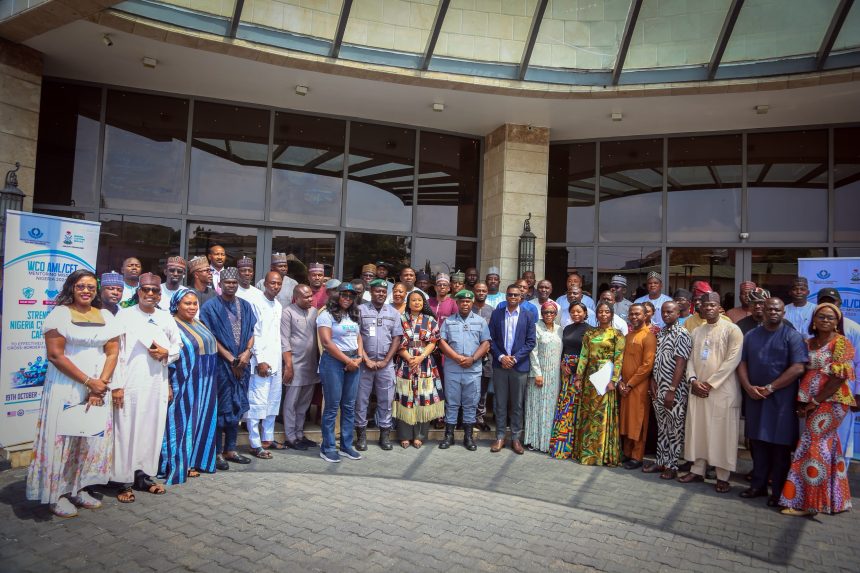
The programme, which commenced on Monday, November 2, 2026, at Johnwood Hotel, Wuse 2, Abuja, ended on Thursday, November 12, 2026, in Lagos, marking the completion of the training phase of the mentoring mission.
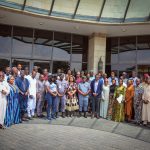
The exercise brought together 120 participants, comprising 60 participants each in Abuja and Lagos, drawn from various Customs formations and key law enforcement and financial intelligence agencies.
Participating agencies included the Nigeria Immigration Service (NIS), Economic and Financial Crimes Commission (EFCC), National Drug Law Enforcement Agency (NDLEA), Nigeria Police Force (NPF) and Nigeria Financial Intelligence Unit (NFIU).
The mentoring mission was designed to strengthen the capacity of officers to identify, detect, investigate and respond effectively to money laundering, terrorism financing and other illicit financial activities associated with cross-border trade and movement of goods.
Speaking at the Abuja session on behalf of the Comptroller-General of Customs and the management of the Service, the Acting Deputy Comptroller-General of Customs in charge of Strategic Research and Policy, Nafiu Isiaku, expressed appreciation to the WCO, particularly its AML/CFT Programme and Project OCTAGON, for supporting the development of Customs administrations.
Isiaku also acknowledged the United States Department of State, through its Bureau of International Narcotics and Law Enforcement Affairs, for providing funding for the mentoring mission.
He stressed that the increasing sophistication and international character of financial crimes required stronger institutional collaboration, improved intelligence sharing and the deployment of adequately trained personnel.
According to him, the challenges associated with money laundering and terrorism financing transcend the mandates of individual agencies and national borders, making coordinated responses essential.
“These challenges transcend the specialised mandates and national borders. So addressing them effectively requires robust systems, skilled personnel, timely exchange of information, and most importantly, sustained cooperation among all relevant agencies,” he said.
The mentoring mission featured assessment activities aimed at examining existing mechanisms for identifying financial crime risks, detecting suspicious movements, sharing intelligence and referring cases for further investigation.
Particular attention was paid to suspicious cash movements, unusual trade transactions, questionable invoices and the movement of valuable commodities, including gold and gemstones.
These activities were identified as potential indicators of wider financial crimes and possible leads for investigations into money laundering, terrorism financing and other illicit financial networks.
The assessment also provided an opportunity for participants and facilitators to examine operational gaps and identify practical measures to improve the detection, reporting and handling of cross-border financial crimes.
Following the assessment phase, participants received specialised training on relevant cross-border AML/CFT modules covering financial intelligence, risk indicators, investigation techniques and information management.
The sessions were facilitated by WCO resource persons, including Felicia Ntusa, Ladassin Kitson, Mohammed Jiya, Claude Chaillou, Eduardo Escobar, Jorge Thibout and Laurent Szymkowiak.
Their technical contributions provided participants with practical insights into emerging financial crime trends, international best practices and approaches to strengthening institutional responses to illicit financial activities.
The training also emphasised the importance of effective communication, timely intelligence exchange and cooperation among Customs administrations and other law enforcement agencies in tackling financial crimes that exploit international trade and border systems.
The WCO team commended the Nigeria Customs Service for its hospitality and support throughout the mentoring mission, noting the importance of mutual trust, experience-sharing and effective communication in achieving sustainable results.
The engagement further strengthened collaboration among participating agencies, providing a platform for officers to share operational experiences and develop a better understanding of their respective roles in combating cross-border financial crimes.
At the closing ceremony, the Deputy Comptroller-General of Customs in charge of Human Resource Development, Dow Gaura, commended participants for their commitment, discipline and active involvement throughout the exercise.
Gaura urged the officers to translate the knowledge acquired into practical improvements in their daily responsibilities, stressing that the success of the programme would be measured by its impact on Customs operations and inter-agency collaboration.
“I urge you all to put the knowledge acquired into practice and ensure that the training translates into improved performance across our operations,” he said.
He also expressed the Service’s appreciation to the WCO for its initiative, technical expertise and support, while acknowledging the United States Department of State for funding the programme.
The closing ceremony featured the presentation of certificates to participants by the Deputy Comptroller-General of Customs in charge of Human Resource Development, formally marking the completion of the capacity-building phase of the WCO AML/CFT Mentoring Mission in Nigeria.
The Nigeria Customs Service is expected to leverage the knowledge and skills acquired during the programme to enhance its risk assessment, intelligence-led operations and collaboration with relevant agencies in the detection and prevention of illicit financial flows.
The mentoring mission underscores the growing importance of strengthening Customs capacity in addressing financial crimes linked to international trade, as well as the need for sustained cooperation among national and international institutions to protect the integrity of borders and the financial system.