
By Julius Peter, Maiduguri
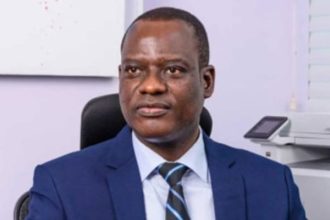
The Director-General and Chief Executive of the Industrial Training Fund (ITF), Dr. Afiz Oluwatoyin Ogun, has disclosed that the Fund has completed seven major projects awaiting commissioning, while more than 10 additional projects are scheduled for foundation-laying ceremonies across the country.
Ogun also revealed that the ITF was incubating 600 tailors under the Federal Government’s Renewed Hope initiative, with each beneficiary expected to receive support valued at ₦5 million to promote local production, strengthen artisanship and create sustainable employment opportunities.
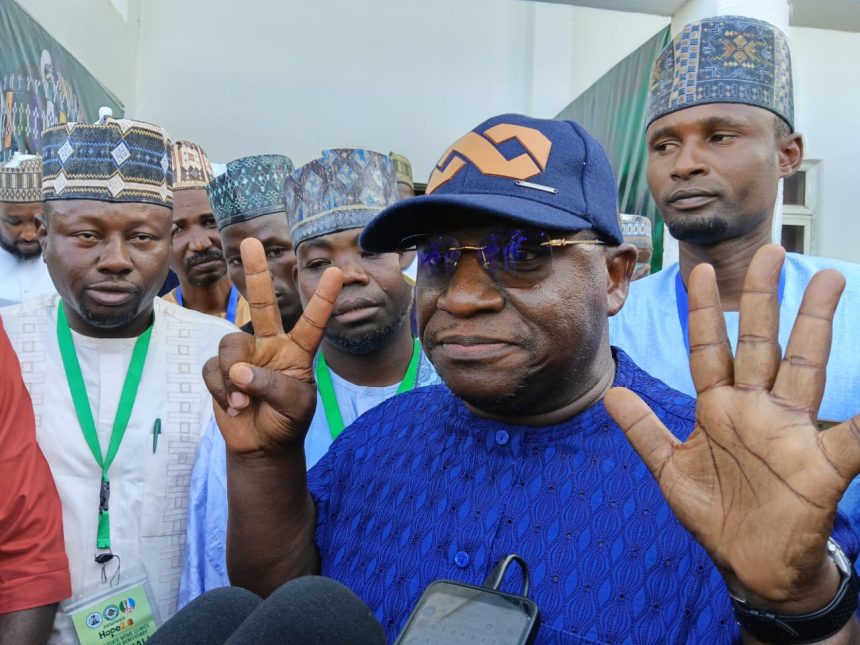
The ITF boss made the disclosures while addressing journalists in Maiduguri, shortly after the Borno State MSME Clinics and Artisans Beneficiary Town Hall held on Tuesday, November 24, 2026, at the Multipurpose Hall, Government House, Maiduguri.
The event was organised under the Renewed Hope 2.0 initiative to strengthen Micro, Small and Medium Enterprises (MSMEs), improve access to business support services and expand economic opportunities for artisans and entrepreneurs.
Ogun said the Fund was intensifying efforts to expand vocational training, technical education and entrepreneurship development, stressing that its interventions were designed to transform Nigerian artisans from small-scale operators into productive entrepreneurs capable of meeting domestic and international market demands.
He said the ITF had already trained more than 200,000 artisans across 27 artisanry fields, adding that the Fund remained committed to equipping Nigerians with practical skills that could enhance industrial productivity and reduce unemployment.
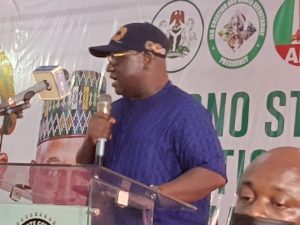
The Director-General, however, expressed concern over what he described as inadequate communication of the achievements of the Federal Government, arguing that many citizens were not sufficiently informed about the impact of government policies and programmes.
According to him, the communication of government achievements had not been effective, despite the progress recorded in various sectors.
“The communication to Nigerians has not been effective. What has been done has not been adequately communicated to Nigerians,” he said.
Ogun maintained that government should consistently inform citizens about its achievements and interventions rather than waiting until election periods to publicise them.
He said the public needed regular information about the progress of government policies to enable Nigerians appreciate the benefits and understand the direction of the administration.
“It is time to hold a microphone. If you tell them last year, by now they will forget. Nigerians are very forgetful,” he said.
The ITF chief recalled that Nigerians had witnessed significant reductions in market prices in 2025 before the outbreak of the Middle East conflict affected the global economy, noting that many people had since forgotten the positive developments recorded before the international crisis.
He argued that sustained public communication was necessary to ensure that the achievements of government were properly documented and understood by citizens.
On the Fund’s ongoing training programmes, Ogun disclosed that City and Guilds examinations were taking place across the country, while the ITF had also received results of technical examinations conducted in Turkey.
He said the examinations and international certification programmes were part of efforts to improve the quality of vocational training and ensure that Nigerian artisans acquired skills that met recognised professional standards.
Ogun further revealed that the Fund was preparing to introduce additional programmes in December, adding that the initiatives would be formally unveiled in Abuja.

The Director-General said the ITF was determined to change the orientation of artisans by encouraging them to move beyond subsistence-level activities and embrace production, innovation and value addition.
He explained that the Fund was working towards developing the capacity of artisans to manufacture finished products rather than limiting their activities to repairs and basic services.
“We want to stop our cobblers from just mending shoes. We want them to produce shoes,” he declared.
He said the transformation of artisans into manufacturers would create more jobs, increase incomes and strengthen Nigeria’s capacity to produce goods locally.
Ogun also challenged cocoa farmers to acquire the skills required to process their produce into finished products instead of exporting raw cocoa beans.
“Our cocoa farmers, we want to train them to become chocolate makers. They should stop selling their cocoa abroad. Make chocolate with it. Make cocoa butter cream with it,” he stated.
According to him, the ITF’s approach is to promote skills that would enable Nigerians to participate in the entire production value chain, thereby retaining more economic value within the country.
He said the strategy would also encourage entrepreneurship, reduce dependence on imported products and create opportunities for small businesses to expand into larger manufacturing enterprises.
Ogun cited the completion of a Digital Fabrication Centre for metal works in Ogba, Lagos, within 90 days as an example of the Fund’s capacity to deliver critical infrastructure for technical and vocational training.
He described the project as evidence of the impact of the policies of President Bola Ahmed Tinubu’s administration, particularly in promoting indigenous technology and industrial development.
“How are we able to do this? Ninety days! We built a whole Digital Fabrication Centre for metals,” he said.

The ITF boss disclosed that seven completed projects were awaiting commissioning, while more than 10 others were expected to undergo foundation-laying ceremonies.
He said the projects would further strengthen the Fund’s infrastructure for skills acquisition, technical training and entrepreneurship development.
Explaining the financial structure of the ITF, Ogun said the institution operated a self-funding arrangement through contributions from employers of labour.
He noted that the resources generated through the arrangement were used to train workers, develop manpower and improve industrial productivity.
Earlier, Vice-President Senator Kashim Shettima described Micro, Small and Medium Enterprises as the foundation of every economy, stressing that artisans and small businesses remained indispensable to national development.
“Businesses are the foundation of every economy. We cannot overemphasise the strength of every nation rests on those who keep its streets working,” the Vice-President said.
Shettima explained that the MSME Clinics were established to bring financial institutions, regulators and business advisory services closer to entrepreneurs, enabling them to access support and address challenges affecting their businesses.
He said the town hall was particularly significant because it provided an opportunity for government to interact directly with beneficiaries and assess the impact of its interventions.
According to him, hearing directly from beneficiaries would enable government to understand the practical challenges facing small businesses and identify areas requiring improvement.
“It is one thing to read about how a programme has helped a citizen. It is another to see it, stand before that citizen and hear what changed,” he stated.
The Vice-President said the experiences and testimonies of beneficiaries were important feedback mechanisms that could guide government in improving its policies and programmes.
He commended the Special Adviser to the President on Job Creation and MSMEs, Mr. Temitola Adekunle-Johnson, and other stakeholders for their contributions to the initiative.
Shettima also appreciated the ITF, Bank of Industry and other participating institutions for their roles in supporting entrepreneurship and promoting economic empowerment.
Borno State Governor, Professor Babagana Umara Zulum, described economic empowerment as a critical instrument for peacebuilding, stabilisation and sustainable recovery, particularly in communities affected by insecurity and terrorist attacks.
“For us in Borno State, economic empowerment goes beyond poverty alleviation. It is an essential instrument for peacebuilding, stabilisation and sustainable recovery,” Zulum said.
The governor explained that providing sustainable livelihoods and productive employment opportunities, especially for youths and women, was fundamental to consolidating the gains of recovery and restoring peace and security in the state.
He said his administration had consistently prioritised vocational education, skills acquisition and deliberate government support for small-scale businesses.
Zulum stressed that empowering citizens to become economically self-reliant was more sustainable than creating a situation in which people depended perpetually on government assistance.
He called on financial institutions to strengthen their interventions in the MSME sector, particularly through the provision of affordable financing, modern equipment, technical training, business modernisation and access to markets.
The governor also urged beneficiaries to make judicious use of the opportunities provided through the Federal Government’s programmes, ensuring that the support translated into productive enterprises, increased incomes and employment opportunities for other Nigerians.
He assured the beneficiaries that the Borno State Government would explore additional ways of supporting them and reaffirmed his administration’s commitment to creating an enabling environment for businesses to thrive.
The Borno State MSME Clinics and Artisans Beneficiary Town Hall formed part of the Renewed Hope 2.0 initiative aimed at strengthening entrepreneurship, promoting artisanship, improving access to business support services and expanding economic opportunities for small business owners across the country.
The initiative is expected to support the Federal Government’s broader efforts to promote skills development, encourage local manufacturing and create sustainable livelihoods through the growth of MSMEs.