

By Julius Peter, Abuja
The Federal Ministry of Finance has held discussions with a delegation of the Organisation for Economic Co-operation and Development (OECD) on potential areas of structured cooperation aimed at supporting Nigeria’s economic reforms, attracting investment and advancing the country’s long-term development objectives.
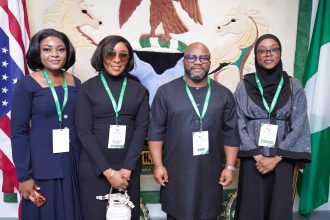
The discussions took place when the Honourable Minister of Finance and Coordinating Minister of the Economy, Taiwo Oyedele, received the OECD delegation to explore opportunities for collaboration in key areas of Nigeria’s economic development.
The engagement focused on investment and long-term financing, fiscal governance, domestic revenue mobilisation, trade, economic diversification, data and statistical capacity, as well as the possibility of establishing an OECD Country Desk for Nigeria.
The proposed areas of cooperation are expected to provide a basis for further engagement between Nigeria and the international economic organisation, particularly in addressing the country’s development priorities and supporting the implementation of its long-term economic plans.
A major focus of the discussions was the potential to strengthen investment and long-term financing, which remain important to expanding economic activities, supporting infrastructure development and creating opportunities for sustainable growth.
Improved access to long-term financing could help Nigeria mobilise resources for strategic investments while strengthening the capacity of public institutions to support economic development.
The talks also examined fiscal governance and domestic revenue mobilisation, two critical areas in the management of public finances and the implementation of economic reforms.
Strengthening fiscal governance involves improving transparency, accountability and efficiency in the management of public resources, while effective domestic revenue mobilisation could help expand the government’s capacity to finance essential public services and development projects.
The engagement further considered trade and economic diversification, with discussions exploring potential areas where cooperation could support Nigeria’s efforts to broaden its economic base, improve competitiveness and expand opportunities across productive sectors.
Economic diversification remains an important component of Nigeria’s long-term development aspirations, particularly in reducing excessive dependence on crude oil revenues and strengthening the contribution of other sectors to national output, employment and exports.
Another area highlighted during the discussions was data and statistical capacity, which is essential for evidence-based policymaking, economic planning and the monitoring of development programmes.
Reliable and timely economic data can help policymakers assess the impact of reforms, identify emerging challenges and make informed decisions on resource allocation and national development priorities.
The possibility of establishing an OECD Country Desk for Nigeria also featured among the areas explored during the meeting.
Such a mechanism could provide a more structured channel for engagement between Nigeria and the OECD, potentially facilitating policy dialogue, technical cooperation and the exchange of expertise on economic governance and development.
However, the discussions were described as preliminary, indicating that the identified areas represent potential avenues for cooperation rather than confirmed agreements or fully established programmes.
The engagement is also expected to be considered within the broader context of Nigeria Agenda 2050, the country’s long-term development framework, which seeks to guide national planning and support the transformation of the Nigerian economy over the coming decades.
Aligning international cooperation with long-term national development priorities could help Nigeria identify relevant policy approaches, strengthen institutional capacity and mobilise the expertise required to address complex economic challenges.
The OECD is an international organisation that works with member countries and partner economies on public policy, economic development, governance and international cooperation. Its expertise spans areas such as taxation, investment, trade, public-sector governance, statistics and sustainable economic growth.
For Nigeria, deeper engagement with the organisation could provide opportunities to draw on international policy experience while developing approaches suited to the country’s economic circumstances and development needs.
The discussions between the Federal Ministry of Finance and the OECD delegation reflect an effort to explore how international cooperation could complement ongoing domestic reforms and contribute to Nigeria’s long-term economic ambitions.
Further progress would depend on the outcomes of subsequent engagements, the definition of specific areas of collaboration and the development of practical initiatives capable of delivering measurable results.
As Nigeria continues to pursue economic reforms, investment expansion and diversification, the proposed cooperation framework could provide an avenue for strengthening policy coordination, improving institutional capacity and supporting the implementation of its development agenda.
The meeting marks an initial step towards identifying areas of mutual interest between Nigeria and the OECD, with the potential to build a more structured relationship focused on sustainable economic growth and long-term national development.