
By Julius Peter,Abuja
The Chairman of the Independent Corrupt Practices and Other Related Offences Commission (ICPC), Dr Musa Adamu Aliyu, SAN, has called for stronger collaboration among African countries and international asset recovery practitioners to combat illicit financial flows and recover assets stolen through corruption.
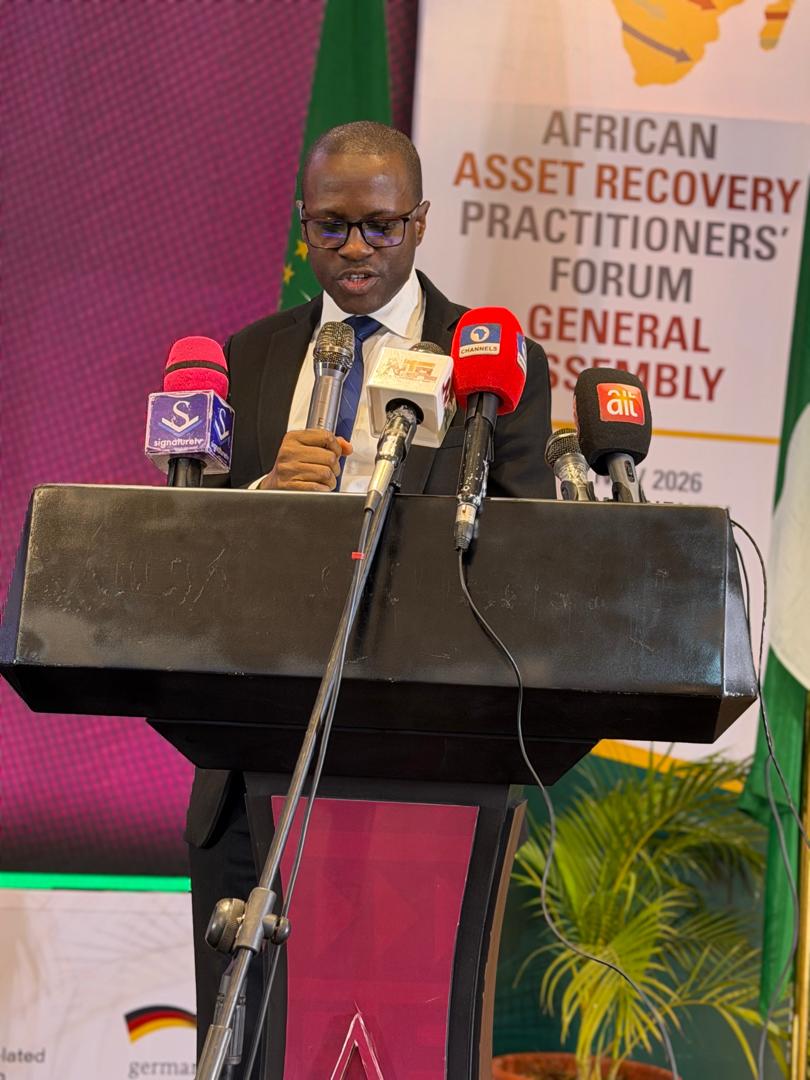
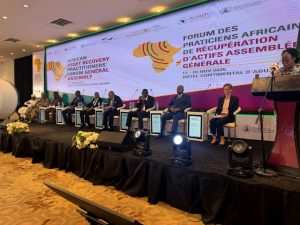
Aliyu made the call at the First General Assembly of the African Asset Recovery Practitioners Forum (AARPF), held recently in Abuja, with the theme, “From Commitment to Action.”
The ICPC chairman, who also serves as Chairman of the Forum’s Interim Steering Council, described asset recovery as a critical instrument in the fight against corruption, stressing that resources lost through corrupt practices represent significant development opportunities denied to African countries and their citizens.
He said Africa could no longer afford to allow illicit financial flows to undermine its economic growth, institutional development and efforts to improve the living conditions of its people.
According to him, addressing the challenge requires a coordinated and sustained approach involving effective asset recovery mechanisms, stronger institutional collaboration and enhanced cooperation among African countries.
Aliyu emphasised that the continent must move beyond policy declarations and political commitments to practical measures capable of identifying, tracing, freezing, confiscating and returning proceeds of corruption.
Declaring the General Assembly open, the Attorney-General of the Federation and Minister of Justice, Chief Lateef Olasunkanmi Fagbemi, SAN, described illicit financial flows as one of the major obstacles to Africa’s development.
Fagbemi noted that the continent continued to lose enormous resources that could otherwise be invested in critical sectors, including education, healthcare, infrastructure and social welfare.
He said the theme of the Assembly was particularly relevant, adding that Africa’s progress should not be measured merely by the commitments made by its leaders but by tangible results and the positive impact of such commitments on the lives of citizens.
The Attorney-General called for the establishment of effective mechanisms for freezing, confiscating and managing recovered assets, while underscoring the importance of information sharing, international cooperation and capacity building.
He maintained that closing existing gaps in Africa’s asset recovery architecture would require stronger collaboration among national institutions, international partners and relevant stakeholders.
Also speaking, the Head of Development Cooperation at the German Embassy, Dr Karen Jansen, expressed concern over the enormous financial resources Africa continues to lose through illicit financial flows.
Jansen observed that recovering stolen resources was essential to financing development, improving citizens’ welfare and restoring public confidence in governance.
She offered recommendations on strengthening Africa’s capacity to trace, freeze and recover assets acquired through illicit means, highlighting the importance of international partnerships and sustained cooperation in addressing the challenge.
She stressed that no country could effectively tackle the problem in isolation, given the cross-border nature of illicit financial transactions and the complex networks often used to conceal proceeds of corruption.
Similarly, the Chairperson of the African Union Advisory Board Against Corruption (AUABC), Honourable Kwami Edem Senanu, described the successful commencement of the First General Assembly as evidence of what African countries could achieve through unity, shared responsibility and cooperation.
Senanu commended Nigeria for its support and consistent leadership in championing the Common African Position on Asset Recovery (CAPAR).
He urged African countries and relevant institutions to consolidate existing commitments through practical actions, stronger institutional engagement and effective implementation strategies.
In his remarks, the Head of the Political Affairs, Peace and Security Department of the African Union Commission, Ambassador Bankole Adeoye, represented by Mr Isiaka Garba, said the initiative was designed to move Africa’s asset recovery commitments beyond policy declarations to concrete actions and measurable results.
He noted that the success of the continental framework would depend largely on the willingness of member states and relevant institutions to translate agreed principles into effective national and regional programmes.
Delivering the keynote address titled, “From Commitment to Action: Enhancing Africa’s Asset Recovery Architecture through Effective Implementation of the Common African Position on Asset Recovery (CAPAR),” Dr Abdullahi Shehu Yibaikwal stressed the need to ensure that asset recovery measures were firmly grounded in law.
Yibaikwal maintained that the freezing and confiscation of assets must be guided by due process and respect for the right to a fair hearing.
He explained that transparency, legitimacy and public trust were essential to ensuring that asset recovery processes achieved their intended objectives without undermining the rule of law.
The keynote speaker also proposed a four-pillar framework aimed at strengthening the implementation of CAPAR and translating Africa’s commitments into practical outcomes.
The General Assembly comes against the backdrop of the enormous financial losses Africa has suffered over several decades through illicit financial flows.
Available estimates indicate that the continent lost as much as $1.8 trillion between 1970 and 2008, while subsequent estimates put annual losses at approximately $150 billion.
In response to the growing challenge, the African Union Assembly adopted the Common African Position on Asset Recovery (CAPAR) in February 2020 as a continental framework for strengthening the identification, tracing, freezing, confiscation and return of assets acquired through illicit means.
The framework is intended to provide African countries with a coordinated approach to addressing the recovery of stolen public resources, strengthening institutional capacity and improving cooperation in cross-border investigations.
The First General Assembly of the AARPF therefore provides an important platform for advancing Africa’s asset recovery agenda, promoting knowledge exchange among practitioners and deepening cooperation between national and international institutions.
A major highlight of the gathering was a high-level panel discussion titled, “From Commitment to Action: What Will It Take to Make CAPAR Work?”
The discussion was moderated by a former Chairman of the ICPC, Mr Ekpo Nta, and brought together stakeholders to examine practical steps required to make the continental asset recovery framework effective.
Participants deliberated on issues surrounding institutional capacity, inter-agency collaboration, international cooperation, implementation challenges and the need to establish effective mechanisms for ensuring that commitments translate into measurable asset recovery results.
They also emphasised the importance of strengthening the legal and institutional frameworks governing asset recovery, particularly in addressing the complexities associated with tracing and recovering assets transferred across international borders.
As Africa intensifies its efforts to combat corruption and illicit financial flows, participants agreed on the need to move beyond declarations and adopt practical implementation strategies that would deliver meaningful results.
They further stressed that recovered assets must be transparently managed and appropriately channelled towards programmes and projects capable of improving citizens’ welfare and advancing sustainable development across the continent.
The General Assembly is expected to strengthen the African Asset Recovery Practitioners Forum as a platform for sustained engagement, professional cooperation and coordinated action against corruption and the illegal movement of financial resources.
The gathering reinforced the position that recovering stolen assets is not merely a law enforcement responsibility but also an important development priority for African countries seeking to protect public resources, strengthen governance and secure a better future for their citizens.