

By Julius Peter, Abuja
Nasarawa becomes first state to flag off ICPC-NITDA digital transparency initiative
The Independent Corrupt Practices and Other Related Offences Commission (ICPC) has recovered more than ₦5.3 billion from its review of local government accounts in seven states and the Federal Capital Territory (FCT), as part of efforts to strengthen transparency, accountability and financial discipline at the grassroots.
The Commission has also commenced moves to ensure that all 774 local government areas in Nigeria publish their financial records, budgets, allocations, procurement activities and other governance-related information online.
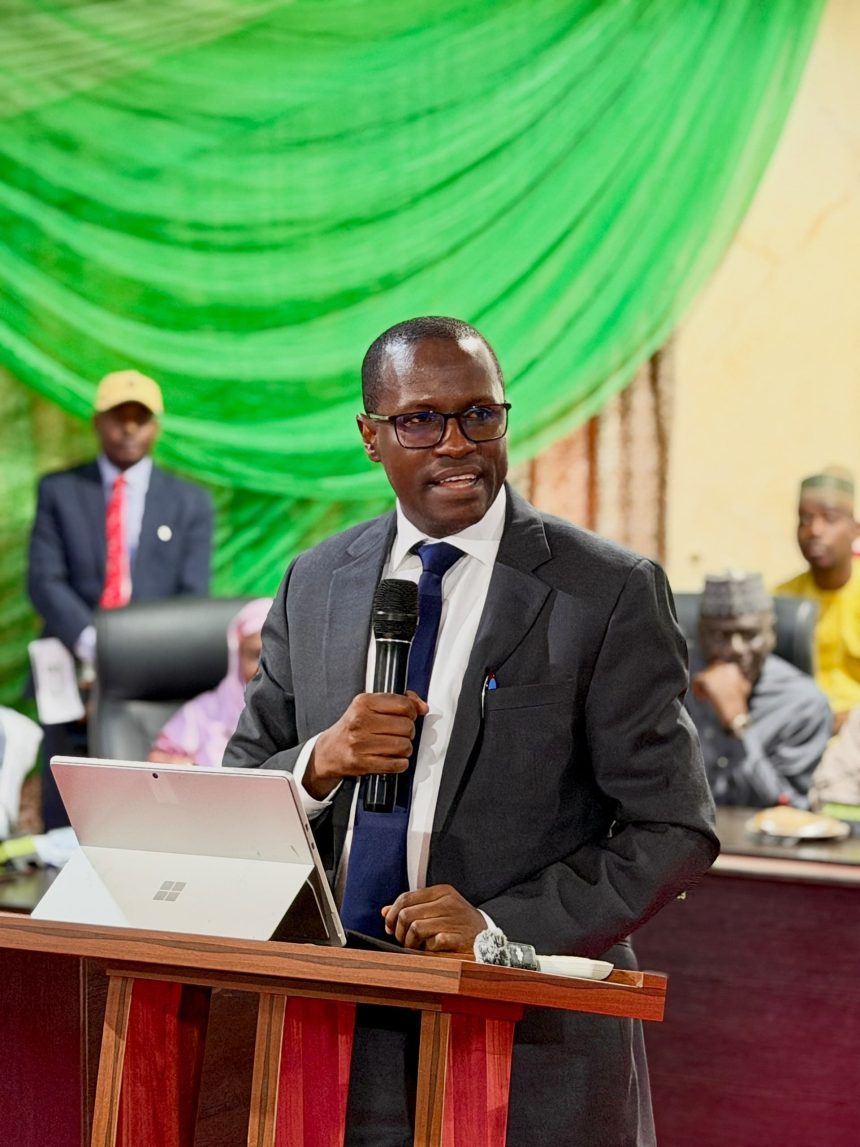
The ICPC Chairman, Dr. Musa Adamu Aliyu, SAN, disclosed this on Thursday in Lafia, Nasarawa State, during the flag-off of the ICPC-National Information Technology Development Agency (NITDA) Local Government Websites Pilot Project.
The initiative, which commenced in Nasarawa State, is designed to establish a digital transparency platform for local government councils across the country, with plans for its eventual expansion to all 774 local government areas.
The event, held at the Banquet Hall of the Nasarawa State Government House, was themed, “Deepening Transparency and Accountability at the Grassroots through Digital Disclosure.”
Speaking at the occasion, Aliyu said the recovery of over ₦5.3 billion from the examination of local government accounts demonstrated the extent of financial irregularities that could occur at the grassroots when public funds were not subjected to adequate scrutiny.
He explained that the initiative was part of the Commission’s broader strategy to prevent corruption by strengthening public access to government financial information and making local government administrations more accountable to the people.
According to him, the Supreme Court judgment of July 2024, which affirmed the financial autonomy of local government councils and the direct payment of their statutory allocations, has increased the need for transparency and responsible management of public resources at the third tier of government.
“Autonomy brings responsibility. Funds that now flow directly to the councils must be spent openly and for the benefit of the people,” he said.

The ICPC chairman stressed that financial autonomy would only deliver meaningful benefits to ordinary Nigerians if local government authorities embraced transparency, accountability and prudent management of public resources.
He noted that while the recovery of the ₦5.3 billion represented the Commission’s enforcement and recovery efforts, the introduction of digital platforms would serve as a preventive mechanism against corruption and financial mismanagement.
Aliyu explained that the websites would be developed using a standardised template under the Commission’s Accountability and Corruption Prevention Programme for Local Governments (ACPP-LG).
He said the platforms would require local government councils to regularly disclose information in five major areas, including financial management, open procurement, human resources, citizen engagement and corruption control.
Under the financial disclosure component, councils would be expected to publish their budgets, statutory allocations, internally generated revenue, expenditure records, audit reports and outstanding debts.
The open procurement section would provide information on government contracts and procurement activities, while the human resources component would promote transparency in personnel administration.
Similarly, the citizen engagement section would provide opportunities for residents to interact with their local governments, access relevant information and report suspected wrongdoing through whistleblowing channels.
The corruption-control component would also provide information on measures being implemented by councils to strengthen institutional accountability and prevent corrupt practices.
The ICPC chairman said making such information publicly accessible would empower citizens, journalists, civil society organisations and oversight institutions to monitor how public funds were being utilised.
“When these records are published regularly, citizens can follow the money, the media can ask informed questions and oversight institutions can detect risks early, before they become losses,” he said.
He explained that Nasarawa State was selected as the first state to implement the pilot project because of Governor Abdullahi A. Sule’s commitment to good governance and the administration’s support for accountability initiatives.
Aliyu also noted that the ICPC’s training institution, the Anti-Corruption Academy of Nigeria, located in Keffi, Nasarawa State, had enjoyed sustained support from the state government.
He commended the Director-General of NITDA, Kashifu Inuwa Abdullahi, for supporting the project, recalling his earlier commitment that the agency would register domain names, develop the websites and provide hosting services for at least one year for all 774 local government areas.
He said the partnership was designed to combine the ICPC’s accountability framework and content standards with NITDA’s technological expertise and digital infrastructure.
However, Aliyu cautioned that the success of the initiative would depend largely on the commitment of local government authorities to regularly update their websites with accurate and verifiable information.
“A website is only as good as the information on it; one that is launched and then abandoned will only disappoint the people,” he warned.
He therefore urged council chairmen to nominate dedicated officers, take ownership of the platforms and ensure that information was uploaded promptly and accurately.
The ICPC chairman assured local government authorities that the Commission would approach the initiative as a partner in corruption prevention rather than an instrument of witch-hunting.
He added that the experiences and lessons from the Nasarawa pilot would help the Commission and NITDA improve the website template and implementation strategy before extending the project to other states.
“Transparency is not an event. It is a habit that will lead to accountability,” Aliyu declared.
In his goodwill message, the Director-General of NITDA, Kashifu Inuwa Abdullahi, CCIE, described the initiative as an important step towards using digital technology to bridge the gap between government and citizens, particularly those living in rural and underserved communities.
He illustrated the challenges confronting residents in remote communities by describing a situation where a woman would have to travel more than 60 kilometres at her own expense to find out whether her local government had approved a community project or to lodge a complaint.
According to him, digital platforms would eliminate unnecessary physical journeys, reduce the cost of accessing public information and make government services more accessible to citizens.
“We are in a digital age. Our people are online; therefore, government needs to be online to serve them better,” he said.
Inuwa identified improved governance, enhanced citizen engagement and expanded economic opportunities as the three major objectives of the initiative.
He explained that NITDA would provide the necessary digital standards, develop website templates and support capacity-building programmes to ensure that local government administrations could effectively manage their online platforms.
The NITDA boss also encouraged local government councils to engage local technology professionals and other available talents in their communities to build, maintain and sustain the websites.
He emphasised that the ambition of the initiative went beyond establishing 774 websites, noting that the ultimate objective was to create digitally empowered local governments capable of delivering better services to millions of Nigerians.
“Our ambition is not 774 websites. It is 774 digitally empowered local governments delivering better experience to millions of Nigerians,” he said.
Flagging off the pilot project, Governor Abdullahi A. Sule described the initiative as a significant development in the state’s efforts to strengthen transparency, accountability and responsible governance at the grassroots.
The Governor introduced the Nasarawa State Information Technology and Digital Economy Agency (NASITDEA) as the state’s technical champion for the implementation of the project.
He directed all local government councils in the state to take responsibility for the accuracy and regular updating of information published on their respective websites.
Sule further instructed the councils to designate responsible officers who would verify information before it was uploaded to ensure that members of the public had access to reliable and up-to-date records.
The Governor stressed that the credibility of the digital platforms would depend on the relevance, accuracy and currency of the information made available to the public.
He called on civil society organisations, media practitioners and community-based institutions to actively use the websites to monitor government activities and demand accountability from local government administrations.
According to him, the success of the initiative should not be measured by the number of websites launched but by the extent to which citizens could access the information, establish its relevance and use it to hold public officials accountable.
Sule also maintained that the publication of statutory allocations as soon as they were received by local governments would eliminate excuses by some council administrations for failing to meet their financial obligations, particularly the payment of workers’ salaries.
He declared that with the new disclosure arrangement, local government officials would be expected to demonstrate greater responsibility in explaining how available funds were being utilised.
The Governor, however, challenged the ICPC and NITDA to extend the transparency initiative beyond local government councils to include state governments.
He offered Nasarawa State as the first state to embrace the proposed arrangement, arguing that citizens deserved to know where public funds meant for local governments were held up whenever there were delays in their disbursement.
His position, he said, was aimed at ensuring that accountability was comprehensive and that all levels of government operated within an open and transparent financial system.
In his remarks, the Emir of Lafia, HRH Justice Sidi Bage Muhammad I (rtd.), expressed satisfaction with the initiative and commended the ICPC chairman, the NITDA Director-General and Governor Sule for their commitment to promoting transparency and accountability in public administration.

He described the project as a welcome development that would strengthen public confidence in government and improve access to information at the grassroots.
Similarly, the Speaker of the Nasarawa State House of Assembly, Rt. Hon. Dr. Danladi Jatau, pledged the legislative arm’s support for the initiative.
Jatau recalled that the Constitution empowered the State House of Assembly to exercise oversight over local government finances, stressing that transparency in the management of council resources was essential to effective legislative supervision.
He also commended Governor Sule for his openness regarding federal allocations to the state and local government councils, describing public disclosure as an important instrument for promoting accountability.
The flag-off ceremony was followed by a technical session during which participants were introduced to the standardised website template and the information disclosure requirements expected of local government councils.
The initiative is expected to strengthen grassroots governance by making financial information more accessible, improving public participation in decision-making and providing citizens with the tools to monitor the implementation of government projects.
It also represents an effort to translate the financial autonomy of local governments into tangible benefits for communities through improved transparency, responsible expenditure and effective service delivery.
With the Nasarawa pilot now underway, attention will shift to the readiness of local government councils to provide accurate information, maintain their digital platforms and respond to citizens’ concerns.
For the ICPC, the ultimate objective is to make transparency an established practice in local government administration and prevent public resources from being diverted from the communities they are meant to serve.
The Commission reaffirmed its commitment to working with the Nasarawa State Government, NITDA, local government councils and citizens to ensure that the project achieves its objectives and provides a sustainable model for nationwide implementation.