
By Julius Peter, Abuja
Nigeria has reaffirmed its commitment to adopting a comprehensive, whole-of-government approach to combating terrorism and violent extremism, while seeking stronger security cooperation with the European Union (EU) in intelligence sharing, advanced technology, surveillance and counterterrorism operations.
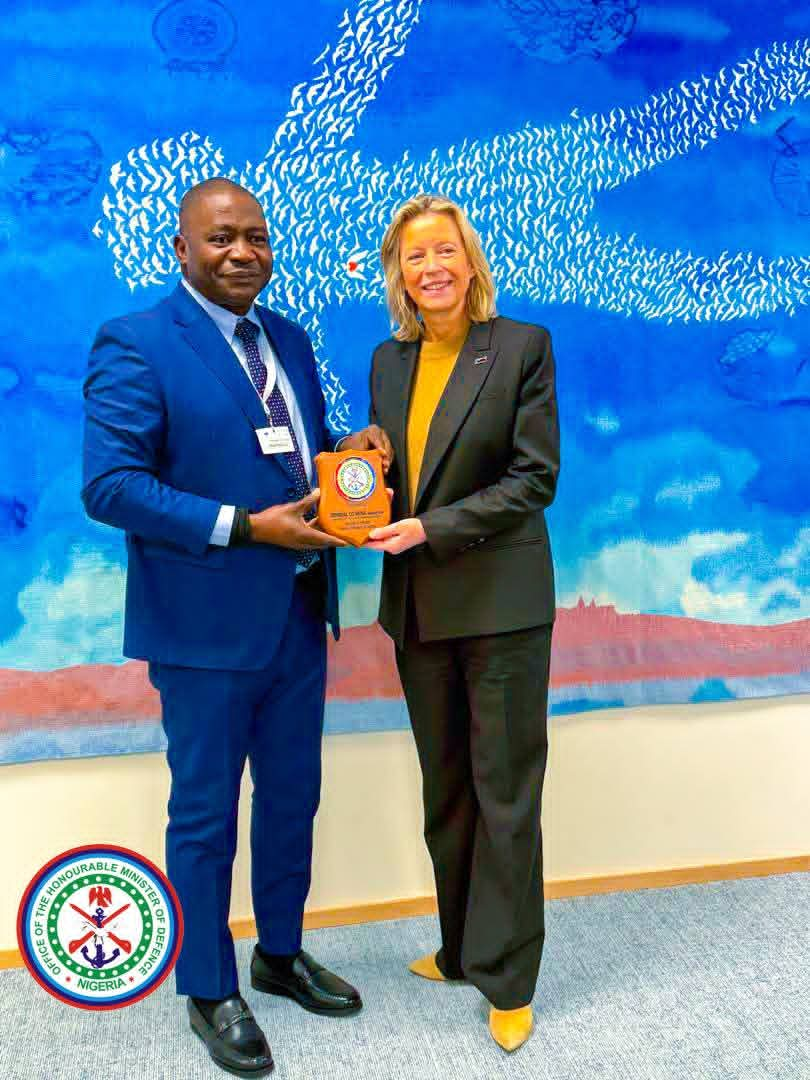
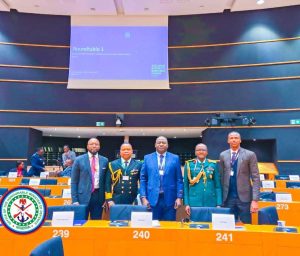
The Minister of Defence, General Christopher Gwabin Musa (Rtd), OFR, made this known while representing Nigeria at the third edition of the Schuman Security and Defence Forum held at the European Parliament in Brussels, Belgium.
The minister said the Federal Government, under the leadership of President Bola Ahmed Tinubu, was pursuing a multi-dimensional counterterrorism strategy that recognises the complex nature of insecurity and the need to address both its immediate security threats and underlying causes.
According to him, terrorism has evolved beyond conventional military confrontations, exploiting economic vulnerabilities, porous borders, local grievances and transnational organised criminal networks to expand its influence and sustain operations.
He explained that Nigeria’s counterterrorism response, guided by the National Counter Terrorism Strategy (NACTEST), had moved beyond an approach predominantly centred on military operations to a coordinated framework involving the armed forces, intelligence agencies, law enforcement institutions, local communities and socioeconomic interventions.
General Musa stressed that addressing terrorism effectively requires a combination of military pressure, intelligence gathering, effective law enforcement, community participation and development initiatives capable of reducing the conditions that enable extremist groups to recruit and operate.
He noted that the Federal Government was also strengthening the country’s capacity to respond to emerging technological threats, particularly the growing exploitation of drones, digital communication systems and satellite technologies by terrorist organisations.
The minister disclosed that the Armed Forces of Nigeria were deploying intelligence-led operations, advanced surveillance systems, unmanned aerial platforms and military artificial intelligence to identify, disrupt and degrade the operational capabilities of terrorist groups.
He cited the interception of more than 400 Starlink communication devices allegedly linked to terrorist networks by troops of Operation HADIN KAI in the North-East in May 2026 as an example of Nigeria’s efforts to disrupt the technological infrastructure supporting extremist activities.
According to him, the development demonstrates the changing character of asymmetric warfare and the need for security agencies to continuously adapt their operational capabilities to emerging technologies.
He said the Ministry of Defence was also promoting indigenous defence innovation through research initiatives and partnerships with private-sector stakeholders to develop home-grown solutions to Nigeria’s security challenges.
General Musa consequently called for deeper collaboration between Nigeria and the European Union, particularly in counter-drone technology, digital forensics, satellite intelligence and other advanced security solutions.
He maintained that stronger international partnerships would improve Nigeria’s ability to anticipate security threats, strengthen surveillance capabilities and respond more effectively to the increasingly sophisticated methods employed by terrorist organisations.
The defence minister further emphasised that military operations alone could not guarantee sustainable peace without addressing the criminal activities and illicit financial networks that provide funding and logistical support to insurgent groups.
He identified kidnapping for ransom, illegal mining, cattle rustling and illicit arms trafficking as some of the criminal enterprises that contribute to the financing and sustenance of terrorism in Nigeria.
According to him, the Federal Government is strengthening collaboration among the Nigerian Financial Intelligence Unit (NFIU), the National Counter Terrorism Centre (NCTC) and other security agencies to identify suspicious financial transactions, trace illicit financial flows, prosecute criminal facilitators and strengthen border security.
He explained that disrupting the financial and logistical networks of terrorist organisations was essential to weakening their operational capacity and preventing them from acquiring weapons, recruiting fighters and sustaining attacks.
On regional security cooperation, General Musa reaffirmed Nigeria’s commitment to collective efforts aimed at confronting terrorism and transnational organised crime across West Africa and the Lake Chad Basin.
He highlighted Nigeria’s participation in the Multinational Joint Task Force (MNJTF), which operates across the Lake Chad Basin, as well as its continued engagement with the Economic Community of West African States (ECOWAS), the African Union (AU) and other international security initiatives.
The minister also identified the West Africa Police Information System (WAPIS) as an important mechanism for strengthening regional information sharing, intelligence coordination and cooperation among law enforcement agencies.
He noted that terrorism and other transnational security threats could not be effectively contained through isolated national efforts, stressing the importance of sustained collaboration among countries sharing common security challenges.
General Musa also reiterated the commitment of the Nigerian Armed Forces to respecting human rights, national laws and international humanitarian law in the conduct of military operations.
He said the protection of civilians, adherence to due process in the prosecution of suspects and the promotion of accountability remained important components of Nigeria’s counterterrorism framework.
The minister further highlighted the importance of rehabilitation and reintegration programmes for eligible former combatants, pointing to Operation SAFE CORRIDOR as an initiative designed to support the rehabilitation and reintegration of individuals who have disengaged from violent extremist groups.
He explained that such programmes complemented military operations by providing pathways for eligible individuals to abandon violence and return to society, thereby contributing to long-term stability and peacebuilding.
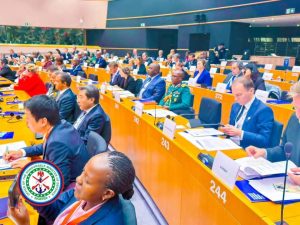
The third edition of the Schuman Security and Defence Forum provided an important platform for high-level discussions on international peace, security and defence cooperation.
The forum brings together defence ministers from partner countries and European Union member states, representatives of international organisations and leading think tanks to deliberate on emerging global security challenges and opportunities for stronger international partnerships.
Nigeria’s participation underscores the country’s determination to deepen its engagement with international partners, strengthen regional security arrangements and build the technological and institutional capacity required to confront terrorism.
The minister’s presentation also highlighted the Federal Government’s position that sustainable security requires a coordinated combination of military strength, intelligence-driven operations, financial disruption, technological innovation, regional cooperation and respect for the rule of law.
As Nigeria continues to confront insurgency and other security threats, the government is seeking to strengthen international partnerships that can provide access to advanced technologies, intelligence capabilities and operational expertise needed to protect lives, secure national borders and restore lasting peace across the country.