

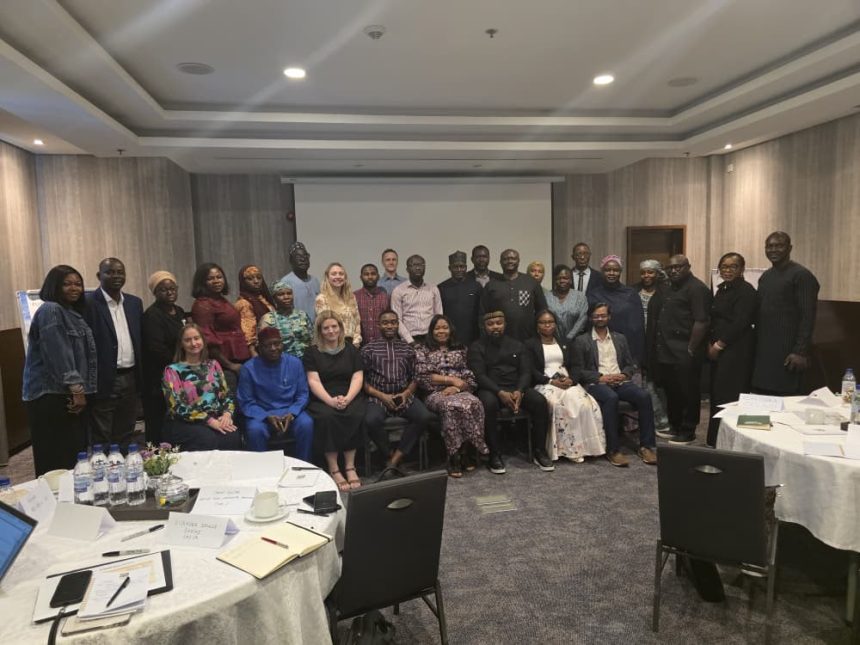
By Julius Peter, Abuja
The Nigerian Meteorological Agency (NiMet) and the United Kingdom Met Office have convened a Climate and Health Learning Lab in Abuja to strengthen Nigeria’s national Health Early Warning System (HEWS) and improve the country’s preparedness for climate-related public health risks.
The five-day Learning Lab, organised under the Weather and Climate Information Services for Africa (WISER) programme, is holding from November 23 to 27, 2026, at the ENVOY Hotel, Abuja.
The programme brought together representatives of NiMet, the Federal Ministry of Health and Social Welfare, the UK Met Office, the Foreign, Commonwealth and Development Office (FCDO), and other government institutions responsible for meteorology, public health, disaster management, water resources and climate policy.
The initiative is aimed at strengthening collaboration among relevant institutions and establishing a more coordinated and sustainable framework for translating weather and climate information into timely public health warnings and practical interventions.
Opening remarks on behalf of NiMet’s Director-General and Chief Executive Officer, Prof. Charles Anosike, were delivered by the Director of Applied Meteorological Services, Mrs. Glory Onyegbule.
In his remarks, Anosike said climate change and variability were increasingly posing serious threats to public health, particularly through rising temperatures, heat stress, changing rainfall patterns, flooding and the growing risks of climate-sensitive diseases.
He stressed the need for stronger cooperation among meteorological, health, water resources and emergency management institutions to address the complex relationship between climate conditions and public health outcomes.
According to him, the increasing frequency and intensity of climate-related hazards make it imperative for Nigeria to strengthen its capacity to anticipate risks, issue timely warnings and support decision-making across critical sectors.
Anosike said the Learning Lab provided an important opportunity for stakeholders to examine existing institutional arrangements, identify gaps and develop practical strategies for building a functional national Health Early Warning System.
He emphasised that the success of the programme should not be measured solely by the number of presentations or discussions held, but by the practical outcomes, institutional commitments and actionable recommendations that would emerge from the engagement.
The NiMet Director-General also expressed appreciation to the UK Met Office for its technical support through the WISER programme, noting that international partnerships remained important in strengthening Nigeria’s climate services and institutional capacity.
He urged participants to contribute actively to the development of a sustainable and functional Health Early Warning System capable of protecting lives, supporting public health planning and improving resilience to climate-related emergencies.
During the sessions, participants examined pathways towards institutionalising a national Health Early Warning System, with emphasis on clearly defined institutional responsibilities, effective coordination mechanisms and the development of a shared understanding of climate-health risks.
The discussions also focused on strengthening the use of existing data platforms and information systems to ensure that relevant weather, climate and health information could be effectively integrated into early warning and response processes.
Participants stressed the importance of developing evidence-based policy recommendations that would sustain government commitment and ensure the long-term implementation of the proposed system.
Presentations were delivered on the mandates and responsibilities of several key institutions, including NiMet, the National Emergency Management Agency (NEMA), National Orientation Agency (NOA), Nigeria Centre for Disease Control and Prevention (NCDC), Nigeria Hydrological Services Agency (NIHSA), National Bureau of Statistics (NBS), National Council on Climate Change (NCCC) and the Federal Ministry of Health and Social Welfare.
NiMet’s institutional mandate was presented by Oyegade Adeleke, Deputy General Manager and Chief Superintendent (DGM/CS), who outlined the agency’s role in providing meteorological information and climate services to support national development and public safety.
A major highlight of the Learning Lab was the presentation of the UK Met Office’s ACTION FIRST approach, which promotes a shift in early warning systems from simply predicting what the weather will do to identifying what actions can be taken to protect lives and livelihoods.
The approach is designed to ensure that climate and weather information leads to timely, practical and coordinated responses by relevant institutions and communities.
It comprises four stages: setup, preparation, warning and review.
The setup stage focuses on establishing the necessary institutional arrangements and coordination structures, while preparation involves identifying risks and developing response plans.
The warning stage emphasises communicating relevant information to decision-makers and vulnerable populations in a timely and actionable manner, while the review stage provides an opportunity to assess responses, identify lessons and improve future preparedness.
The approach is expected to strengthen the link between climate forecasts, public health planning and emergency response by ensuring that warnings are accompanied by clear guidance on appropriate actions.
An interactive session also provided participants with the opportunity to exchange experiences, seek clarification and discuss issues relating to climate and health, disaster management, agriculture and other climate-sensitive sectors.
Representatives of participating agencies responded to questions based on their respective mandates, highlighting the need for improved information sharing and stronger collaboration in addressing emerging climate-related challenges.
At the wrap-up session, participants identified several priority areas requiring further discussion and action, including the integration of indigenous knowledge into risk education, the identification and resolution of institutional and technical gaps, sustainable financing mechanisms and stronger coordination among ministries, departments and agencies (MDAs).
They also underscored the importance of building effective partnerships among government institutions, technical organisations and other stakeholders to ensure the sustainability of the national Health Early Warning System.
The Learning Lab is expected to contribute to the development of a coordinated framework that would enable Nigeria to better anticipate climate-related health risks, strengthen preparedness and support evidence-based decisions by public health authorities.
Through the collaboration between NiMet and the UK Met Office, stakeholders are seeking to establish a system that transforms climate information into practical public health action, helping to reduce vulnerability and protect communities from the growing impacts of climate change.