

By Julius Peter, Abuja
The Comptroller-General of the Nigeria Customs Service (NCS), Adewale Adeniyi, has signed key anti-corruption documents and directed their immediate implementation across all zones, commands and units of the Service as part of efforts to strengthen integrity, accountability and transparency in Customs operations.
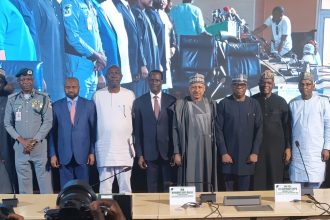
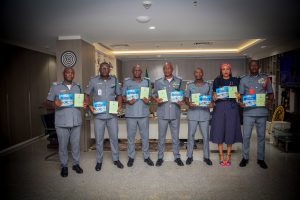
The documents, comprising the Standard Operating Procedure (SOP) for Conducting Internal Corruption Risk Analysis and Mapping (ICRAM), the ICRAM Handbook and the Integrity Action Plan (IAP), were signed by the Comptroller-General on Tuesday, October 6, 2026, at the NCS Headquarters in Maitama, Abuja.
As part of the milestone, Adeniyi also formally activated the ICRAM Steering Committee, providing an institutional structure for the systematic identification, assessment and mapping of corruption risks across the operational and administrative processes of the Service.
The initiative is expected to provide Customs officers with practical tools for identifying vulnerabilities to corruption within their areas of responsibility and deploying targeted measures to address such risks.
Speaking during the ceremony, Adeniyi said the documents were the outcome of a painstaking process involving an internal team of the NCS, the World Customs Organisation (WCO) and partner Customs administrations, including His Majesty’s Revenue and Customs (HMRC).
He said the collaboration was aimed at ensuring that integrity becomes a central component of the Service’s operations and institutional culture.
According to him, the initiative was not merely about producing policy documents, but about creating practical mechanisms that officers could apply in their daily operations.
“These two documents are products of a painstaking process which we have undertaken with efforts from an internal team working together with our partners from the WCO and a number of other Customs administrations that have walked this path with us to ensure that we have a Service where integrity leads,” Adeniyi said.
The Comptroller-General explained that the ICRAM framework would empower officers operating at ports, borders and airports to identify corruption risks within their respective areas, map the risks and implement appropriate measures to mitigate or eliminate them.
“We want to believe that we have laid a practical step, very easy to follow, for all our operatives at the ports, the borders, and the airports, to be able to conduct corruption risk mapping in their places, giving them the opportunity and capacity to implement the action plan to instil integrity in our system,” he said.
Adeniyi directed that the newly approved documents should be immediately deployed across the Service, stressing that the effectiveness of the initiative would depend largely on its implementation at operational and administrative levels.
Earlier, the Assistant Comptroller-General of Customs in charge of the Strategic Research and Policy Department, ACG Nafi’u Isyaku, led senior officers in presenting the documents to the Comptroller-General and sought approval for their full rollout across the NCS.
The development represents a significant step in institutionalising corruption risk management within the Service, particularly as Customs operations involve complex interactions among officers, importers, exporters, clearing agents, transporters, government agencies and other stakeholders.
The ICRAM methodology was subjected to a pilot exercise before its formal launch, with the exercise conducted across seven strategic Commands and Units of the NCS.
The pilot covered 66 processes spanning regulatory functions, core Customs operations and support functions, providing the Service with an opportunity to test the methodology and identify areas requiring stronger safeguards.
The pilot locations were selected across the three major operational modalities and specialised units.
Under the sea modality, the Apapa Area Command participated in the pilot, while the air modality covered the Murtala Muhammed Cargo (MMAC) and Murtala Muhammed International Airport (MMIA) Commands.
For the land modality, the Seme Area Command was selected, while specialised units involved in the exercise included the Customs Police Unit Zone A, the PAAR Ruling Centre and the Procurement Unit.
The exercise culminated in the development of a comprehensive Integrity Action Plan containing 101 Action Items and 295 Sub-Action Items.
The action points cover several areas considered critical to reducing corruption vulnerabilities and improving institutional accountability within the NCS.
Among the major areas identified are increased automation of Customs processes, stronger supervision and accountability mechanisms, enhanced audit trails and traceability, clearer segregation of duties, regular rotation of personnel, targeted training and improved controls governing interactions between officers and stakeholders.
The emphasis on automation is expected to reduce unnecessary human intervention in Customs processes, while improved audit trails and traceability would make it easier to monitor transactions and establish responsibility for decisions taken during operational processes.
Similarly, clearer segregation of duties is expected to reduce the concentration of responsibilities in the hands of individual officers and minimise opportunities for abuse of office.
Regular staff rotation is also identified as an important integrity safeguard, particularly in sensitive operational areas where prolonged deployment could create vulnerabilities or foster inappropriate relationships between officers and stakeholders.
The training component is intended to strengthen the capacity of personnel to identify corruption risks and understand their responsibilities under the new framework, while improved officer-stakeholder controls would provide additional safeguards against undue influence and conflicts of interest.
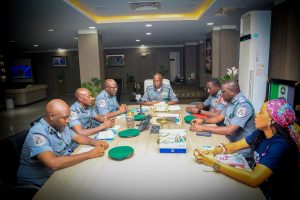
The activation of the ICRAM Steering Committee is therefore expected to provide oversight and coordination for the implementation of the framework, ensuring that identified risks are properly assessed and that agreed mitigation measures are followed through.
The initiative also reinforces the NCS’s broader institutional reform agenda, particularly efforts to strengthen transparency, accountability, professionalism and efficiency in Customs administration.
With the formal signing of the documents and activation of the steering committee, the next phase will focus on translating the framework into practical actions across the Service’s commands, units and operational points.
The NCS leadership is expected to use the findings and lessons from the pilot exercise to guide implementation across other locations, while monitoring compliance with the Integrity Action Plan.
The development also underscores the importance of collaboration between the NCS and international Customs partners in strengthening integrity systems and adopting globally recognised approaches to corruption-risk management.
For the Service, the ultimate objective is to establish an operational environment in which corruption risks are identified before they escalate, vulnerabilities are systematically addressed and officers are equipped with the tools and institutional support needed to uphold professional and ethical standards.
The initiative is consequently positioned not only as an anti-corruption measure but also as part of the broader effort to build a more efficient, transparent and accountable Nigeria Customs Service capable of delivering its revenue, trade facilitation, border security and regulatory responsibilities with greater public confidence.