

By Julius Peter, Abuja
The Federal Government has rejected renewed calls for the restoration of petrol subsidy, warning that returning to the policy would worsen Nigeria’s fiscal and economic challenges and expose the country to renewed currency instability, fuel scarcity and pressure on foreign reserves.
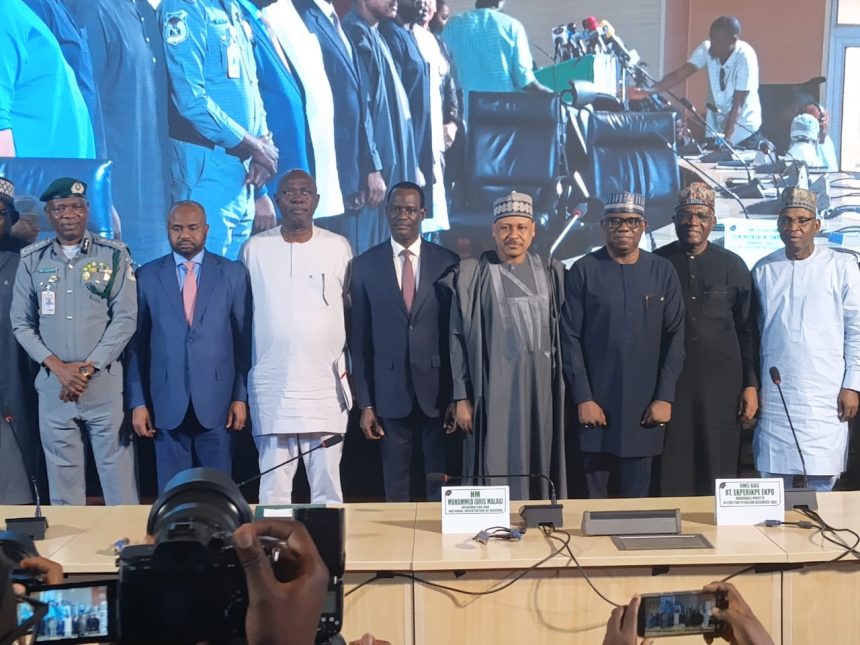
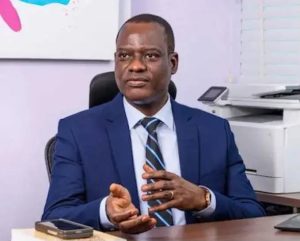
The Minister of Finance and Coordinating Minister of the Economy, Mr. Taiwo Oyedele, stated this during a press briefing on the fuel price and subsidy question held at the Ministry of Finance’s main auditorium.
Oyedele said the current increase in petrol prices was being driven largely by developments in the international energy market, including a surge in crude oil prices and disruptions to the global supply of crude oil and refined petroleum products.
According to him, Brent crude had risen above $100 per barrel, while diesel exports from the Middle East and Russia had fallen significantly, resulting in higher refined-product prices and increased shipping costs globally.
He explained that petrol, which sold for about N830 per litre before the latest global energy shock, now averages about N1,400 per litre.
The minister acknowledged the hardship that higher fuel prices were imposing on households and businesses, but maintained that the removal of subsidy had prevented the impact of the global crisis from becoming substantially worse.
Oyedele argued that restoring subsidy would merely transfer the burden from consumers to government finances, with serious implications for the payment of salaries and pensions, infrastructure development, healthcare, education and other essential public services.
“A subsidy does not lower the cost of fuel. It only changes how it is paid and when,” the government stated, stressing that the policy ultimately places the financial burden on the public purse.
The minister warned that a return to a blanket petrol subsidy could trigger capital flight, deplete the country’s foreign reserves, put renewed pressure on the naira and worsen inflation.
He also rejected proposals for what has been described as a production subsidy for domestic refineries, arguing that such an arrangement would still amount to a consumption subsidy if crude oil were supplied to refiners below its market value and the resulting discount passed on to consumers.
Oyedele maintained that the government’s decision to remove the subsidy had substantially improved revenue available to the three tiers of government.
According to him, subsidy removal released N15.8 trillion to the Federation Account between June 2023 and December 2025, with N10.4 trillion accruing to state and local governments.
He said the increased revenue had enabled governments to meet wage obligations and provide funding for infrastructure, electricity support and social intervention programmes.
The minister, however, acknowledged that the benefits of the reforms had not yet been fully felt by many Nigerians, saying the government was therefore pursuing measures aimed at cushioning the immediate impact of high fuel prices without returning to the old subsidy regime.
As part of the measures, the Federal Government announced a 30-day discount on petrol sold through NNPC Limited stations, with public transport operators expected to receive priority.
The initiative is designed to reduce transportation costs and provide temporary relief to Nigerians who depend heavily on public transportation.
Oyedele said the government was also working on measures to improve price stability by introducing forward crude sales to domestic refineries.
Under the arrangement, domestic refiners would have greater certainty over the price and availability of crude feedstock, thereby helping them plan production and reduce exposure to sudden international price movements.
The government is also negotiating a N1,350-per-litre ceiling on the ex-refinery or landing cost of petrol as part of efforts to moderate price volatility.
Oyedele disclosed that the Federal Government was considering a price-modulation mechanism that would not amount to either subsidy or direct price control.
Under the proposed arrangement, refiners and importers would absorb temporary increases in production or import costs and subsequently recover such costs when international market conditions improve.
The minister said the approach was intended to reduce sharp fluctuations in pump prices while maintaining the broader principles of market-based pricing.
He explained that the government’s objective was to protect consumers from sudden international price shocks without recreating the fiscal burden associated with the former petrol subsidy regime.
As part of the longer-term strategy to reduce dependence on petrol and lower transportation costs, the Federal Government said it was accelerating the Compressed Natural Gas (CNG) programme.
Oyedele disclosed that more than 120,000 vehicles were already operating on CNG across the country, supported by more than 400 conversion centres and 96 refuelling stations.
He added that more than 550 CNG buses had also been deployed.
According to him, the expansion of CNG-powered transportation was already producing measurable benefits, with fares on routes served by CNG buses falling by between 30 and 50 per cent.
The minister said the government would continue to expand the CNG ecosystem as part of efforts to provide Nigerians with cheaper transportation alternatives and reduce the impact of petrol price increases on households and businesses.
Other measures announced by the government include the removal of illegal levies that increase transportation costs, expansion of cash-transfer programmes and provision of subsidised credit for vulnerable households and small businesses.
The government is also considering an excess-profit tax on energy operators found to be taking undue advantage of the current market conditions to make excessive profits at the expense of consumers.
Oyedele said these measures were intended to ensure that the burden of the global energy crisis was not disproportionately transferred to ordinary Nigerians.
He further disclosed that Nigeria had granted a full waiver of taxes and duties on petrol worth more than N3.3 trillion for the year ending September 30, 2026.
According to him, the tax and duty reliefs form part of the Federal Government’s broader effort to moderate energy and transportation costs.
The minister stressed that the government was not seeking to reverse the economic reforms introduced under President Bola Ahmed Tinubu but was focused on ensuring that the benefits of those reforms reached Nigerians more quickly and directly.
He acknowledged that the removal of subsidy had imposed significant costs on households, but argued that maintaining the previous system was no longer sustainable.
“Removing the subsidy came at a price, and many households are still bearing it. But the alternative has been tried,” he said.
Oyedele warned that returning to the old system could recreate the cycle of fuel scarcity, smuggling, currency instability and fiscal crisis that had characterised the subsidy era.
He said the government’s priority was therefore to maintain macroeconomic stability while deploying targeted interventions to protect vulnerable citizens.
Oyedele also assured Nigerians that the Federal Government was working on a broader package of fiscal measures aimed at sustainably reducing inflation to single digits.
He stressed that maintaining macroeconomic stability was critical to achieving lasting improvements in household welfare, investment, business activity and economic growth.
The minister maintained that the government’s approach was to move away from expensive blanket subsidies towards targeted interventions capable of delivering direct support to Nigerians while preserving public finances.
He said the combination of increased government revenues, energy-sector reforms, CNG expansion, targeted social interventions, tax reliefs and measures to stabilise petrol prices would help Nigeria navigate the current global energy shock.
The government’s position underscores its determination to retain the petrol subsidy removal policy despite mounting pressure over the rising cost of living, while seeking alternative measures to cushion its effects on households, businesses and the transportation sector.
Oyedele said the ultimate objective was to build an economy capable of absorbing external shocks without repeatedly resorting to policies that place unsustainable pressure on public finances.