

By Julius Peter
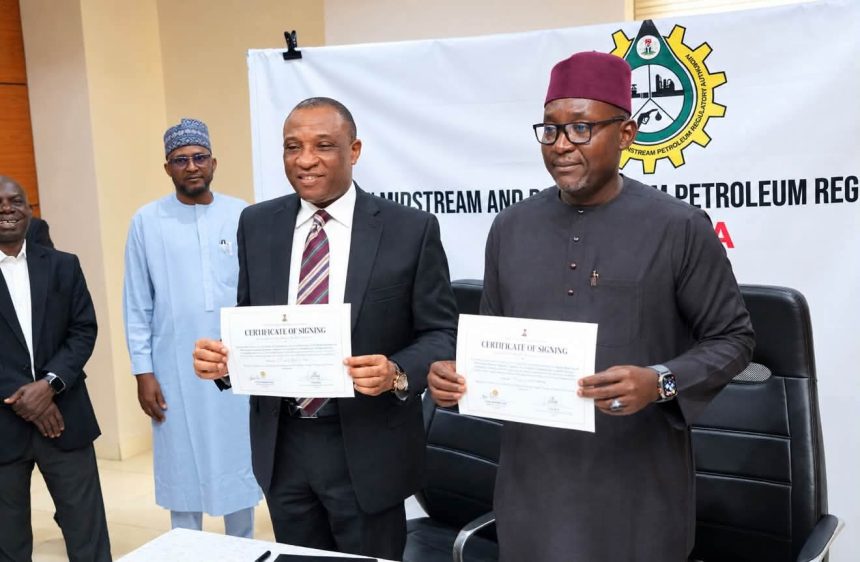
The Nigerian Midstream and Downstream Petroleum Regulatory Authority (NMDPRA) and the Federal Competition and Consumer Protection Commission (FCCPC) have signed a Memorandum of Understanding (MoU) aimed at strengthening fair competition, market transparency and consumer protection across Nigeria’s petroleum value chain.
The agreement was signed in Abuja on Thursday, September 10, 2026, as part of efforts by both regulatory agencies to deepen institutional collaboration and promote a more transparent, competitive and consumer-friendly petroleum market.
The MoU provides a framework for enhanced cooperation between the two agencies in areas including regulatory enforcement, market monitoring, accurate product metering, compliance with fuel-quality standards and the protection of consumers from unfair or deceptive practices.
The partnership is expected to strengthen regulatory oversight across the midstream and downstream petroleum sectors by ensuring that market participants operate in accordance with established laws, regulations and standards.
A major component of the agreement is improved coordination in enforcement activities. Through closer collaboration, NMDPRA and FCCPC are expected to share relevant information, coordinate regulatory interventions and address practices capable of undermining competition or exposing petroleum consumers to unfair treatment.
The agencies will also work to promote greater accuracy and transparency in the measurement of petroleum products. Accurate metering is critical to ensuring that consumers receive the quantity of products for which they pay, while also promoting confidence in transactions throughout the petroleum distribution chain.
The MoU further places emphasis on compliance with fuel-quality standards, an area considered essential to consumer safety, environmental protection and the integrity of Nigeria’s petroleum market.
By working together, the agencies are expected to improve monitoring of petroleum products and strengthen measures to ensure that products supplied to the Nigerian market meet applicable quality requirements.
The collaboration also seeks to create a more predictable operating environment for businesses by clarifying areas of regulatory cooperation and reducing gaps that may arise from overlapping responsibilities.
For consumers, the partnership is expected to reinforce protections against unfair market practices and improve access to reliable information and quality petroleum products.
The agreement comes amid continuing efforts to reform Nigeria’s petroleum industry following the implementation of the Petroleum Industry Act and the restructuring of regulatory responsibilities across the oil and gas value chain.
A competitive and transparent petroleum market is considered important to improving efficiency, encouraging investment, protecting consumers and ensuring that businesses compete on a level playing field.
The collaboration between NMDPRA and FCCPC is therefore expected to contribute to stronger regulatory coordination at a time when Nigeria’s midstream and downstream petroleum sectors are undergoing significant transformation.
The two agencies are expected to use the framework provided by the MoU to strengthen information sharing, improve regulatory compliance and respond more effectively to practices that could distort competition or undermine consumer welfare.
The agreement also underscores the importance of cooperation among government institutions in addressing challenges within the petroleum sector, particularly where effective regulation requires complementary expertise and enforcement capabilities.
With the MoU in place, both agencies are expected to intensify efforts to ensure that petroleum market operators comply with applicable standards while consumers are adequately protected.
The partnership is ultimately aimed at fostering a petroleum market where competition is fair, transactions are transparent, product quality is assured and consumers receive value for money.
It is also expected to support broader government efforts to build confidence in the petroleum sector, strengthen regulatory institutions and create conditions conducive to sustainable investment and economic growth.