

By Julius Peter
The Chairman of the Economic and Financial Crimes Commission (EFCC), Mr Ola Olukoyede, has disclosed that more than 40 personnel of the anti-graft agency have been dismissed for corruption and financial malpractice in the last three years.
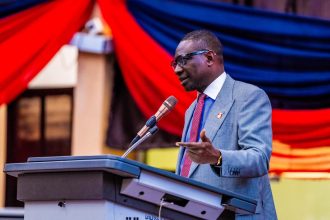
Olukoyede made the disclosure on Monday in Abuja at a media interactive session organised to mark his three-year stewardship at the commission’s headquarters.
The EFCC chairman said the disciplinary measures were part of efforts by the commission to strengthen internal accountability, maintain professional standards and ensure that personnel entrusted with the responsibility of fighting corruption were themselves held to the highest standards of integrity.
According to him, the commission would not shield any member of staff found to have compromised his or her position or engaged in corrupt practices.
He explained that the fight against corruption must begin from within the institution saddled with the responsibility of enforcing Nigeria’s financial crimes laws, stressing that the credibility of the EFCC depended largely on the integrity and professionalism of its personnel.
Olukoyede said the dismissal of the affected officers demonstrated the commission’s determination to maintain a zero-tolerance posture toward corruption, financial misconduct and abuse of office among its personnel.
He noted that the EFCC had, over the past three years, continued to strengthen its internal mechanisms for detecting misconduct and ensuring that allegations against its personnel were properly investigated and subjected to appropriate disciplinary procedures.
The chairman also emphasised the importance of transparency and accountability in the operations of the commission, saying that the EFCC must remain responsive to Nigerians and constantly improve its methods of fighting economic and financial crimes.
He said the commission’s war against corruption was not limited to the investigation and prosecution of members of the public, but also extended to ensuring that its own personnel operated within the law.
Olukoyede’s disclosure comes against the backdrop of increasing public demand for stronger institutional accountability and greater transparency in the fight against corruption in Nigeria.
The EFCC chairman said the commission would continue to strengthen its human capacity, operational systems and institutional safeguards to prevent corruption within its ranks and improve its effectiveness in tackling economic and financial crimes.
He further stressed that officers of the commission must understand that their positions came with significant responsibility and public trust, adding that any personnel who violated the law or abused their official positions would be made to face the consequences.
The chairman said the EFCC under his leadership would continue to prioritise professionalism, integrity and efficiency, while ensuring that its activities were guided by the rule of law.
He urged the media to continue to support the anti-corruption campaign by providing accurate information to the public and holding institutions accountable.
Olukoyede also acknowledged the role of the media in shaping public perception of the commission and the broader fight against corruption, noting that effective communication and constructive engagement were essential to sustaining public confidence in the EFCC.
The three-year stewardship interactive session provided an opportunity for the EFCC chairman to review the commission’s activities, challenges and institutional reforms since assuming office, as well as engage journalists on issues concerning the agency’s operations.
The disclosure that more than 40 EFCC personnel had been dismissed over corruption and financial malpractice highlights the commission’s emphasis on internal discipline as it continues to pursue its broader mandate of preventing, investigating and prosecuting economic and financial crimes.
Olukoyede reaffirmed that the EFCC would not compromise its standards, maintaining that those entrusted with fighting corruption must be prepared to uphold the principles of integrity and accountability in the discharge of their duties.
He said the commission remained committed to deepening its institutional reforms and strengthening public confidence in its ability to effectively confront economic and financial crimes in the country.