

By Julius Peter
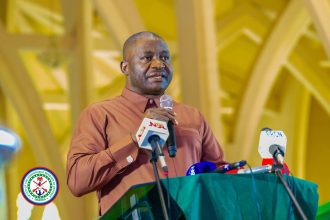
The Chief Executive of the Nigerian Upstream Petroleum Regulatory Commission (NUPRC), Mrs. Oritsemeyiwa Eyesan, has called for massive investment in education, skills acquisition and research, saying Nigeria’s ambition to produce three million barrels of crude oil per day and 12 trillion cubic feet of gas by 2030 can only be achieved through the development of human capacity.
Eyesan made the call on Monday, November 23, 2026, while delivering the 56th Founders’ Day Lecture of the University of Benin (UNIBEN), Edo State, exactly 40 years after she graduated from the institution.
The NUPRC chief executive also announced plans by the Commission to collaborate with the university in oil and gas research, with particular emphasis on gas and heavy oil, as part of efforts to strengthen innovation and improve the development and extraction of Nigeria’s petroleum resources.
In her lecture titled, “The Wealth Beneath Our Feet and the Wealth Within Our Minds: Rethinking Leadership, Education and National Development,” Eyesan stressed that the true wealth of a nation lies not only in its natural resources but also in the knowledge, creativity and capabilities of its people.
She argued that Nigeria must look beyond the possession of abundant petroleum deposits and invest in the intellectual and technical capacity required to transform those resources into sustainable national prosperity.
According to her, the Federal Government’s ambitious production targets under President Bola Ahmed Tinubu require a deliberate and sustained investment in the people who will drive the petroleum industry.
“The task before us is enormous. The Federal Government, under President Bola Ahmed Tinubu, has set ambitious targets of three million barrels of oil and 12 trillion cubic feet of gas by 2030.
“Achieving these ambitions will require more than the development of our petroleum resources; it will demand a corresponding investment in the knowledge, skills and capabilities of the people who will drive the industry forward. This is why the meeting of minds between town and gown is essential,” she said.
Eyesan’s call underscores the importance of strengthening the relationship between universities and the petroleum industry, particularly at a time when the sector requires innovative solutions to technical, operational and production challenges.
She said the NUPRC would work closely with the University of Benin to support research and development initiatives aimed at improving the exploitation of Nigeria’s petroleum resources.
As part of the proposed partnership, the Commission will provide support for researchers pursuing innovative approaches to petroleum development and extraction, especially in the areas of gas and heavy oil.
“To strengthen research and development at the University, the Commission will provide support for researchers pursuing innovative approaches to the development and extraction of our petroleum resources, with particular emphasis on gas and heavy oil.
“The intellectual and research outcomes arising from this initiative will be jointly owned by the Commission and the university,” she said.
The collaboration is expected to create opportunities for researchers and academics to contribute practical solutions to challenges facing the upstream petroleum industry while promoting the application of scientific knowledge to national development.
The emphasis on gas research also comes against the backdrop of Nigeria’s ambition to expand its gas resources and improve their contribution to economic growth, industrial development and energy security.
Eyesan maintained that the country’s petroleum ambitions would require a workforce equipped with the relevant knowledge, technical skills and innovative capacity to meet the demands of a rapidly evolving energy industry.
She further urged students of the University of Benin to broaden their intellectual horizons by exploring opportunities beyond their immediate academic disciplines.
According to her, students should take advantage of the opportunities available within and outside their fields of study to develop their talents and maximise their potential.
The NUPRC boss encouraged them to recognise education as a tool for personal development and national transformation, stressing that the future of the country depends largely on the quality of its human resources.
The lecture was particularly significant for Eyesan, who returned to the university four decades after leaving its premises as a fresh graduate.
Her return as the head of Nigeria’s upstream petroleum regulator highlighted the role of the institution in producing professionals who have gone on to occupy important positions in the nation’s oil and gas industry.
In his remarks, the Vice-Chancellor of the University of Benin, Professor Edoba Bright Omoregie, SAN, thanked Eyesan for bringing pride to the institution and for supporting the university’s development.

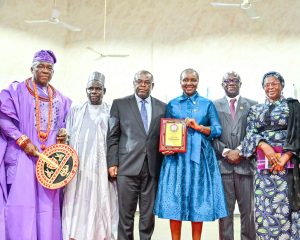
Omoregie described her achievements as a source of inspiration to the university community and presented her with a medallion on behalf of the management.
He also noted that Eyesan, the Executive Commissioner for Development and Production at the NUPRC, Engineer Enorense Amadasu, and several other notable figures in the petroleum industry were products of the University of Benin.
The vice-chancellor said their achievements demonstrated the institution’s contribution to the development of skilled professionals and leaders across different sectors of the economy.
Eyesan’s lecture and the proposed NUPRC-UNIBEN research partnership further highlighted the need for closer cooperation between government agencies, universities and industry players in building the technical expertise required to maximise Nigeria’s petroleum resources.
As the country pursues its 2030 oil and gas production targets, the NUPRC chief executive said investment in education, skills and research must remain central to the national development agenda.