

By Julius Peter, Abuja
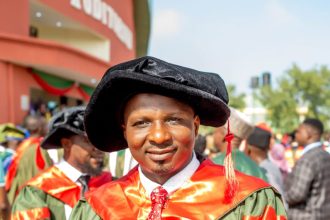
Senator representing Kaduna South Senatorial District, Distinguished Senator Sunday Marshall Katung, has commenced a major intervention aimed at transforming science education across Southern Kaduna through the construction, comprehensive renovation and full equipping of science laboratory centres in five secondary schools across the district.
The initiative, which is designed to strengthen practical learning and improve access to modern educational facilities, is part of the Senator’s broader commitment to investing in projects capable of producing lasting benefits for students, schools and communities across Southern Kaduna.
The first phase of the laboratory project covers five secondary schools located across five Local Government Areas of the senatorial district.
The beneficiary schools are Government Secondary School (GSS) Ngarshang-Kwoi in Jaba Local Government Area; GSS Sonje in Jema’a Local Government Area; GSS Zankan-Moroa in Kaura Local Government Area; GSS Katari in Kachia Local Government Area; and GSS Kamuru in Zangon Kataf Local Government Area.
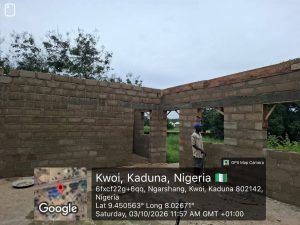
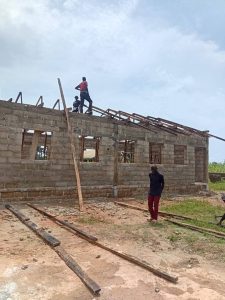
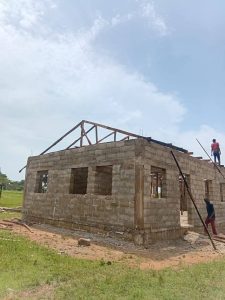
Under the project, new Science Laboratory Centres are being constructed and fully equipped at GSS Ngarshang-Kwoi, GSS Sonje, GSS Zankan-Moroa and GSS Katari.
At GSS Kamuru, the existing science laboratory is undergoing complete renovation and re-equipping to bring the facility up to modern standards.
The laboratories are expected to be fitted with modern scientific apparatus, reagents and chemicals, as well as appropriate safety facilities required to provide students with a conducive environment for practical lessons in Physics, Chemistry and Biology.
The intervention is particularly significant in an educational environment where inadequate laboratory facilities have continued to limit students’ exposure to practical aspects of science subjects.
By providing modern laboratory infrastructure and equipment, the project is expected to give students greater opportunities to conduct experiments, understand scientific concepts through practical demonstrations and develop skills that can prepare them for further studies and careers in science, technology, engineering and medicine.
The initiative also underscores the importance of practical learning in the development of young people capable of competing in an increasingly technology-driven global economy.
Senator Katung said the intervention was informed by the need to provide students in Southern Kaduna with the facilities required to acquire relevant knowledge and practical skills.
According to him, the quality of infrastructure available to students should not determine the extent to which they can realise their potential.
“You cannot teach 21st century science with 19th century facilities. If we must produce future doctors, engineers and scientists from Southern Kaduna, we must invest in the foundation today,” he said.
The Senator’s position reflects the growing emphasis on science, technology, engineering and mathematics education as critical components of human capital development.
With the rapid transformation of the global economy through technology and innovation, access to quality science education has become increasingly important in preparing young people for emerging opportunities.
The laboratory projects are therefore expected to contribute not only to improved academic performance but also to the development of a culture of scientific inquiry among students.
Students will have the opportunity to move beyond theoretical classroom instruction and gain practical experience through experiments and laboratory-based learning.
The intervention is also expected to benefit teachers by providing them with better facilities and equipment with which to deliver science curricula more effectively.
According to the project details, work is already at an advanced stage across the various sites, with the completed facilities expected to be commissioned soon and made available for immediate use by students.
The distribution of the projects across Jaba, Jema’a, Kaura, Kachia and Zangon Kataf Local Government Areas also demonstrates an effort to extend the intervention to different parts of Kaduna South Senatorial District.
The initiative is expected to provide a foundation for sustained improvement in science education within the beneficiary schools, while potentially inspiring similar investments in other educational institutions across the district.
For communities in Southern Kaduna, the projects could also have a wider long-term impact by helping to nurture a new generation of students equipped to pursue professional careers in medicine, engineering, scientific research, technology and other specialised fields.
The Senator has maintained that investment in education remains one of the most effective ways of securing the future of young people and strengthening communities.
The laboratory intervention therefore forms part of an approach that places human capital development at the centre of constituency representation, with emphasis on projects that can continue to deliver benefits long after their completion.
The commissioning of the completed laboratory centres is expected to mark another stage in the effort to improve the quality of science education in the beneficiary schools and ensure that students across Southern Kaduna are not denied opportunities to acquire practical knowledge because of inadequate facilities.
The project was disclosed by Midat Joseph, Special Adviser, Media and Communications to Distinguished Senator Sunday Marshall Katung.