

By Julius Peter, Abuja
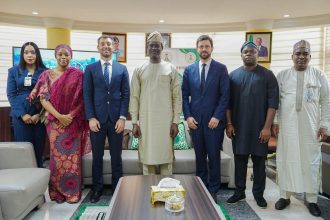
The Secretary to the Lagos State Government (SSG), Barrister Bimbola Salu-Hundeyin, has described the National Industrial Manpower Summit 2026 as a timely and significant initiative capable of accelerating Nigeria’s industrial transformation through human capital development, skills acquisition and innovation.
Salu-Hundeyin said the summit, themed “Unlocking Nigeria’s Human Capital for Industrial Transformation: Building Skills, Driving Innovation and Creating Prosperity,” had been successful, noting that its focus on manpower development was critical to national growth and economic prosperity.
She made the remarks while assessing the outcome of the summit, which brought together stakeholders from government, the private sector and other relevant institutions to examine practical strategies for strengthening Nigeria’s workforce and building the skills required to drive industrial development.
According to her, the programme came at a crucial time when Nigeria needed to prioritise skills development, improve the quality of its human capital and create opportunities for citizens to contribute meaningfully to the nation’s economic growth.
She maintained that no country could achieve sustainable development without investing adequately in the skills, knowledge and capabilities of its people.
“Skills development and manpower skills are what make a nation grow,” she said, stressing the need for Nigeria to strengthen its commitment to equipping citizens with relevant competencies for employment, entrepreneurship and industrial productivity.
The Lagos SSG expressed satisfaction with the contributions made by participants at the summit, noting that stakeholders had offered different perspectives on how the country could encourage and expand skills development across various sectors.
She said the recommendations reflected the need for a coordinated approach involving government institutions, educational establishments, the private sector and other stakeholders to build a workforce capable of meeting the demands of a rapidly changing economy.
Salu-Hundeyin observed that one of the important issues raised at the summit was the need to introduce skills development early in the educational system, with some participants advocating that practical and vocational learning should begin at the primary school level.
She explained that early exposure to practical skills could help young Nigerians identify their talents, develop productive abilities and prepare for future employment or business opportunities.
The SSG also highlighted proposals for integrating entrepreneurship education with conventional academic learning, arguing that education should not only provide theoretical knowledge but also equip students with practical competencies to become self-reliant and contribute to national development.
According to her, combining academic education with entrepreneurship and vocational training would help prepare young people for the realities of the labour market while encouraging innovation, creativity and the establishment of businesses.
She noted that countries seeking to achieve industrial advancement must continuously review their educational systems to ensure that graduates possess the skills required by employers and industries.
Salu-Hundeyin further emphasised the importance of collaboration between the public and private sectors in expanding manpower development, saying that collective efforts were necessary to identify skills gaps, develop relevant training programmes and create pathways for Nigerians to acquire marketable skills.
She expressed confidence that the ideas generated at the summit would contribute to the formulation of policies and programmes capable of strengthening the country’s industrial base and improving the livelihoods of citizens.
The Lagos SSG particularly commended the Senior Special Assistant to the President responsible for bringing the summit together, describing the initiative as a welcome step towards mobilising stakeholders around a shared vision for Nigeria’s human capital development.
She expressed hope that the deliberations would culminate in a comprehensive communiqué to be presented to President Bola Ahmed Tinubu for consideration and implementation.
According to her, the real value of the summit would be demonstrated by the extent to which its recommendations translated into concrete policies, practical interventions and measurable improvements in skills acquisition and employment opportunities.
She urged the organisers and relevant stakeholders to ensure that the outcome of the summit did not end with discussions but progressed to actionable proposals that would support the Federal Government’s development agenda.

Salu-Hundeyin said the recommendations, if effectively implemented, could help Nigeria strengthen its workforce, promote industrial growth and create greater prosperity for its citizens.
She also expressed support for the Tinubu administration, saying the government was committed to building a better Nigeria and ensuring that the benefits of democracy reached citizens across the country.
According to her, initiatives that prioritise human capital development are among the practical measures needed to improve the nation’s economic prospects and create opportunities for Nigerians to participate in the development process.
She added that investment in people remained essential to achieving sustainable progress, explaining that a skilled and productive population would be better positioned to support innovation, strengthen industries and contribute to national prosperity.
The SSG therefore called on Nigerian youths to take advantage of opportunities presented by manpower development initiatives, vocational training programmes and entrepreneurship schemes to improve their skills and enhance their prospects for employment and self-employment.
She encouraged young people to be proactive in acquiring relevant skills rather than relying solely on academic qualifications, stressing that practical knowledge and technical competence were increasingly important in a competitive economy.
Salu-Hundeyin urged youths to embrace learning, innovation and entrepreneurship, noting that the country’s future industrial growth would depend significantly on the ability of its young population to develop the skills needed to meet emerging economic demands.
She maintained that effective implementation of the summit’s recommendations, combined with sustained investment in education and workforce development, could help position Nigeria for stronger industrial growth, job creation and inclusive prosperity.
The National Industrial Manpower Summit 2026 thus provided a platform for stakeholders to discuss how Nigeria could better harness its human resources, strengthen the relationship between education and industry, and build a workforce capable of driving sustainable economic transformation.
For Salu-Hundeyin, the next critical step is to translate the ideas generated at the summit into practical policies and programmes that will empower Nigerians, particularly the youths, while supporting the country’s long-term industrial and economic ambitions.