
By Julius Peter
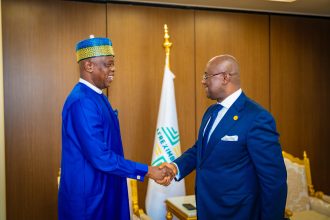
Nigeria and Cameroon have intensified efforts to transform trade and movement across their shared border, with the two countries’ customs administrations launching a joint assessment of the Ekok-Mfum One-Stop Border Post (OSBP) as part of a broader push to eliminate cross-border trade bottlenecks, strengthen security and deepen regional economic integration.
The high-level assessment, held on Tuesday, September 8, 2026, represents a significant step in efforts to make the Mfum-Ekok corridor more efficient for legitimate traders, transporters and travellers while improving the ability of border agencies to detect and respond to security and customs risks.
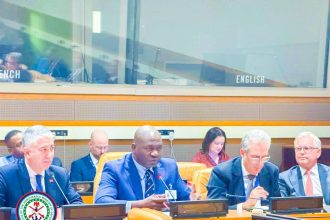
The exercise, themed “Leveraging the Nigeria Customs Service Trade Modernisation Project to Advance Seamless Cross-Border Trade and Shared Prosperity,” brought together senior officials of the Nigeria Customs Service (NCS) and Cameroon Customs Administration, technical experts, security agencies, development partners and representatives of communities located around the border.
At the centre of the discussions was the need to move away from fragmented border procedures towards a coordinated system in which agencies on both sides can share information, manage risks jointly and reduce repetitive inspections and documentation.
The initiative is particularly significant for communities and businesses that depend on the Nigeria-Cameroon border for their livelihoods. For traders moving goods across the frontier, delays, multiple checks, inadequate infrastructure and overlapping procedures can increase transportation costs and discourage formal trade.
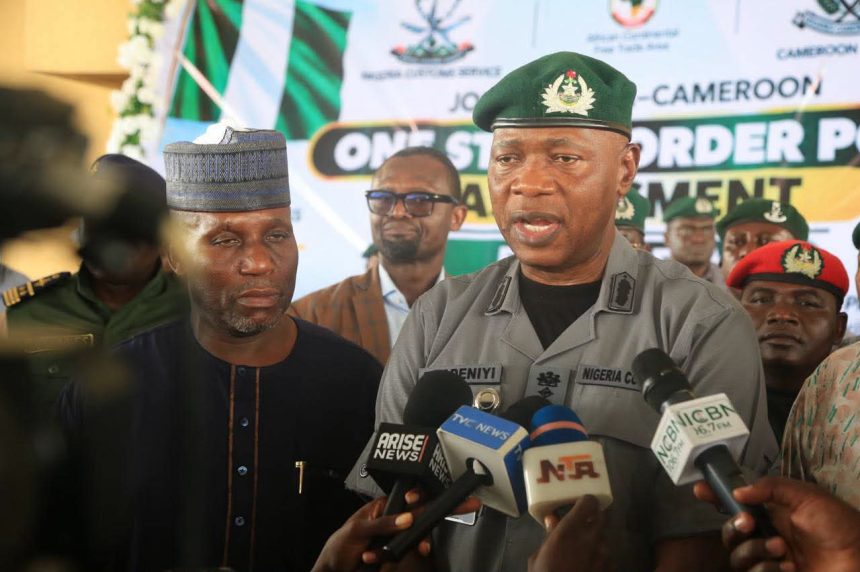
Speaking at the assessment, the Comptroller-General of Customs, Adewale Adeniyi, stressed that the initiative was not an attempt to create a new partnership from scratch but to strengthen an existing relationship and build a model that could eventually benefit other African borders.
“We are not building from nothing. We are taking something that works between the two of us and asking whether it can be made to work for the region and hopefully for our continent,” Adeniyi said.
His remarks underscored the wider ambition behind the Mfum-Ekok initiative. Beyond improving the operations of two neighbouring customs administrations, the project is being positioned as part of the continent’s broader effort to make African trade faster, cheaper and more predictable.
The Nigeria Customs Service has identified trade modernisation and digitalisation as key tools for achieving that objective. By integrating technology into customs procedures, officials hope to reduce manual processes, improve transparency and provide border agencies with better information for making decisions.
The initiative also enjoys the support of major continental and regional institutions, including the African Development Bank, ECOWAS, ECCAS, Afreximbank and the AfCFTA Secretariat.
Their involvement reflects the growing recognition that efficient border management is essential to the success of the African Continental Free Trade Area (AfCFTA), which seeks to increase intra-African trade by reducing barriers to the movement of goods and services.
The push for reform at Mfum-Ekok is also being informed by experiences from other major African border crossings.
Adeniyi disclosed that Nigerian and Cameroonian customs delegations recently undertook a study tour of the Beitbridge Border Post, which links South Africa and Zimbabwe.
The visit provided an opportunity for officials from both countries to examine border-management practices and identify approaches that could be adapted to the Mfum-Ekok corridor.
Beitbridge is one of Africa’s major land-border crossings and has been used as a reference point for initiatives aimed at improving the coordination of border agencies, reducing congestion and facilitating the movement of people and goods.
Following the study tour, technical teams from Nigeria and Cameroon have been working towards finalising a joint operational agreement. The agreement is expected to be signed at the forthcoming C-PACT conference, providing a formal framework for deeper operational cooperation between the two customs administrations.
For Cameroon Customs, the success of the initiative will depend heavily on how effectively both countries integrate their procedures.
The Director General of Cameroon Customs, Fongod Nuvaga, described the joint assessment as the first concrete step towards unified border operations.
He called for greater emphasis on real-time information exchange and joint risk-management systems, arguing that customs administrations should be able to coordinate their operations so that legitimate cargo and travellers are processed efficiently instead of being subjected to repeated checks on both sides of the border.
The principle is simple: where a consignment has already undergone appropriate customs and security checks on one side, relevant information should be available to authorised officials on the other side, reducing unnecessary duplication.
Such an approach could have a direct impact on the cost and speed of cross-border commerce.
For commercial operators, time spent waiting at a border can translate into higher fuel consumption, additional labour costs, vehicle maintenance expenses and, in the case of perishable goods, potential losses.
A more coordinated system could therefore improve not only border efficiency but also the competitiveness of businesses operating along the Nigeria-Cameroon trade corridor.
While trade facilitation is a major component of the initiative, officials have also emphasised that faster border clearance must not come at the expense of security.
The participation of security agencies in the assessment reflects the need to balance easier movement for legitimate traders and travellers with effective controls against smuggling, trafficking and other forms of cross-border crime.
The proposed use of shared data and coordinated risk management could strengthen that balance.
Instead of relying primarily on repeated physical inspections, customs authorities can increasingly use intelligence and risk-based targeting to identify suspicious consignments and transactions for closer examination while allowing compliant operators to move more quickly.
For the Mfum-Ekok corridor, this could represent a shift from a border system based heavily on physical intervention towards one increasingly driven by information, technology and inter-agency coordination.
The event also marked the launch of the Mfum-Ekok Border Modernisation Initiative, which is expected to provide a technological and infrastructural foundation for the reforms.
Driven by trade technology experts, the initiative seeks to digitise customs workflows, improve the use of physical border infrastructure and create new economic opportunities around the corridor.
Digitalisation could cover several stages of the trade process, including the submission and processing of customs information, document management, cargo tracking, risk assessment and communication between relevant border agencies.
The ultimate objective is to create a border environment in which traders have greater certainty about procedures and processing times while customs authorities have better access to accurate and timely information.
Such reforms could also improve revenue collection and reduce opportunities for informal practices by limiting unnecessary face-to-face interactions and creating clearer digital records of transactions.
The Mfum-Ekok border is more than a crossing point between two neighbouring countries. It is part of a wider economic corridor connecting communities, markets and commercial networks in Central and West Africa.
Nigeria and Cameroon share a long history of economic and social interaction. Communities on both sides of the frontier have maintained commercial and family links for generations, making the efficiency of the border important to the everyday lives of people who depend on cross-border activity.
Improving the crossing could therefore have benefits beyond customs revenue and trade statistics.
Small traders, transport operators, farmers, manufacturers and consumers could all benefit from more predictable movement of goods.
For regional policymakers, the project could also provide an example of how bilateral cooperation can be aligned with the wider objectives of ECOWAS, ECCAS and AfCFTA.
The launch of the initiative marks an important milestone, but its long-term impact will depend on implementation.
The proposed joint operational agreement, the integration of customs data, investment in border infrastructure and the adoption of interoperable technology will require sustained cooperation between the two governments and their respective agencies.
There will also be a need for continuous engagement with traders, transporters and communities so that reforms respond to actual conditions at the border rather than existing only as policy objectives.
Development partners and regional institutions are expected to remain important to this process, particularly in areas involving infrastructure, technology, capacity building and institutional coordination.
The success of the Mfum-Ekok model could ultimately be measured by a simple question: whether a trader or traveller can cross the border with less delay, fewer unnecessary procedures and greater certainty, while security agencies retain the ability to identify genuine risks.
The Nigeria-Cameroon initiative comes at a time when African countries are seeking to translate the promise of continental integration into practical improvements in the movement of goods and people.
AfCFTA has created an ambitious framework for increasing intra-African commerce, but the effectiveness of the agreement depends in part on what happens at Africa’s borders.
If goods continue to face lengthy delays, duplicated inspections, inconsistent procedures and inadequate infrastructure, the benefits of tariff reductions and trade agreements may remain limited.
The Mfum-Ekok project offers Nigeria and Cameroon an opportunity to demonstrate how coordinated customs administration, digital technology and modern infrastructure can help close that gap.
The goal, as reflected in his remarks, is to take a bilateral arrangement that works and develop it into a model capable of contributing to broader regional and continental integration.
With the joint assessment now under way, technical teams working on an operational agreement and the Mfum-Ekok Border Modernisation Initiative formally launched, the next phase will be to turn the commitments made by both countries into visible changes at the border.
For traders and communities on both sides, the measure of success will ultimately be whether Mfum-Ekok becomes a place where legitimate commerce moves faster, security becomes smarter and the border functions less as a barrier and more as a bridge between two economies.