
By Julius Peter
Nigeria and Russia have strengthened their bilateral economic and trade relations following the signing of an Agreement on Cooperation and Mutual Assistance in Customs Matters (CMAA), aimed at improving trade facilitation, enhancing information exchange, strengthening border security and combating customs-related crimes.
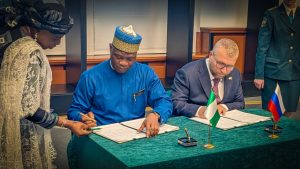
The agreement, signed by the Nigeria Customs Service (NCS) and the Federal Customs Service of the Russian Federation in Moscow on October 28, 2026, provides a comprehensive framework for closer institutional collaboration between the two countries’ customs administrations.
The development is expected to promote legitimate international trade, strengthen the security of supply chains, improve customs enforcement and create opportunities for greater operational efficiency through technology, intelligence sharing and capacity development.
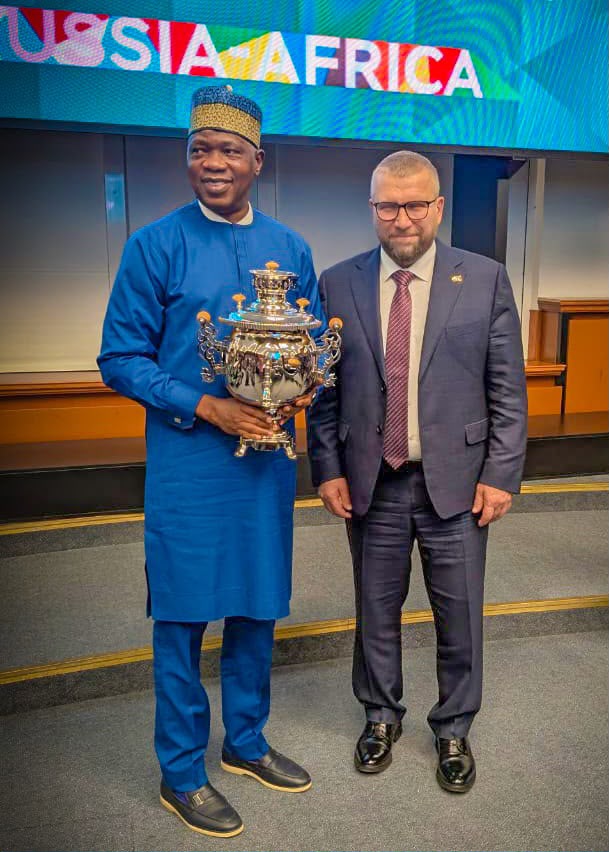
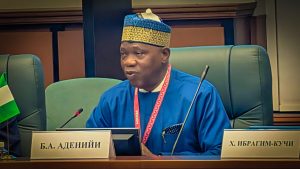
The Comptroller-General of Customs, Adewale Adeniyi, who led the Nigerian delegation to Russia, described the agreement as a strategic instrument for safeguarding economic integrity, securing international supply chains and strengthening trade governance.
Adeniyi said the signing marked the culmination of months of technical consultations, legal reviews and constructive engagements between the two customs administrations, reflecting their shared commitment to modernising customs operations and addressing emerging challenges in international commerce.
He explained that the agreement would provide the necessary institutional and legal framework for both countries to expand cooperation in customs administration, exchange relevant information and develop practical solutions to challenges affecting international trade.
According to him, Nigeria’s ongoing customs reforms have been accelerated by the introduction of a new legislative framework, particularly the Nigeria Customs Service Act 2023, which has strengthened the legal foundation for institutional transformation, technological advancement and private-sector partnerships.
The Customs chief noted that the Service had made considerable progress in digitising its operations, with declarations, payments and the submission of supporting documents increasingly handled electronically.
He said the adoption of digital systems had improved operational efficiency, reduced manual processes and enhanced the ability of the Service to facilitate legitimate trade while strengthening revenue collection.
Adeniyi stressed that revenue generation and trade facilitation should not be regarded as competing responsibilities, explaining that an efficient customs administration must be capable of achieving both objectives simultaneously.
He added that the NCS approach was consistent with the World Customs Organisation’s SAFE Framework of Standards, which promotes secure and facilitated international trade through effective customs controls and cooperation.
During bilateral discussions with the Head of the Federal Customs Service of Russia, Valery Pikalyov, Adeniyi highlighted the similarities in the reform experiences of both administrations.
He observed that the Nigerian Customs Service had evolved significantly from its colonial origins into a modern customs administration, despite operating for several years under an outdated legal framework.
He said the enactment of the Nigeria Customs Service Act 2023 had provided a stronger foundation for implementing reforms, embracing modern technologies and strengthening collaboration with stakeholders in the private sector.
One of the major areas identified for cooperation under the agreement is the exchange of experience and operational knowledge relating to the Authorised Economic Operator (AEO) programmes operated by both countries.
Adeniyi explained that the two administrations had been encouraged to undertake structured exchanges to understand their respective AEO frameworks, implementation procedures and operational experiences.
He said the long-term objective was to work towards mutual recognition and acceptance of the programmes, an arrangement that would strengthen the confidence placed in compliant traders and potentially accelerate the movement of legitimate cargo between Nigeria and Russia.
The AEO initiative is designed to recognise businesses that demonstrate compliance with customs regulations and maintain high standards of supply-chain security.
Mutual recognition, when achieved, could reduce repetitive customs checks, improve predictability in cargo clearance and lower the cost of international trade for recognised operators.
The proposed collaboration is therefore expected to provide additional opportunities for businesses operating in both countries while encouraging greater compliance with customs regulations.
Another important component of the discussions was the possibility of establishing a structured arrangement for exchanging customs statistics and trade data.
Adeniyi emphasised the importance of reliable customs information in understanding international trade patterns, identifying discrepancies and improving evidence-based decision-making.
He disclosed that Nigeria was participating in the World Customs Organisation’s data initiative, noting that the NCS was the only customs administration to have submitted its trade data to the WCO data project.
He said greater access to reliable customs statistics would enable both countries to undertake comparative analysis, understand bilateral trade movements and strengthen their capacity to identify potential irregularities in international commerce.
Responding, Pikalyov explained that the Federal Customs Service of Russia had statutory responsibility for collecting, processing, compiling and providing customs statistics generated through customs declarations.
He said Russia already maintained arrangements for exchanging customs statistics with foreign customs administrations under existing cooperation agreements.
According to him, such exchanges enable participating countries to analyse trade flows, identify discrepancies and monitor developments in bilateral commercial activities.
Pikalyov indicated that the Russian administration was willing to explore a dedicated arrangement with the Nigeria Customs Service for the exchange of statistical information, subject to the relevant legal frameworks and operational procedures.
Such an arrangement is expected to improve transparency, strengthen customs intelligence and provide both administrations with more reliable information for monitoring trade transactions.
The Customs Cooperation and Mutual Assistance Agreement establishes four principal areas of collaboration between Nigeria and Russia.
These include the simplification and streamlining of customs procedures to facilitate legitimate international trade; secure information exchange to prevent, detect, investigate and suppress customs offences; financial integrity measures targeting illicit financial flows, grey-market importations and tax evasion; and enhanced border security through joint efforts against counterfeit goods, narcotic drugs, psychotropic substances and other prohibited or hazardous materials.
The agreement also provides a legal basis for direct engagement between the two customs administrations on customs-related matters.
This includes operational assistance, the exchange of professional experiences and cooperation in personnel training and capacity development.
Through these provisions, both countries are expected to strengthen their institutional capabilities and improve their responses to transnational customs violations and other threats to international supply chains.
The Russian delegation noted that Nigeria had become one of the first sub-Saharan African countries, alongside Ethiopia and Namibia, to conclude a customs cooperation agreement with the Federal Customs Service of Russia.
The engagement took place within the framework of the Third Russia-Africa Summit, providing an opportunity to advance customs collaboration as part of the broader diplomatic and economic relationship between Nigeria and Russia.
The agreement represents an important step towards expanding institutional ties between the two countries, particularly in areas involving international trade, customs intelligence, border management and economic security.
With the signing of the CMAA, the Nigeria Customs Service is expected to deepen its engagement with its Russian counterpart through structured information exchange, technical cooperation, capacity building and the development of more efficient customs procedures.
The partnership also underscores the growing importance of international customs cooperation in addressing emerging challenges associated with global trade, including illicit financial transactions, smuggling, counterfeiting and the movement of prohibited goods.
Ultimately, the successful implementation of the agreement could improve the business environment for legitimate traders, strengthen revenue protection, promote transparency and contribute to safer and more efficient international supply chains.
Both administrations are now expected to translate the provisions of the agreement into practical areas of collaboration that will deliver measurable benefits to their respective economies and strengthen the broader Nigeria-Russia relationship.