

By Julius Peter,Abuja
The Nigerian Upstream Petroleum Regulatory Commission (NUPRC) has screened 28 oil and gas wells around reported gas seepage locations in Bille Community, Degema Local Government Area of Rivers State, identifying three as very high risk, 10 as high risk and 15 as medium to low risk.
The Commission disclosed this while providing an update on its ongoing investigation into the source and possible causes of gas seepage reported in the oil-producing community.
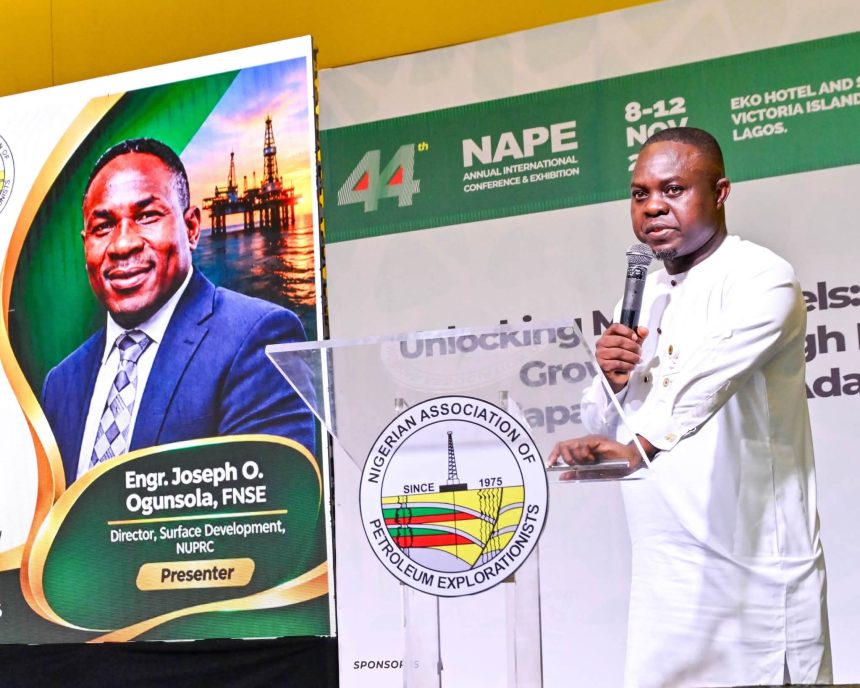
The findings were presented on Thursday during a special technical paper session at the 44th Annual International Conference and Exhibition of the Nigerian Association of Petroleum Explorationists (NAPE), hosted by the NUPRC.
The technical paper, titled, “Unravelling Gas Seepage and Bubbling in Nigeria: The Integrated Study Approach Towards Source Attribution,” examined the scientific and technical processes being deployed to determine the origin of the gas emissions and establish possible links with existing oil and gas wells in the affected area.
Speaking during the presentation, the Director of Subsurface Development at the NUPRC, Engr. Joseph Ogunsola, FNSE, described gas seepage as a relatively new phenomenon in Nigeria’s petroleum terrain, explaining that the development prompted the Commission to constitute a technical investigation team to examine the situation and determine what lies beneath the reported bubbles.
Ogunsola, who was represented by the Senior Manager, Onshore Frontier Development Drilling, Dr. Azibamikiomam John-Adumo, said the Commission had commenced an integrated technical assessment to establish the source of the seepage and understand the geological and structural conditions responsible for the occurrence.
He disclosed that preliminary studies conducted in one of the affected locations had provided useful insights into the underlying structural features associated with the seepage, thereby helping investigators to better understand the potential pathways through which gas could migrate to the surface.

According to him, one of the identified wells was originally drilled in search of crude oil but was subsequently shut down after gas, rather than oil, was encountered.
He explained that the well is located approximately 2.5 kilometres from the reported gas seepage location, making it one of the facilities being considered in the ongoing investigation.
The NUPRC representative, however, stressed the importance of further technical examination to determine whether the gas emissions originated from the particular well or other nearby oil and gas wells.
The screening of the 28 wells represents an important aspect of the Commission’s efforts to identify potential sources of the seepage, assess associated risks and establish the relationship between the reported surface emissions and subsurface petroleum activities.
The classification of three wells as very high risk and 10 as high risk highlights the need for sustained technical scrutiny, while the remaining 15 wells have been categorised as medium to low risk based on the screening exercise.
The Commission’s investigation is expected to provide a clearer understanding of the seepage phenomenon through the integration of geological, geophysical, drilling and subsurface engineering data.
The technical study also underscores the importance of source attribution in determining whether naturally occurring geological processes, abandoned or shut-in wells, or other petroleum-related infrastructure could be contributing to the gas emissions.
For communities such as Bille, where the reported seepage has raised concerns, establishing the actual source of the gas is critical to determining the appropriate regulatory, environmental and safety measures.
The NUPRC’s intervention also reflects its responsibility to monitor upstream petroleum operations, ensure compliance with industry standards and address potential risks associated with oil and gas exploration and production activities.
As investigations continue, the Commission is expected to rely on further technical assessments to establish the precise origin of the seepage and determine the necessary steps to address any identified threats.
The outcome of the investigation will be significant in guiding appropriate interventions, protecting host communities and strengthening environmental and operational safety across Nigeria’s petroleum industry.