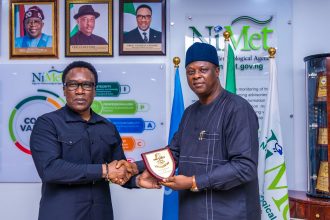


By Julius Peter, Abuja
The Minister of Defence, General Christopher Gwabin Musa (rtd.), OFR, has identified sustainable national security, effective governance and credible institutions as critical foundations for Nigeria’s ambition to become a trillion-dollar economy.
Musa said national security must be regarded not merely as a military responsibility but also as a major driver of economic growth, investment, industrial development and national prosperity.
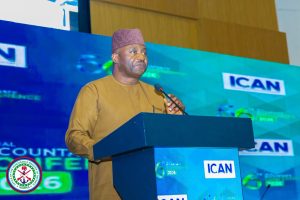
The minister stated this while delivering a keynote address titled “National Security: Pathway to a Trillion-Dollar Economy” at the 56th Annual Accountants’ Conference of the Institute of Chartered Accountants of Nigeria (ICAN), held at the Bola Ahmed Tinubu International Conference Centre, Abuja.
Addressing professional accountants, policymakers and business leaders at the conference, the defence minister stressed that a secure environment was essential for protecting human capital, safeguarding critical infrastructure and creating the confidence investors need to commit resources to the Nigerian economy.
According to him, no country can achieve sustainable economic expansion without adequately addressing the security challenges that threaten lives, businesses, public infrastructure and productive activities.
“No investor commits capital where lives and assets are not safe, and no economy grows beyond the reach of its security,” Musa said.
He explained that security and economic development were closely interconnected, noting that insecurity could discourage investment, disrupt commercial activities, weaken agricultural production and undermine the confidence required for long-term economic planning.
The minister maintained that Nigeria’s ambition to build a trillion-dollar economy would require deliberate efforts to create a stable environment in which businesses could operate, entrepreneurs could thrive and investors could confidently deploy their capital.
Musa urged Nigerians to adopt a broader understanding of national security, explaining that its importance extended beyond conventional military operations and law enforcement.
He said national security should encompass the protection of economic assets, the stability of communities, the preservation of critical infrastructure and the creation of conditions that support productive economic activities.
According to him, security agencies must work alongside other government institutions, financial professionals and private-sector stakeholders to address the threats that undermine national development.
He noted that the protection of lives and property remained fundamental to economic progress, particularly in a country seeking to expand its industrial base, strengthen agriculture, attract foreign investment and create employment opportunities for its growing population.
The minister’s position underscored the need for a coordinated national approach in which security institutions and economic managers work together to achieve sustainable development.
He explained that a secure operating environment would enable farmers to cultivate their land, manufacturers to sustain production, traders to move goods safely and investors to pursue long-term business opportunities without undue fear of disruption.
Acknowledging Nigeria’s continuing security challenges, the defence minister identified attacks on communities, highway kidnappings and isolated insurgent activities among the threats requiring sustained attention.
He, however, assured Nigerians that ongoing operations by the Armed Forces of Nigeria were making progress towards restoring stability across the country’s economic corridors, agricultural belts and industrial zones.
Musa said the military remained committed to addressing security threats and creating the conditions necessary for economic activities to flourish.
He emphasised that restoring peace to vulnerable communities and protecting strategic economic locations were essential to strengthening public confidence and supporting national development.
The minister’s remarks highlighted the relationship between security operations and the broader economic objectives of the Federal Government, particularly the need to protect the areas and infrastructure that support production, transportation, trade and investment.
He also stressed the importance of sustained collaboration among security agencies and other relevant institutions to address emerging threats and consolidate gains in areas affected by insecurity.
Aligning the Defence Ministry’s approach with President Bola Ahmed Tinubu’s Renewed Hope Agenda, Musa outlined five strategic priorities through which improved security could contribute to Nigeria’s macroeconomic expansion.
The priorities include the protection of strategic economic assets, promotion of good governance and human capital development, defence financial discipline, cybersecurity and financial intelligence, as well as the development of domestic defence industrial capacity.
On the protection of strategic economic assets, the minister stressed the importance of securing infrastructure and facilities that contribute significantly to national productivity.
Such assets are vital to the country’s economic activities, and their protection would help minimise disruptions, preserve public investments and improve the operating environment for businesses.
He also highlighted good governance and human capital development as important components of the country’s security and economic development strategy.

According to him, strengthening institutions, developing professional capacity and promoting accountability would contribute to a more effective security architecture while supporting broader national objectives.
The minister further emphasised the need for financial discipline in defence expenditure, noting the importance of responsible resource management in achieving institutional efficiency and national security objectives.
He identified cybersecurity and financial intelligence as increasingly important areas requiring attention, particularly as financial transactions, public administration and economic activities become more dependent on digital systems.
He also underscored the importance of building domestic defence industrial capacity, a strategy that could strengthen Nigeria’s ability to develop indigenous solutions, support local industries and reduce dependence on foreign sources for certain defence-related products and services.
The five priorities, he explained, formed part of a broader approach to ensuring that security investments deliver benefits not only to the military but also to the wider economy.
In a significant move to strengthen institutional collaboration, Musa announced plans to establish a Joint Ministry of Defence–ICAN Implementation Committee to develop frameworks for cooperation between the two institutions.
The initiative followed collaborative proposals presented by the President of ICAN, Hajia Queensley Seghosime, mni, FCA.
The proposed partnership is expected to focus on specialised training in public financial management and accounting standards for personnel of the Armed Forces of Nigeria.
It will also promote joint training programmes in forensic accounting and financial intelligence, particularly in efforts to combat terrorism financing and strengthen the financial integrity of public institutions.
Another key component of the collaboration is the enhancement of corporate governance practices and the development of welfare schemes for military veterans.
The proposed committee is expected to provide a platform for both institutions to identify areas of mutual interest, develop practical implementation frameworks and strengthen professional capacity in financial management and accountability.
The partnership reflects the growing recognition that tackling security challenges requires expertise from different professional fields, including accounting, auditing, financial investigation and institutional management.
Through the proposed training initiatives, military personnel are expected to benefit from specialised knowledge that could improve financial administration, strengthen internal controls and support the effective management of public resources.
Similarly, the focus on forensic accounting and financial intelligence is intended to strengthen the capacity of relevant institutions to identify suspicious financial activities and address the funding mechanisms that sustain terrorism.
The inclusion of veterans’ welfare and corporate governance also signals the importance of institutional accountability and support for personnel who have served the country.
The minister’s engagement with ICAN also drew attention to the importance of professional financial management in the administration of the defence sector.
He commended the institute for its sustained commitment to fiscal discipline, transparency and professional accounting standards.
Musa stressed that the effective management of public resources was essential to strengthening institutional capacity and ensuring that government spending translated into measurable outcomes.
He noted that security institutions required adequate resources to fulfil their responsibilities, but such resources must also be managed efficiently and transparently to achieve their intended objectives.
The proposed collaboration with ICAN is therefore expected to provide opportunities for strengthening financial management practices, improving professional competence and promoting accountability within the defence sector.
For a country pursuing ambitious economic growth targets, effective public financial management remains important in ensuring that limited resources are directed towards priority areas and used to deliver sustainable results.
The minister’s emphasis on financial discipline also reinforced the need for closer cooperation between security institutions and professional bodies in addressing complex national challenges.
Nigeria’s ambition to become a trillion-dollar economy requires sustained growth across several sectors, including agriculture, manufacturing, energy, infrastructure, technology and services.
However, insecurity can undermine progress in these sectors by disrupting production, restricting movement, damaging infrastructure and increasing the risks associated with investment.
By linking national security with economic transformation, Musa stressed the need for security policies that support the country’s wider development priorities.
A stable environment would provide businesses with greater certainty, encourage investment in productive sectors and help communities participate more fully in economic activities.
Similarly, stronger institutions, responsible financial management and improved cybersecurity could contribute to public confidence and protect the systems upon which modern economic activities depend.

The proposed partnership between the Defence Ministry and ICAN represents an effort to bring professional expertise into the pursuit of these objectives, particularly in the areas of financial accountability, forensic investigation and institutional governance.
Nevertheless, achieving the desired outcomes will require sustained implementation, effective coordination among relevant institutions and measurable improvements in the country’s security environment.
The protection of lives and property, alongside the strengthening of public institutions, remains central to creating the conditions necessary for sustainable economic growth.
Musa reiterated that national security and professional financial management must work together to support Nigeria’s long-term economic ambitions.
He maintained that a secure environment, backed by effective governance, credible institutions and responsible management of public resources, would provide a solid foundation for economic prosperity.
The minister’s address at the ICAN conference highlighted the importance of viewing security as a shared national responsibility that extends beyond the military to include government institutions, professional organisations, businesses and other stakeholders.
As Nigeria pursues its trillion-dollar economy ambition, the challenge will be to translate security strategies and institutional partnerships into lasting improvements in public safety, investor confidence, economic productivity and national development.
Musa concluded that combining a secure environment with professional financial management would lay a strong foundation for Nigeria’s long-term economic prosperity.