
By Julius Peter, Abuja
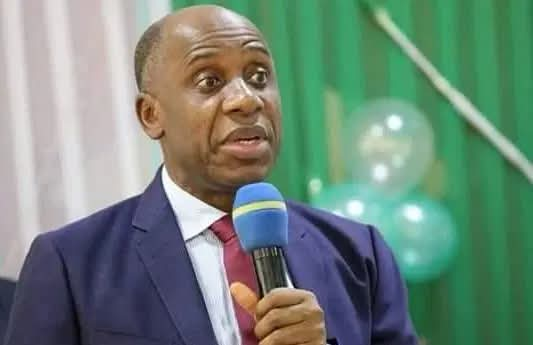
The Vice-Presidential candidate of the African Democratic Congress (ADC), Chibuike Rotimi Amaechi, has challenged President Bola Ahmed Tinubu to reduce the pump price of petrol to ₦600 per litre, saying he would campaign for the President in the 2027 election if such a reduction is achieved.
Amaechi, who is the running mate to former Vice-President Atiku Abubakar on the ADC presidential ticket, made the statement while appearing on Channels Television’s Politics Today on Friday, October 2, 2026.
The former Rivers State governor was reacting to the economic policies of the Tinubu administration and the President’s recent Independence Day address, in which Tinubu said Nigeria was entering an “age of prosperity.”
Amaechi questioned whether Nigerians were already experiencing a reduction in the cost of living, particularly in the prices of transportation, food and other essential commodities.
He argued that the impact of government policies should be measured by their effect on the daily lives of Nigerians, especially the cost of basic necessities.
According to him, a significant reduction in the price of petrol would provide a practical indication that the government’s economic reforms were producing tangible benefits for citizens.
Amaechi said he was prepared to personally visit a filling station to verify whether petrol had been reduced to ₦600 per litre.
“I will go tomorrow morning to the petrol station to buy fuel. I will go myself. If fuel has come down to ₦600, I will campaign for President Tinubu,” he said, according to reports of the interview.
He subsequently raised the stakes, saying that if the price actually fell to the stated level, he would withdraw from the ADC ticket and campaign for Tinubu.
“If you doubt me, come with your camera to my house, and I will go to the filling station and buy fuel, and I, Chibuike Rotimi Amaechi, will withdraw as a vice-presidential candidate of Atiku and campaign for President Tinubu, if it has come down,” he said.
Amaechi’s comments come against the backdrop of continuing political debate over petrol pricing, subsidy policy and the broader economic reforms introduced by the Tinubu administration.
President Tinubu removed the petrol subsidy after assuming office in May 2023, with the government maintaining that the policy was necessary to reduce the fiscal burden associated with subsidy payments and redirect resources towards development.
The administration has also rejected calls for a return to the former petrol subsidy regime.
In September, Tinubu said Nigeria could not return to what he described as the “ruinous petrol subsidy regime,” arguing that the country should instead expand alternative energy sources and transportation systems, particularly Compressed Natural Gas (CNG) and electric-powered transport.
The President said his administration had spent the past three years developing a CNG transportation ecosystem and that more than 120,000 vehicles had been converted, alongside more than 400 certified conversion centres and over 90 CNG refuelling stations.
Tinubu also directed state governments to work towards reducing transportation costs, with the Federal Government targeting measurable reductions in fares through the National Affordable CNG Transit Programme.
The President cited examples of reduced transport fares in some states following the deployment of CNG and electric-powered vehicles.
Meanwhile, the debate over petrol prices has featured prominently in preparations for the 2027 presidential election.
Atiku Abubakar, the ADC presidential candidate and Amaechi’s running mate, has proposed a production subsidy for locally refined petrol as part of measures he says could reduce the cost of petroleum products and ease the burden on Nigerians.
The Presidency has questioned the legal, fiscal and practical basis of Atiku’s proposal, while the Nigerian Midstream and Downstream Petroleum Regulatory Authority has maintained that petrol pricing is generally subject to market forces under the Petroleum Industry Act.
Amaechi, however, has continued to criticise the current economic situation, arguing that Nigerians are yet to see sufficient reductions in the prices of essential goods and services.
His latest statement introduces an unusual political condition ahead of the 2027 election: that a reduction of petrol to ₦600 per litre would be sufficient for him to abandon his position on the ADC ticket and campaign for the incumbent President.
Amaechi’s declaration comes at a time when the price of petrol remains a major issue in Nigeria’s political and economic discourse, with its impact extending to transportation, food distribution, manufacturing and household expenses.
The statement is also likely to draw attention because Amaechi is currently part of the opposition presidential ticket seeking to challenge the Tinubu administration in the 2027 election.
As political parties intensify preparations for the election, the cost of living, petrol pricing, subsidy policy, transportation costs and the broader direction of economic reforms are expected to remain central issues in the campaign debate.