
By Julius Peter
President Bola Ahmed Tinubu has reaffirmed his administration’s commitment to strengthening Nigeria’s intelligence architecture through technological innovation, strategic partnerships and enhanced inter-agency collaboration to tackle the country’s evolving security challenges.
The President also disclosed that Nigeria had recorded significant progress in the fight against terrorism, revealing that four out of eight identified senior terrorist leaders had either been killed or arrested through sustained and coordinated security operations.
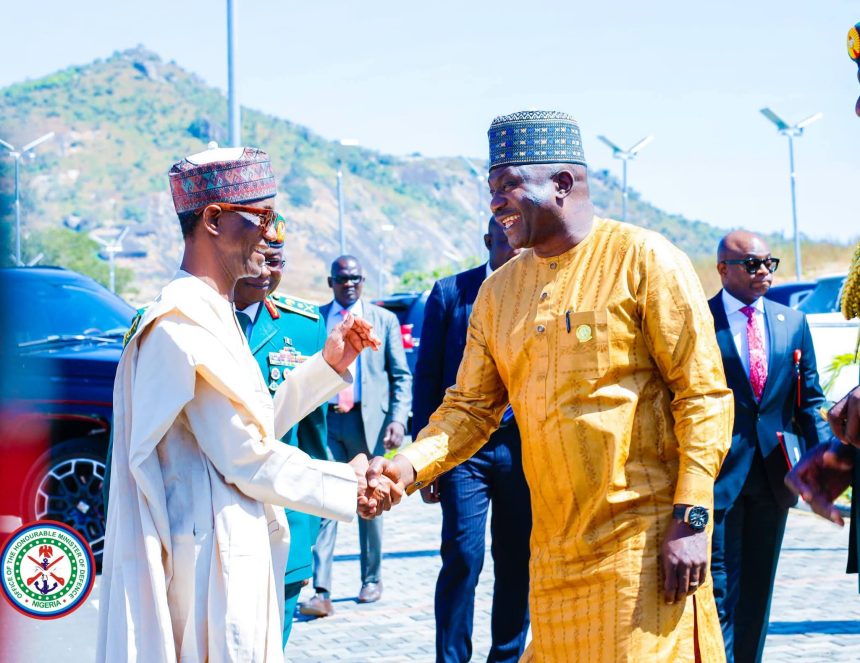
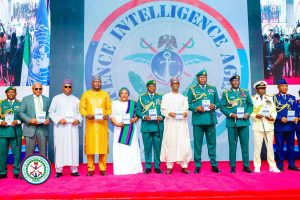
Tinubu made this known on Monday, November 16, 2026, while delivering an address at the 2026 Chief of Defence Intelligence (CDI) Annual Conference held at the Armed Forces Event Centre, Asokoro, Abuja.
The President, who was represented by the National Security Adviser (NSA), Mallam Nuhu Ribadu, also revealed that the country had recorded more than 1,000 convictions and over 2,000 terrorism-related trials within the last two years.
He described the developments as evidence of the Federal Government’s determination to dismantle terrorist networks, strengthen the country’s security institutions and ensure that individuals involved in terrorism are brought to justice.
The conference, with the theme, “Optimizing Intelligence through Technological Innovations and Strategic Partnerships in a Complex Security Environment,” brought together senior military officers, security stakeholders, members of the diplomatic community and other strategic partners to examine emerging security threats and explore innovative approaches to national security.
Tinubu described the conference as timely, noting that threats to Nigeria’s national security had become increasingly complex, interconnected and technology-driven.
He identified terrorism, banditry, kidnapping, cyber threats and transnational organised crime as major challenges requiring integrated, proactive and intelligence-driven responses.
According to him, addressing the evolving security threats requires reliable intelligence capable of supporting timely strategic decisions and improving the operational effectiveness of security agencies.
While commending the security agencies for their achievements, the President charged them to consolidate the gains by sustaining pressure on terrorists and criminal networks, protecting vulnerable communities and strengthening intelligence operations, particularly in the North-Central region.
He stressed that intelligence must remain at the centre of national security planning, operational coordination and strategic decision-making.
The President also emphasised the importance of protecting Nigeria’s critical national assets, particularly energy infrastructure, explaining that improved security operations and intelligence coordination were necessary to safeguard the nation’s energy resources and revenue.
On the application of technology in intelligence gathering and security operations, Tinubu identified artificial intelligence, machine learning, cyber capabilities and unmanned systems as essential tools for detecting emerging threats, mapping criminal networks and generating early-warning intelligence.
He, however, cautioned that information generated through artificial intelligence must be properly verified and subjected to accountable human judgement.
He further stressed that data protection and cybersecurity must remain central to the country’s intelligence systems to prevent the misuse of sensitive information and protect national security infrastructure.
On strategic partnerships, the President called for stronger cooperation among the Armed Forces, Defence Intelligence agencies, Department of State Services (DSS), National Intelligence Agency (NIA), Nigeria Police Force, Nigeria Security and Civil Defence Corps and other relevant security institutions.
He disclosed that Nigeria was also strengthening its security relationships with international partners, including the United States, France, the United Kingdom, China, the United Arab Emirates, Türkiye and neighbouring African countries.
According to him, the partnerships would focus on intelligence sharing, capacity building, training and technological cooperation, while ensuring that Nigeria’s sovereignty and national interests remained paramount.
Tinubu further disclosed that his administration was pursuing comprehensive national security reforms to improve the country’s response to emerging threats.
As part of the initiative, he said he had directed the Special Adviser on Homeland Security, Major General A. A. Tarfa, to coordinate the development of a comprehensive national threat assessment and a five-year rolling strategic defence operations plan.
He explained that the initiative was expected to provide a clearer framework for identifying security threats, strengthening operational coordination and improving the country’s long-term defence planning.
The President urged participants at the conference to ensure that their deliberations produced practical recommendations with clearly defined responsibilities, timelines and measurable outcomes.
He maintained that the ultimate test of the country’s security policies and intelligence operations must be their ability to make Nigerian communities safer and protect citizens from threats to their lives and property.
In his goodwill message, the Minister of Defence, General Christopher Gwabin Musa (Rtd), OFR, also underscored the importance of intelligence-driven military operations, technological advancement and stronger collaboration among security institutions.
Musa noted that Nigeria’s contemporary security challenges required security agencies to embrace modern intelligence capabilities, improve information sharing and strengthen their capacity to respond effectively to emerging threats.
He particularly called for increased investment in indigenous technical expertise and stronger partnerships with research institutions and technology companies.
According to the Defence Minister, Nigeria must develop its own technological capabilities to reduce dependence on foreign systems and strengthen operational self-reliance in the defence and security sector.
He reiterated the Federal Government’s commitment to providing the Armed Forces and intelligence community with the necessary support through improved operational capabilities, strategic partnerships and the development of indigenous defence technology.
The Minister stressed that building a stronger national security system required sustained investment in technology, human capacity and institutional cooperation.
Earlier in his welcome address, the Chief of Defence Intelligence, Lieutenant General Emmanuel Undiandeye, welcomed participants to the 2026 CDI Annual Conference, describing the gathering as an important platform for strengthening intelligence cooperation and developing innovative responses to Nigeria’s complex security environment.
Undiandeye recalled that the conference, previously known as the Defence Intelligence Agency Conference, had continued to provide an opportunity for security stakeholders to examine emerging threats and explore ways of improving intelligence operations through technological innovation and strategic partnerships.
He emphasised the need for collective commitment among security institutions and strategic partners, stressing that intelligence must remain central to national security planning and operational decision-making.
The Chief of Defence Intelligence also acknowledged the contributions of members of the diplomatic community and other stakeholders to Nigeria’s security efforts.
He expressed confidence that the conference would generate practical recommendations capable of strengthening the country’s intelligence architecture and improving the capacity of security institutions to address emerging threats.
The 2026 CDI Annual Conference is expected to provide an avenue for the exchange of professional experiences, deepening of strategic partnerships and advancement of technology-driven intelligence solutions in support of Nigeria’s national security objectives.
The conference comes amid the Federal Government’s continued efforts to strengthen the country’s security framework through improved intelligence gathering, coordinated military operations, international cooperation and technological innovation.
With the latest disclosures on terrorism-related convictions and the neutralisation or arrest of senior terrorist leaders, the administration is seeking to consolidate existing security gains while developing a more coordinated and technology-driven approach to tackling threats across the country.