

By Julius Peter, Abuja
The European Union (EU) has pledged €20 million in defence assistance to the Armed Forces of Nigeria under the European Peace Facility, as part of efforts to strengthen security cooperation between Nigeria and the EU and support ongoing operations against terrorism and other security threats.
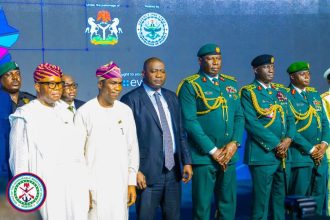
The proposed assistance was discussed when the EU Ambassador to Nigeria and the Economic Community of West African States (ECOWAS), Gautier Mignot, led a delegation on a working visit to the Minister of Defence, General Christopher Gwabin Musa (Rtd), OFR, at Ship House, Abuja.
The meeting focused on critical bilateral defence agreements, a review of existing security cooperation and the modalities for delivering the EU’s support to the Nigerian military.
Ambassador Mignot commended the Defence Minister for his efforts towards improving the country’s security situation and also invited him to attend a meeting of defence ministers in Brussels later in the year.
The proposed €20 million assistance is expected to further strengthen the partnership between Nigeria and the European Union in addressing security challenges and supporting efforts to promote peace and stability.
Speaking during the engagement, General Musa expressed appreciation to the EU for its consistent support for Nigeria’s security objectives and development aspirations.
He reaffirmed President Bola Ahmed Tinubu’s commitment to ensuring the safety of Nigerians and creating an environment conducive to national development.
The minister noted that relative peace was gradually returning to parts of the country as a result of the sustained efforts of the Armed Forces and other security agencies.
He, however, acknowledged that kidnapping along major highways and attacks on isolated communities remained persistent security concerns requiring continued operational attention.
According to him, the government is taking steps to strengthen the operational capacity of the military and other security agencies to address these threats.
Musa disclosed that Nigeria was expecting the delivery of 10 attack helicopters, unmanned aerial vehicles (UAVs) and other critical military equipment through the efforts of President Tinubu.
The expected platforms and other operational enablers are intended to strengthen the country’s capacity to respond to security threats and support military operations across affected areas.
The minister’s remarks underscored the importance of sustained international cooperation, improved military capabilities and the provision of appropriate equipment in addressing Nigeria’s complex security challenges.
General Musa also drew attention to the security implications of the shrinking Lake Chad Basin, noting that more than 50 million people depend on the region for their livelihoods and economic activities.
He warned that the environmental and socioeconomic pressures affecting the basin could become a potential source of instability if not adequately addressed.
The region has faced multiple challenges, including insecurity, displacement, pressure on livelihoods and the activities of armed groups. These difficulties have increased the need for coordinated regional efforts to protect communities and restore stability.
The minister stressed that denying terrorists access to operational bases and hiding places on the islands of Lake Chad remained a major priority for the Multinational Joint Task Force (MNJTF).
The MNJTF brings together countries in the Lake Chad region to coordinate efforts against terrorism and other cross-border security threats.
Musa’s position highlighted the importance of continued cooperation among Nigeria and its regional partners, particularly in tackling threats that extend beyond national borders.
He emphasised that sustained military pressure, intelligence sharing and effective regional coordination would remain essential to preventing terrorist groups from exploiting remote areas and vulnerable communities.
The EU’s proposed assistance is expected to complement broader international efforts to strengthen security institutions and support regional stability, subject to the agreed implementation arrangements.
The Defence Minister also called for greater attention to victims under the Disarmament, Demobilisation and Reintegration (DDR) Programme.
He stressed that the programme should prioritise victims of insecurity, including military personnel affected by the consequences of conflict.
The emphasis on victims reflects the need to complement military operations with appropriate support for those who have suffered from violence and prolonged insecurity.
A comprehensive approach to peace and security, according to the minister’s position, should extend beyond defeating armed groups to include the welfare, rehabilitation and reintegration of affected individuals.
The inclusion of affected military personnel also highlights the importance of recognising the sacrifices of service members involved in operations to protect the country.
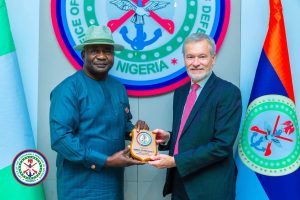
In his response, Ambassador Mignot disclosed that an EU technical delegation would visit Abuja in November to discuss and agree on the details for delivering the proposed assistance.
The planned visit is expected to provide an opportunity for both sides to work out the practical arrangements surrounding the support under the European Peace Facility.
The discussions will build on the existing relationship between Nigeria and the EU and seek to advance cooperation in addressing security challenges.
The ambassador also commended the recent conference of past and serving MNJTF force commanders, which was attended by representatives of the African Union and the Lake Chad Basin Commission.
The conference brought attention to the importance of institutional cooperation and the exchange of operational experience among military leaders involved in efforts to stabilise the Lake Chad region.
The participation of the African Union and the Lake Chad Basin Commission further underscored the regional and continental dimensions of the security challenges confronting countries around the basin.
The proposed €20 million assistance represents a further step in Nigeria’s engagement with international partners on defence and security matters.

Nigeria continues to confront a range of security threats, including terrorism, kidnapping and attacks on vulnerable communities, making international cooperation an important element of its wider security strategy.
The engagement between the Defence Minister and the EU ambassador provided an opportunity to review areas of mutual interest, assess existing cooperation and discuss practical measures for supporting the Nigerian Armed Forces.
The forthcoming technical delegation’s visit to Abuja is expected to advance discussions on the delivery arrangements, while the planned meeting of defence ministers in Brussels could provide another platform for strengthening bilateral and wider regional security cooperation.
Both engagements are expected to contribute to ongoing efforts to improve coordination, build operational capacity and promote lasting peace and stability in Nigeria and the Lake Chad Basin.
The Ministry of Defence disclosed the development in a press release signed by Leah Katung-Babatunde, Special Assistant (Media) to the Honourable Minister of Defence, on October 17, 2026.