
By Julius Peter, Abuja
The Minister of Defence, Gen. Christopher Musa, has described the tenure of former Chief of Army Staff (COAS), Lt. Gen. Tukur Yusufu Buratai (rtd.), as a period characterised by deliberate reforms in military training, equipment, personnel welfare and professionalism.
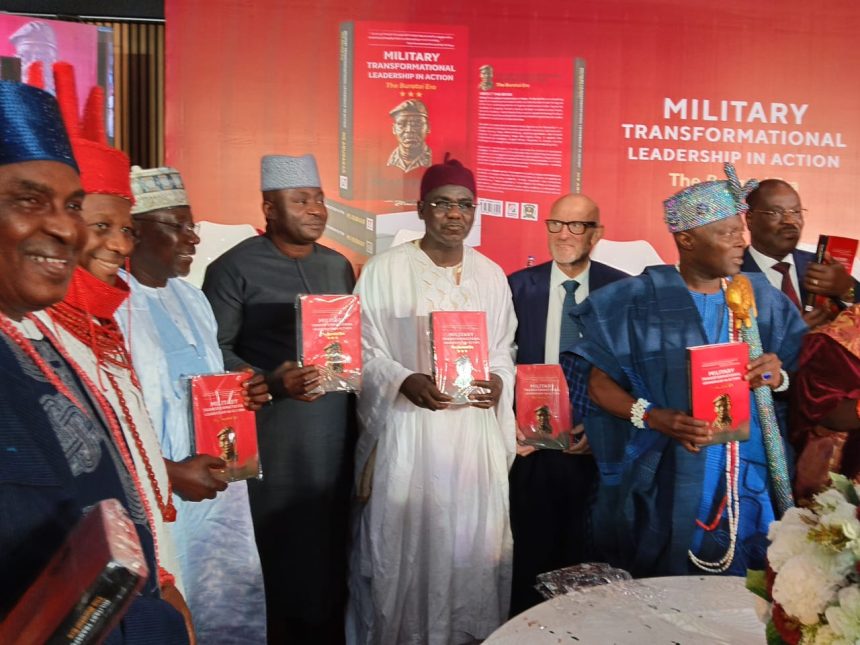
Musa made the remarks on Wednesday in Abuja at the public presentation of a book titled Military Transformational Leadership in Action: The Buratai Era, which examines the leadership, reforms and institutional changes introduced during Buratai’s tenure as Chief of Army Staff between 2015 and 2021.
The minister said Buratai led the Nigerian Army at a particularly challenging period in the nation’s history, when the military was confronted with complex security threats and the need to strengthen its operational capabilities.
According to him, Buratai’s leadership went beyond the conduct of military operations, as his tenure also focused on institutional reforms designed to improve the Army’s capacity, professionalism and long-term effectiveness.
Musa described Buratai’s tenure as the 20th Chief of Army Staff as a period marked by deliberate efforts to improve training, equipment, welfare and professionalism within the Nigerian Army.
He said the reforms introduced during the period demonstrated how institutional transformation could be achieved through purposeful leadership, discipline and policies capable of outliving individual office holders.
The Defence Minister also disclosed that he was a direct beneficiary of Buratai’s leadership, recalling the former Army chief’s commitment and dedication to addressing the security challenges confronting the country.
Musa particularly commended Buratai for identifying and nurturing military officers who subsequently rose to occupy senior positions within the Armed Forces.
He noted that several officers who served under the former Army chief later became service chiefs and senior military officers, describing the development as an indication of the importance attached to leadership development during Buratai’s tenure.
The minister also recalled Buratai’s commitment to troops deployed in the North-East, particularly his frequent visits to Maiduguri and his involvement in frontline operations.
According to him, Buratai’s presence and engagement with troops demonstrated his determination to understand operational realities and provide support to personnel confronting insurgency in the theatre.
The minister’s remarks formed part of tributes paid to the former Army chief during the presentation of the book, which seeks to document the reforms and leadership decisions associated with Buratai’s years as Army chief.
The publication, authored by Dr. M.S. Abubakar, examines Buratai’s leadership approach, institutional reforms, welfare initiatives, military training, equipment development and counter-insurgency efforts during the period.
The author said the book was the product of about 10 years of research, interviews and documentation of Buratai’s leadership experience.
Abubakar stressed that the publication was not intended merely as a praise document but as a study of military leadership and the implementation of reforms during a period of significant security challenges.
Among the initiatives highlighted in the book are welfare programmes, the establishment of the Nigerian Army University Biu, the development of resource centres, military manufacturing initiatives and other institutional reforms undertaken during Buratai’s tenure.
He said documenting the experiences of military leaders was important to preserving institutional memory and ensuring that lessons from previous security challenges remained available to future generations of military and civilian leaders.
The author warned that failure to properly document the experiences of the Armed Forces could result in the loss of valuable institutional knowledge and deny future commanders the opportunity to learn from past successes, challenges and decisions.
The event also featured contributions from other prominent Nigerians, including the Emir of Kano, Muhammadu Sanusi II, and Senator Ali Ndume.
Sanusi said Nigeria’s insecurity could not be addressed through military operations alone, arguing that the roots of insecurity were connected to wider social, economic and political challenges.
The Emir stressed the importance of strengthening institutions and ensuring that security agencies, the judiciary, the media and other national institutions remained professional and focused on their constitutional responsibilities.
He also called for greater attention to education, employment opportunities and human development, noting that economic hardship and lack of opportunities could increase the vulnerability of young people to criminal and extremist groups.
Sanusi further stressed the need for long-term national planning, saying security policies should be developed beyond electoral cycles and should not be undermined by ethnic, religious or political divisions.
Ndume, who represented Borno South in the National Assembly, also commended Buratai for his service to the country and called for collective responsibility in addressing Nigeria’s security and development challenges.
He argued that politicians should not be solely blamed for the country’s problems, saying citizens and leaders alike had responsibilities in building a more secure and prosperous Nigeria.
Also speaking at the event, former Commander of the Vatican Gendarmerie, Lt. Gen. Domenico Giani (rtd.), said contemporary security challenges required cooperation among countries and institutions.
Giani said terrorism, organised crime and emerging threats such as cybercrime could not be effectively tackled through military action alone.
He stressed the importance of strengthening institutions, protecting civilians, building public trust and ensuring accountability, transparency and integrity within security institutions.
He also called for greater attention to education, justice, economic opportunities, humanitarian assistance and interfaith dialogue as part of broader efforts to prevent conflict and rebuild communities affected by violence.
The presentation attracted senior military officers, traditional rulers, diplomats, academics, researchers and other stakeholders in Nigeria’s security sector.
The event provided an opportunity for participants to reflect on the evolution of Nigeria’s military leadership and the institutional reforms undertaken during Buratai’s tenure.
Buratai served as Chief of Army Staff from July 2015 until January 2021, during a period dominated by counter-insurgency operations in the North-East and other internal security challenges.
The discussions surrounding his tenure also come at a time when the Nigerian Armed Forces continue to face evolving security threats and growing demands for improved professionalism, modern equipment, personnel welfare and institutional capacity.
The Defence Minister’s assessment therefore placed particular emphasis on the need for reforms within the Armed Forces to be sustained beyond individual commanders, while the book presentation highlighted the importance of preserving institutional memory and learning from previous military experiences.
The presentation of Military Transformational Leadership in Action: The Buratai Era thus provided a platform for examining not only the former Army chief’s leadership record but also the broader question of how military reforms can be institutionalised and sustained in Nigeria’s continuing efforts to strengthen national security.