

By Julius Peter
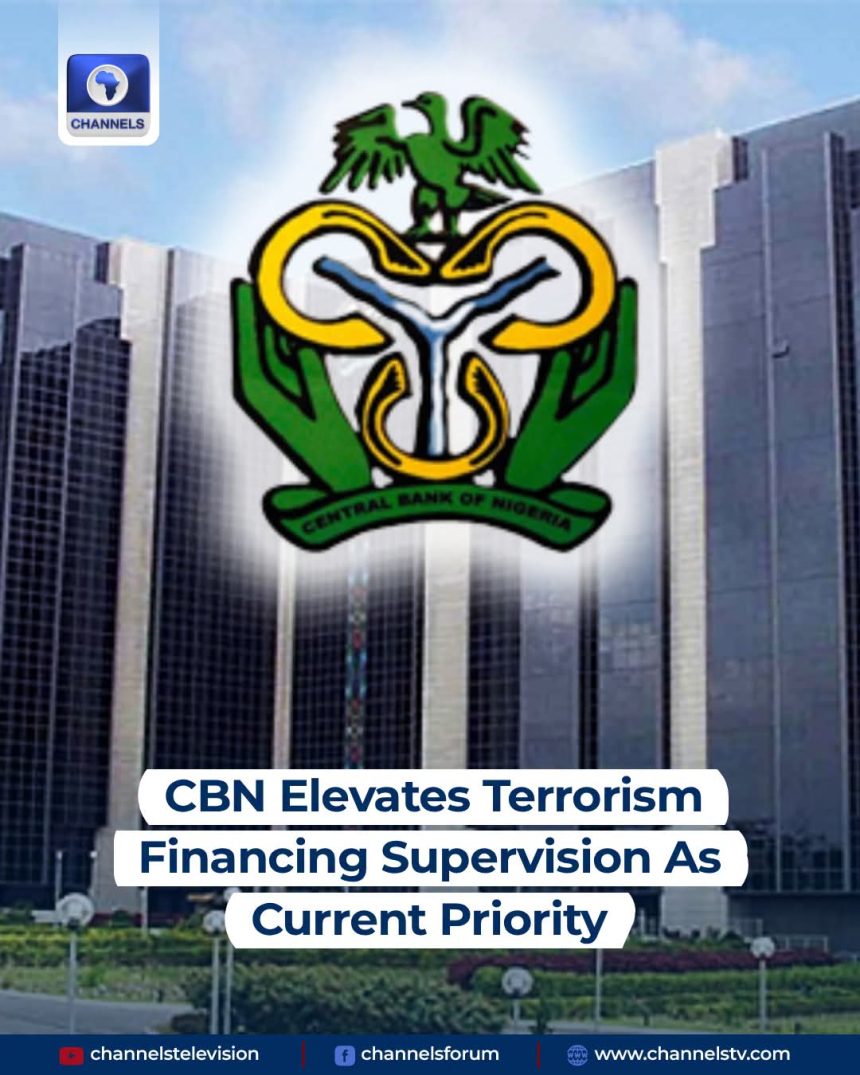
The Central Bank of Nigeria (CBN) has intensified its supervisory focus on terrorism financing as part of measures to prevent the nation’s financial system from being exploited by illicit actors.
The apex bank said the renewed focus forms part of its broader efforts to strengthen the integrity, resilience and security of Nigeria’s financial system and ensure that financial institutions do not become channels for the movement or concealment of funds linked to terrorism and other illicit activities.
According to the CBN, terrorism financing has become a current supervisory priority, underscoring the importance of robust controls within the financial sector to identify, prevent and disrupt activities that could facilitate terrorism or other threats to national and international security.
The bank noted that the initiative also supports Nigeria’s domestic and international cooperation in the fight against terrorism financing and counter-proliferation financing.
The renewed supervisory attention is expected to reinforce the responsibility of financial institutions to maintain effective systems for detecting suspicious financial activities and ensuring compliance with applicable laws and regulatory requirements.
The CBN’s position reflects the growing importance of financial-sector safeguards in combating illicit finance. Financial institutions are critical components of the national economy, but their systems can also be targeted by individuals and networks seeking to move, store or disguise funds for unlawful purposes.
By strengthening supervision, the apex bank is seeking to ensure that banks and other regulated financial institutions maintain appropriate measures to identify potential risks and respond promptly to activities that may threaten the integrity of the financial system.
The focus on terrorism financing also forms part of the wider global campaign to prevent financial resources from reaching terrorist organisations and other prohibited actors. International efforts increasingly emphasize cooperation among financial regulators, law-enforcement agencies, financial institutions and other relevant stakeholders to detect and disrupt illicit financial flows.
For Nigeria, the CBN said the strengthened approach would complement the country’s domestic efforts as well as its engagement with international partners on counter-terrorism financing and counter-proliferation financing.
Counter-proliferation financing focuses on preventing financial resources from being made available to activities associated with the proliferation of weapons of mass destruction and related illicit networks. Together with measures against terrorism financing and money laundering, it forms an important component of the broader global financial-integrity framework.
The CBN’s intensified supervisory approach is therefore expected to place greater emphasis on the ability of regulated institutions to understand and manage risks associated with illicit finance.
Beyond regulatory compliance, the move is also aimed at protecting the credibility and stability of Nigeria’s financial system. A financial system vulnerable to exploitation by illicit actors can expose institutions to significant operational, legal and reputational risks while undermining public confidence.
Effective supervision, the apex bank’s position suggests, is consequently essential to ensuring that financial institutions maintain appropriate safeguards and that weaknesses capable of being exploited by criminals or other illicit actors are identified and addressed.
The development further highlights the increasingly important role of financial regulators in national security. While traditional counter-terrorism measures often focus on physical security and law enforcement, tracking and disrupting financial flows has become a critical element of efforts to combat terrorism and other forms of organised illicit activity.
Through its supervisory responsibilities, the CBN is positioned to ensure that financial institutions strengthen their internal controls and remain alert to emerging risks associated with illicit financial activities.
The bank’s renewed emphasis also reinforces the need for continued collaboration among regulators, financial institutions, government agencies and international partners. Such cooperation is considered vital because illicit financial networks can operate across jurisdictions, making information-sharing and coordinated action important tools in detecting and disrupting suspicious financial activities.
The CBN said its approach supports broader efforts to strengthen financial integrity and protect the financial system from exploitation.
The latest focus is therefore not only about ensuring compliance with existing regulatory requirements but also about strengthening the resilience of the financial sector against evolving threats.
As Nigeria continues to deepen its participation in international efforts to combat illicit finance, the CBN’s intensified supervisory focus on terrorism financing signals a determination to ensure that the country’s financial infrastructure is not compromised by actors seeking to use legitimate financial channels for unlawful purposes.
The initiative is expected to contribute to the protection of Nigeria’s financial system, strengthen confidence in the country’s financial institutions and support both domestic and international efforts to combat terrorism financing, counter-proliferation financing and other forms of illicit financial activity.