
By Julius Peter
The Nigeria Customs Service (NCS) has expressed its readiness to deepen collaboration with the Association of Communication Scholars and Professionals of Nigeria (ACSPN) in the areas of strategic communication, digital media, research and professional development.
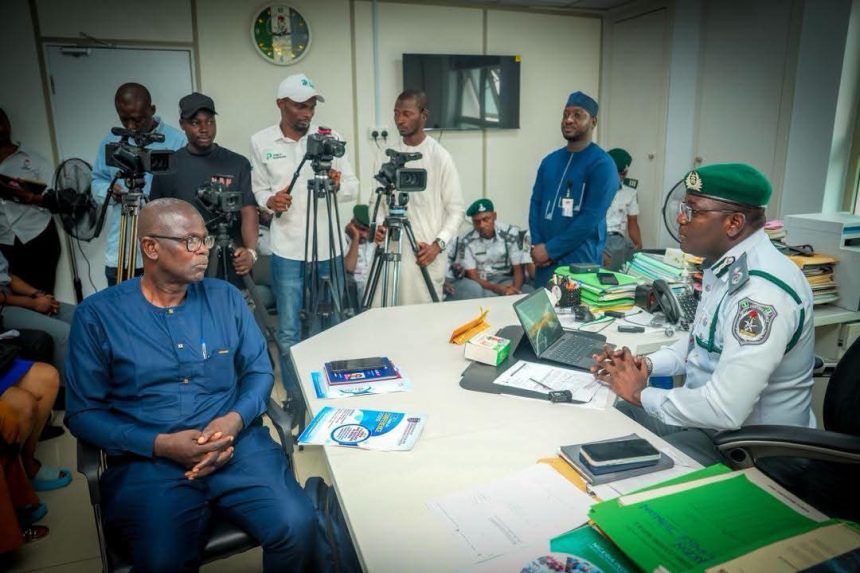
The commitment was made on Monday, August 31, 2026, when members of the ACSPN executive visited the NCS National Headquarters in Abuja to explore opportunities for stronger institutional partnership between the two organisations.
Receiving the delegation on behalf of the Comptroller-General of Customs, Adewale Adeniyi, the National Public Relations Officer and spokesperson of the Service, Deputy Comptroller of Customs Abdullahi Maiwada, described communication as a critical component of institutional reforms and public-sector transformation.
Maiwada stressed that effective communication must be integrated into every reform process to ensure that the public understands the objectives, benefits and implications of government policies and institutional changes.
He said the Customs Service had continued to strengthen its communication architecture through its monthly newsletter, social media platforms, data analytics and other digital communication channels.
According to him, the growing importance of strategic communication in the operations of the Service necessitated continuous engagement with professionals and academics in the communication field.
«“In every reform, communication must be embedded to achieve the desired result,” Maiwada said.»
He explained that the NCS had also embraced innovative approaches to communication by exploring the creative industry as a platform for public engagement and institutional visibility.
Maiwada cited the Service’s one-off movie production, Beyond the Badge, as well as its 79-episode movie series, Novera, as examples of the innovative initiatives undertaken by the Customs Service.
He disclosed that the productions had not only contributed to public awareness of the Service but had also begun generating revenue for the NCS while creating employment opportunities within Nigeria’s entertainment industry.
The Customs spokesperson further disclosed plans by the Service to expand the Nigeria Customs Broadcasting Network (NCBN) to Lagos as part of efforts to broaden its media reach and strengthen its capacity to communicate directly with stakeholders and the wider public.
He also announced the intention of the NCS to pursue corporate membership of ACSPN, while encouraging its Public Relations officers to become members of the association.
Maiwada said such institutional and professional linkages would create opportunities for knowledge sharing, capacity building and the adoption of emerging communication practices in the public sector.
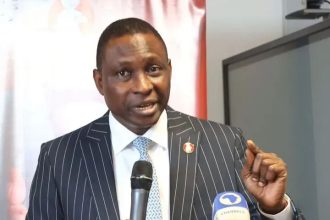
Earlier, the President of ACSPN, Professor Rotimi Williams Olatunji, commended Maiwada for his sustained support for the association and described him as an ambassador who had consistently demonstrated commitment to the advancement of communication scholarship and practice.
Olatunji welcomed the proposed institutional partnership between ACSPN and the Customs Service, assuring the NCS of the association’s readiness to support personnel of the Service seeking higher academic and professional qualifications.
He said stronger interaction between academia, professional communicators and public institutions was necessary to improve the quality of communication and public engagement in Nigeria.
“When communication scholars are given the opportunity to lead organisations, they excel because they remain conscious of public needs, sensibilities, and sensitivities,” Olatunji stated.
He emphasised that communication professionals had an important responsibility to ensure that public institutions remained responsive to citizens, particularly at a time when digital platforms had transformed the way information was produced, distributed and consumed.
The engagement also featured a joint press briefing at the NCS headquarters auditorium, during which ACSPN formally announced its 2026 National Conference.
The conference is themed, “Media, Technology and Elections in Africa: Navigating Digital Disruptions and Dynamics of Communication.”
The conference is expected to examine the rapidly changing relationship between media, technology and political communication, particularly as Nigeria approaches the 2027 general elections.
Key issues expected to feature prominently include the growing influence of artificial intelligence, social media platforms, digital technologies and other emerging communication tools on electoral campaigns, political discourse and citizens’ access to information.
Addressing journalists during the briefing, Olatunji called for closer collaboration between communication scholars and media practitioners to strengthen fact-based public discourse and protect the information environment from manipulation.
He expressed concern over the growing prevalence of misinformation, disinformation and AI-generated or manipulated content, including deepfakes, which could make it increasingly difficult for citizens to distinguish credible information from fabricated material.
The ACSPN president therefore urged media organisations to institutionalise fact-checking mechanisms as part of their editorial and professional processes.
He said fact-checking had become increasingly important as digital platforms continued to accelerate the speed at which information could be created and circulated, particularly during sensitive political and electoral periods.
According to him, journalists, communication scholars, media organisations and other stakeholders must work together to develop strategies capable of helping citizens navigate the increasingly complex digital information environment.
The call assumes added significance ahead of the 2027 elections, when political parties, candidates and interest groups are expected to intensify their use of social media and other digital platforms to reach voters.
The meeting between the NCS and ACSPN therefore provided an opportunity for both institutions to examine how professional communication, technology and institutional innovation could be harnessed to improve public understanding and stakeholder engagement.
The visit concluded with a guided tour of key facilities at the NCS headquarters, including the Information and Communication Technology (ICT)/Modernisation Department and the studios of the Nigeria Customs Broadcasting Network.
During the tour, the ACSPN delegation was briefed on the Customs Service’s digital operations, modernisation efforts and media strategy.
The engagement underscored the increasing importance of strategic communication to the operations of public institutions and highlighted the potential benefits of stronger collaboration between communication scholars, professionals and government agencies.
For the Customs Service, the proposed partnership with ACSPN is expected to provide additional opportunities for professional development, research, knowledge exchange and improved communication of its ongoing reforms.
For ACSPN, the collaboration offers an avenue to further bridge the gap between communication scholarship and professional practice while contributing to the development of more effective communication strategies for public institutions.
The two organisations’ engagement also reflects the broader transformation taking place in the communication industry, where traditional media, social media, artificial intelligence, data analytics and creative content are increasingly converging to shape how institutions communicate with citizens and stakeholders.