

By Julius Peter, Abuja
The Minister of Humanitarian Affairs and Poverty Reduction, Dr. Bernard M. Doro, has reaffirmed the Federal Government’s commitment to ensuring a smooth, sustainable and nationally owned transition of Nigeria’s humanitarian response system.
Doro said the government was determined to strengthen national institutions, build domestic capacity and deepen collaboration among relevant stakeholders to ensure that humanitarian interventions remained effective and sustainable beyond the planned transition in January 2027.
The Minister stated this during a meeting with the United Nations Resident Coordinator and UNDP Representative in Nigeria, Ms. Elsie Attafuah, and representatives of the United Nations Office for the Coordination of Humanitarian Affairs (UNOCHA).
The meeting focused on the planned transition of Nigeria’s humanitarian response, ongoing humanitarian support and the implementation of the Joint Transition Action Plan designed to guide the process.
Doro stressed the importance of stronger inter-ministerial collaboration, noting that the successful transition of humanitarian responsibilities would require coordinated efforts across government institutions and other critical stakeholders.
He also called for sustained technical support from development and humanitarian partners as Nigeria moves towards greater ownership of its humanitarian response architecture.
According to him, the transition should not be viewed merely as a change in responsibility, but as an opportunity to strengthen the country’s institutions and create a more resilient national system capable of responding effectively to humanitarian challenges.
The Minister emphasised the need for broader stakeholder engagement, including government institutions, international organisations, development partners and other relevant actors, to ensure that the transition process was comprehensive and sustainable.
He said the Federal Government remained committed to working closely with the United Nations system and other partners throughout the transition process, particularly in areas requiring technical expertise, institutional strengthening and capacity development.
The discussions also reviewed progress made under the Joint Transition Action Plan, with both sides assessing ongoing efforts to ensure that the planned January 2027 transition is orderly and adequately coordinated.
The parties reaffirmed their commitment to maintaining a strong partnership during the transition period, while ensuring that humanitarian assistance to vulnerable populations is not disrupted.
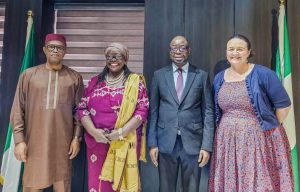
The meeting underscored the importance of continuity in humanitarian support as the government works towards a system that places greater emphasis on national ownership and domestic capacity.
Doro’s position is coming as Nigeria continues efforts to strengthen its humanitarian institutions and improve coordination in responding to emergencies, displacement, poverty and other vulnerabilities affecting communities across the country.
The Minister maintained that a stronger national humanitarian response would require not only government leadership but also sustained cooperation with international partners and other stakeholders.
He therefore urged all relevant institutions and partners to remain committed to the transition agenda, stressing that collaboration would be critical to achieving the Federal Government’s objective of developing a more sustainable and resilient humanitarian response framework.
Attafuah and the UN representatives, for their part, reaffirmed their commitment to supporting Nigeria through the transition process and strengthening cooperation with the Federal Government.
The meeting ended with both sides reaffirming their commitment to the Joint Transition Action Plan and to building a stronger national humanitarian response system capable of addressing the needs of vulnerable Nigerians in a sustainable manner.
The planned January 2027 transition is expected to mark an important stage in Nigeria’s humanitarian response, with the Federal Government seeking to consolidate national ownership while retaining strategic partnerships and technical support where necessary.