

By Julius Peter
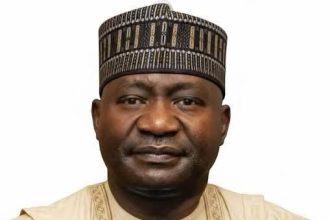
Former Inspector-General of Police, Mohammed Abubakar Adamu, has emerged as the governorship candidate of the Social Democratic Party (SDP) in Nasarawa State ahead of the 2027 general elections.
Adamu emerged during a replacement primary organised by the SDP in Lafia, the state capital, following the withdrawal of the party’s previously nominated candidate, Musa Adamu Angba.
The development marks a major turn in the former police chief’s bid to govern the state after he previously contested the governorship ticket of the All Progressives Congress (APC).
According to reports from the SDP primary, Adamu was the sole aspirant in the replacement exercise and was affirmed as the party’s candidate after delegates from across the state participated in the process.
The Chairman of the SDP Electoral Committee for Nasarawa State, Joseph Achille, said the exercise was conducted across the state’s 13 local government areas, with results from the wards collated before the final declaration.
Achille put the number of participating delegates at 28,637.
Declaring the result, he said Adamu had satisfied the requirements of the party’s constitution and secured the highest number of votes.
The former police chief subsequently accepted the party’s ticket and thanked the delegates for the confidence reposed in him, pledging to work towards delivering what he described as the dividends of democracy to the people of Nasarawa State.
Adamu’s emergence under the SDP comes after a politically eventful period surrounding his ambition to govern Nasarawa State.
The former IGP had initially sought the governorship ticket of the APC but lost the party’s primary election. He subsequently resigned his membership of the APC and joined the SDP, signalling his determination to continue with his governorship ambition on another platform.
His movement to the SDP has since generated considerable political attention in the state, particularly because of his national profile and his record in public service.
Adamu served as Nigeria’s Inspector-General of Police and previously held senior positions within the international policing system. His supporters have repeatedly presented his experience in security and public administration as an advantage in his quest to lead the state.
The campaign has also sought to portray him as a candidate capable of bringing his experience in public service to bear on governance in Nasarawa.
Since entering the governorship race, Adamu has identified infrastructure, healthcare, agriculture and the utilisation of the state’s mineral resources among areas requiring greater attention.
Speaking after his emergence as the SDP candidate, he said the condition of roads and other basic amenities across communities in the state had influenced his decision to seek the governorship.
He pledged that, if elected, his administration would prioritise basic infrastructure and healthcare, with particular attention to rural communities.
“We will not neglect social amenities that are required. We’ve gone round the state, we have seen all the roads that are in the hinterlands are neglected,” he said.
He also promised to improve access to healthcare beyond the urban centres and extend services to rural communities.
Agriculture is another major component of his proposed agenda.
Adamu has described Nasarawa as an agrarian state with significant potential for agricultural production and has promised to invest in the sector as a means of increasing food production and improving the livelihoods of residents.
He has also raised concerns about the exploitation of the state’s mineral resources, arguing that the people of Nasarawa should derive greater benefits from the resources available within the state.
The emergence of Adamu gives the SDP a high-profile candidate as the 2027 Nasarawa governorship contest begins to take shape.
The former IGP will face candidates from the APC, Peoples Democratic Party (PDP), Labour Party and other political parties in what is expected to be a competitive election.
The APC’s candidate is Senator Aliyu Ahmed Wadada, while other candidates already associated with the race include Emmanuel David Ombugadu of the PDP and Jonathan Gaza Gbefwi of the Labour Party.
The political significance of Adamu’s candidacy is further heightened by his previous association with the APC and his subsequent decision to seek the governorship under the SDP.
His supporters believe his national experience, familiarity with the state and grassroots mobilisation could strengthen the SDP’s chances. A member of the Nasarawa State House of Assembly, Jacob Kudu, has publicly expressed confidence in Adamu’s ability to win the governorship election, citing his experience and claimed support across the state.
However, the contest is unlikely to be straightforward.
Political observers have pointed to the strength of established party structures, the importance of local alliances and the influence of zoning and regional considerations as factors that could shape the outcome of the 2027 election.
Adamu’s campaign organisation has also sought to distinguish his political approach from the often-confrontational style associated with Nigerian election campaigns.
The campaign has promised an issue-based campaign and rejected politics of calumny, while urging supporters to maintain peace and operate within the rules governing the electoral process.
The Director-General of the campaign organisation, Abdullahi Yammani, said the campaign would focus on how to move Nasarawa forward and maintain peace and stability in the state.
He also urged supporters to conduct themselves lawfully throughout the campaign period.
That approach could become particularly important as the 2027 election draws closer and competition among the major political parties intensifies.
Adamu’s emergence also comes against the backdrop of uncertainty over the list of candidates previously published by the Independent National Electoral Commission (INEC).
INEC had earlier listed Musa Adamu Angba as the SDP governorship candidate for Nasarawa State. Adamu’s campaign organisation subsequently expressed confidence that the former IGP would eventually be recognised following the party’s substitution process.
The latest SDP primary was therefore significant not only because it produced a new candidate but also because it represented the party’s formal effort to replace its earlier nominee.
With Adamu now emerging as the party’s standard-bearer, attention is expected to shift towards the necessary electoral and administrative processes required to formalise his candidacy ahead of the 2027 poll.
A New Political Battle for Nasarawa
For Adamu, the SDP ticket represents another opportunity to pursue an ambition that began with his entry into partisan politics after a long career in the police.
For the SDP, his candidacy provides a nationally recognised figure around whom the party can build its campaign in Nasarawa.
The former IGP will now have to translate his public-service reputation and growing political profile into an effective statewide campaign capable of winning support across the state’s diverse political constituencies.
The coming months are therefore likely to test whether Adamu’s experience and personal following can be converted into the political structure necessary to defeat better-established political forces.
With the 2027 governorship election still ahead, the emergence of the former police chief has undoubtedly added a new dimension to the political contest in Nasarawa State.
The race is now set for a battle in which issues such as infrastructure, security, healthcare, agriculture, employment, mineral resources and political inclusion are likely to feature prominently in the competing parties’ campaigns.
For the people of Nasarawa State, the ultimate question will be whether Adamu’s political transition from Nigeria’s police leadership to elective governance can translate into electoral victory—and, if successful, whether the promises now being made can be converted into tangible improvements in the lives of citizens.