

By Julius Peter
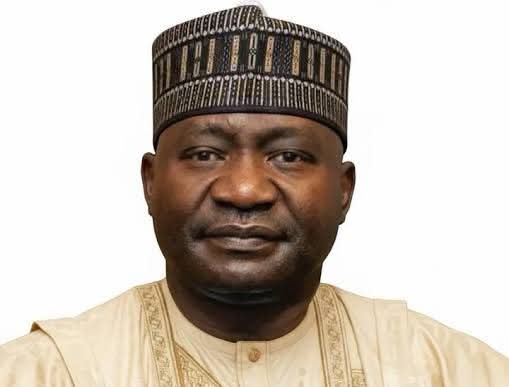
The Federal Government has unveiled a major shift in Nigeria’s military strategy to confront asymmetric warfare, with the Minister of Defence, General Christopher Gwabin Musa (rtd.), disclosing that the Armed Forces are intensifying efforts to disrupt the logistical and financial networks that sustain terrorist and other armed groups operating across the country.
Musa said the updated strategy places greater emphasis on weakening the support systems that enable violent groups to recruit fighters, procure supplies, move personnel and sustain prolonged operations.
The minister’s disclosure signals a broader approach to counterterrorism and counter-insurgency operations in which military action is increasingly being complemented by efforts to undermine the networks that provide armed groups with the resources needed to operate.
Rather than focusing exclusively on confronting fighters on the battlefield, the strategy seeks to target the infrastructure that allows asymmetric warfare to continue, including supply chains, financial channels and other forms of support.
Asymmetric warfare presents a particularly difficult challenge for conventional military forces because armed groups often operate without the conventional structures associated with regular armies.
Such groups can rely on dispersed networks, local support structures, illicit economies and clandestine supply arrangements to maintain their operations.
According to the Defence Minister, the military’s updated approach is therefore designed to place greater pressure on these networks.
The objective is to make it increasingly difficult for terrorist and criminal groups to obtain the resources required to sustain their operations.
Logistics remain critical to any armed organisation. Fighters require food, weapons, ammunition, fuel, communications equipment, transportation and other supplies. Disrupting those channels can reduce the ability of armed groups to maintain operational tempo and occupy territory.
Financial resources are equally important because money facilitates recruitment, procurement, movement and other activities necessary for sustaining violence.
By attacking both elements simultaneously, the military hopes to reduce the capacity of armed groups to regenerate and continue attacks.
The strategy reflects an understanding that defeating asymmetric threats requires more than conventional military engagements.
Security forces may succeed in eliminating or capturing individual fighters, but if the networks supporting those fighters remain intact, new recruits and resources can potentially replace those lost.
The emphasis on logistics and financial lifelines is therefore aimed at addressing the underlying systems that allow violent groups to survive pressure from security forces.
It also points towards greater coordination among the military, intelligence agencies, law-enforcement institutions and relevant government bodies.
Financial intelligence, border monitoring, intelligence gathering and the disruption of illicit supply networks can all play a role in identifying and weakening the structures that sustain armed groups.
The focus on financial lifelines is particularly significant because terrorism and organised violence require funding.
Money can be generated through a variety of illicit activities and can subsequently be moved through complex networks designed to conceal its origins and beneficiaries.
An effective counterterrorism strategy must therefore be capable of identifying suspicious financial flows and disrupting the channels through which funds reach violent groups.
This makes cooperation between the security services and financial-intelligence institutions increasingly important.
Banks, telecommunications companies, businesses and other sectors that form part of the financial ecosystem may also have an important role to play within the framework of existing laws and regulatory requirements.
The broader objective is to ensure that individuals and networks financing violence face increasing difficulty in moving and deploying funds.
The military’s focus on logistics also highlights the importance of intelligence-led operations.
Supply networks can extend across large geographical areas and may involve multiple layers of intermediaries. Identifying those networks requires reliable intelligence, surveillance and effective coordination between security agencies.
Once identified, the networks can be subjected to lawful enforcement measures aimed at preventing supplies from reaching armed groups.
The approach is particularly relevant in Nigeria’s fight against terrorism and other forms of armed violence, where difficult terrain and extensive borders can create opportunities for clandestine movement.
Strengthening surveillance and intelligence capabilities can therefore help security agencies detect movements and identify the channels through which weapons, equipment and other resources are supplied to violent groups.
The minister’s statement also underscores the need for a whole-of-government approach to national security.
While the military remains central to the country’s response to terrorism and insurgency, no single institution can address all the factors that sustain asymmetric warfare.
Military operations must be complemented by intelligence gathering, policing, financial investigations, border security and judicial processes.
At the community level, efforts to prevent recruitment and strengthen public cooperation with security agencies can also reduce the ability of armed groups to establish support networks.
Such an integrated approach is particularly important because asymmetric threats often exploit gaps between institutions and jurisdictions.
The persistence of terrorism and armed violence has consequences that extend far beyond the immediate security situation.
Communities affected by attacks can experience displacement, disruption of economic activity, destruction of property and loss of livelihoods.
Businesses may become reluctant to invest in areas perceived as insecure, while farmers and other rural workers can face difficulties accessing their land.
By reducing the operational capacity of armed groups, the military hopes to create conditions in which affected communities can gradually regain stability and economic activity.
A successful disruption of terrorist logistics and financing could therefore have implications not only for national security but also for agriculture, trade, investment and development.
The strategy places considerable importance on intelligence.
Asymmetric warfare often depends on the ability of armed groups to conceal their movements, sources of funding and supply arrangements.
For the military, timely and accurate intelligence can provide the information required to identify these networks and support targeted operations.
This requires continued investment in intelligence gathering, analysis, surveillance and information-sharing capabilities.
It also requires close cooperation among Nigeria’s various security and intelligence institutions to ensure that information is rapidly converted into actionable intelligence.
Communities remain an important component of the fight against terrorism and insurgency.
Residents often possess valuable information about suspicious movements, recruitment efforts and unusual activities. Building trust between communities and security agencies can therefore improve the flow of information needed to identify threats.
At the same time, security operations must maintain public confidence and operate within the law, particularly when dealing with civilian populations in areas affected by conflict.
Winning the confidence of communities can make it more difficult for armed groups to operate undetected.
The effectiveness of the new strategy will ultimately depend on whether the military and its partners can sustain pressure on both the fighters and the networks supporting them.
A temporary disruption may force armed groups to change their methods, but sustained intelligence-led pressure can make it progressively more difficult for them to recruit, finance and equip their members.
This means that the fight against asymmetric warfare is likely to remain a long-term undertaking requiring consistency, coordination and institutional capacity.
Musa’s disclosure represents what could be viewed as a strategic recalibration in Nigeria’s response to asymmetric threats.
The emphasis is shifting further towards dismantling the systems that enable violence, rather than concentrating solely on direct engagements with armed fighters.
The strategy recognises that an armed group deprived of funding, supplies and freedom of movement may find it increasingly difficult to maintain its operational capabilities.
For Nigeria, the challenge will be to translate the strategic vision into coordinated action across the security and intelligence architecture.
The military’s ability to disrupt logistics and financial networks, combined with effective intelligence, law enforcement and community engagement, could become an important element of the country’s broader effort to restore security in affected areas.
As the government intensifies the campaign against terrorism and other forms of asymmetric violence, the focus on choking the lifelines that sustain armed groups could mark an important evolution in the country’s security strategy.
The coming months will show how effectively the new approach can disrupt the networks behind Nigeria’s security threats and translate strategic planning into lasting improvements in the safety and stability of communities across the country.