
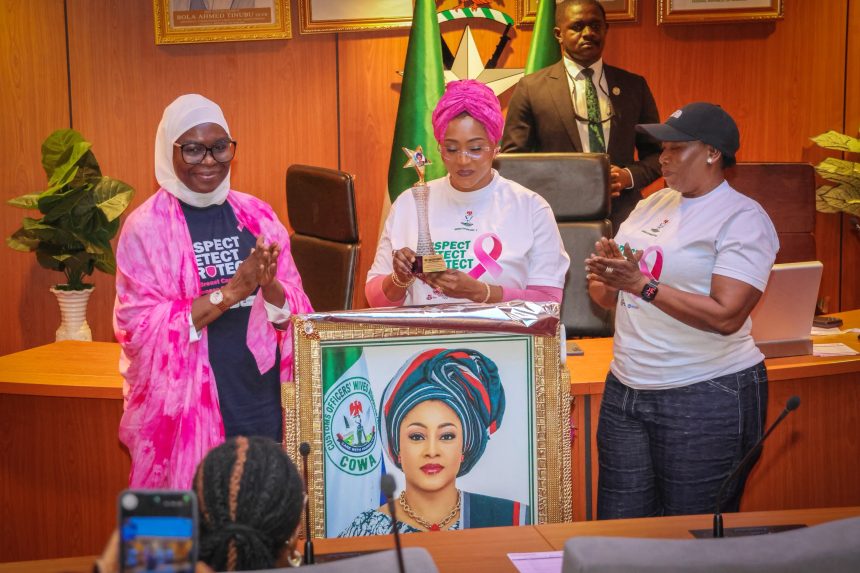
By Julius Peter,Abuja The Nigeria Customs Service (NCS) has joined the global campaign against breast cancer with a sensitisation programme held at its Headquarters in Maitama, Abuja, urging officers and other stakeholders to prioritise regular health checks, early detection and timely treatment of the disease.
The programme, held on October 6, 2026, to commemorate Breast Cancer Awareness Month, was organised under the theme, “Inspect, Detect, Protect,” and brought together senior Customs officers, medical professionals, representatives of partner organisations and other stakeholders.
Speaking at the event, the Deputy Comptroller-General of Customs in charge of Information and Communication Technology and Modernisation, Oluyomi Adebakin, who represented the Comptroller-General of Customs, Adewale Adeniyi, called for increased awareness and a proactive approach to cancer prevention and management.
Adebakin stressed that cancer should not be viewed as a stigma or a death sentence, but as a health challenge requiring attention, support, proper medical care and hope for affected persons.
She urged officers to take responsibility for their health by paying closer attention to early warning signs and seeking medical attention whenever necessary.
“Cancer isn’t a stigma. It is a time to give attention to those affected and give them hope again. Together, we can build a healthier society, a healthier Service, and healthier communities,” she said.
According to her, continuous education and sensitisation remained essential in the fight against breast cancer, particularly because early detection significantly improves the chances of successful treatment.
She noted that workplace initiatives such as the awareness programme would help promote a culture in which officers could openly discuss health concerns, access screening services and seek support without fear or stigma.
Also speaking, the President of the Customs Officers’ Wives Association (COWA), Mrs Kikelomo Adeniyi, who was the Special Guest of Honour and keynote speaker, urged Customs officers, especially women, to make their health a priority.
Adeniyi observed that women often devoted considerable attention to the wellbeing of their husbands, children and families, sometimes at the expense of their own health.
She therefore encouraged women to conduct regular breast self-examinations, undergo appropriate screening and promptly report unusual changes or symptoms to qualified medical professionals.
“Fellow officers, you must be alive before you get promoted. Check on yourself,” she said.
She also called on male officers to pay attention to breast cancer awareness, stressing that the disease does not affect women alone and that men have an important role to play in supporting female relatives, colleagues and members of their communities.
The COWA President emphasised the importance of creating a supportive environment where people affected by cancer could access care and encouragement rather than discrimination or social stigma.
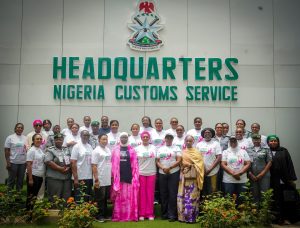
The Project Manager of the BOYA Project, Fauziya Abubakar, said the initiative had sustained breast cancer awareness activities within the Nigeria Customs Service for three years.
Abubakar stressed that awareness campaigns must be continuous because regular sensitisation helps people understand the importance of prevention, self-examination and medical screening.
She said early detection remained one of the most important factors in tackling breast cancer, noting that routine checks could help identify abnormalities early and improve access to appropriate treatment.
A significant highlight of the programme was a ₦50 million pledge by the Managing Director of the Trade Modernisation Project Limited, Dr Jummai Umar-Ajijola, in support of efforts to combat breast cancer.
Umar-Ajijola urged Customs officers and other participants to show the same level of diligence they demonstrate in their professional responsibilities when it comes to their personal health.
She encouraged participants not to ignore symptoms or remain uncertain about changes in their bodies, stressing that seeking information and medical advice could make a critical difference.
“When you are not sure, always ask and always check. No one has to fight this alone,” she said.
The pledge was widely seen as an important boost to ongoing efforts to promote breast cancer awareness and screening, particularly among officers and their families.
The event featured a health talk and medical session designed to educate participants on breast cancer risk factors, warning signs, preventive measures and the importance of seeking professional medical attention.
A survivor also shared her experience as part of efforts to provide encouragement and demonstrate that early intervention, proper treatment and support can help individuals overcome the disease.
The question-and-answer session further provided participants with an opportunity to seek clarification from health professionals on issues surrounding breast cancer, screening and prevention.
The programme culminated in free breast cancer screening for Customs officers and other participants, translating the awareness campaign into a practical health intervention.
The screening exercise provided participants with the opportunity to undergo checks while reinforcing the central message of the campaign — that awareness must be accompanied by action.
The Nigeria Customs Service’s participation in Breast Cancer Awareness Month underscores the growing importance of workplace health initiatives and preventive healthcare, particularly among institutions with large and diverse workforces.
Through sensitisation, medical screening and stakeholder support, the Service is seeking to encourage its personnel to take their health more seriously while fostering a culture of early detection and collective responsibility.
The event also highlighted the need for sustained collaboration among government agencies, healthcare professionals, civil society organisations and private-sector partners to strengthen public awareness and improve access to screening and treatment.
With the message “Inspect, Detect, Protect,” the NCS campaign ultimately encouraged officers and members of the public to remain vigilant about their health, embrace regular screening and support those affected by breast cancer.
The Service’s call was clear: early detection, timely medical attention and strong community support remain essential tools in the fight against breast cancer.