
By Julius Peter, Abuja
The Nigerian Army has called for a stronger and more structured partnership with the Independent Corrupt Practices and Other Related Offences Commission (ICPC) to trace, disrupt and block the complex financial networks sustaining terrorism, insurgency and other criminal activities in the country.
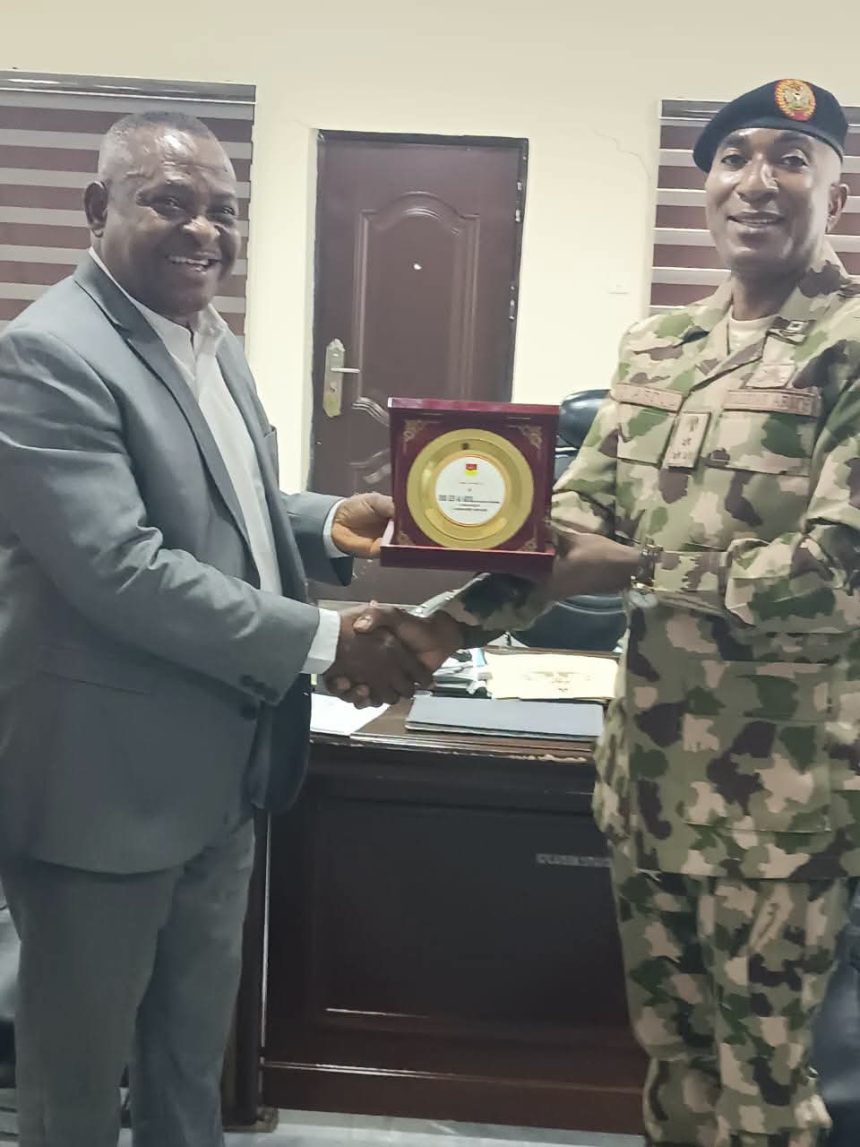
The call was made by the Commandant of the Nigerian Army’s 23 Armoured Brigade, Brigadier General Adamu Abdul, when he led a high-level delegation on a courtesy visit to the Adamawa State Command of the ICPC.
The engagement, according to the ICPC, reflects growing recognition of the importance of financial intelligence, information sharing and inter-agency cooperation in the fight against terrorism and illicit financial flows, particularly in Nigeria’s North-East.
Abdul said the Army considered the ICPC an important stakeholder in efforts to address the financial dimensions of terrorism and criminality, noting that effective security operations must go beyond confronting terrorists and criminals on the battlefield to identifying and disrupting the financial structures that enable their activities.
He explained that his assessment of the Commission’s activities over time had convinced him that the ICPC had an important role to play in combating terrorism financing and illicit financial flows, especially through intelligence gathering and the sharing of relevant information.
The Commandant stressed the need for both institutions to deepen their existing relationship and establish more effective mechanisms for collaboration in areas where financial intelligence could support military and security operations.
According to him, disrupting the financial channels available to terrorist and criminal groups would strengthen efforts to restore lasting peace and stability in Adamawa State and other parts of the country affected by insecurity.
The visit also highlighted the importance of closer coordination between security, anti-corruption and financial intelligence institutions in tackling criminal networks whose operations often depend on concealed or illicit sources of funding.
The ICPC Commissioner, while receiving the Army delegation, recalled that the two institutions had maintained a working relationship over the years, particularly in the areas of personnel training and information sharing.
He said the existing cooperation had become increasingly important against the backdrop of the security and governance challenges confronting the country.
The Commissioner noted that collaboration among relevant government institutions remained essential to addressing threats that cut across conventional security operations, financial crimes and corruption.
He assured the Army delegation that the ICPC would continue to work closely with the military in areas falling within the Commission’s mandate, particularly on financial and intelligence-related matters capable of undermining efforts to combat terrorism and other criminal activities.
The assurance reinforces the Commission’s broader role in addressing corruption-related practices and illicit financial activities that can weaken public institutions, facilitate criminal enterprises and undermine national security.
The meeting between the two institutions therefore provided an opportunity to explore ways of strengthening existing channels for information exchange and cooperation.
For the Nigerian Army, greater access to relevant financial intelligence could complement ongoing security operations by helping authorities understand the financial architecture supporting terrorist and criminal activities.
Such cooperation is particularly significant in the North-East, where security agencies have continued to confront the consequences of prolonged insurgency and related criminal activities.
The engagement also underscores the increasing importance of a multi-agency approach to national security, in which military operations are complemented by investigations, intelligence gathering, financial tracing, anti-corruption measures and other preventive mechanisms.
Rather than focusing exclusively on the physical activities of terrorist and criminal groups, the emerging approach places greater emphasis on identifying the networks, resources and financial channels that enable such groups to recruit, acquire equipment, move funds and sustain their operations.
The Army-ICPC engagement is expected to further strengthen institutional cooperation in these areas, while supporting the broader objective of improving security and stability in Adamawa State and the country at large.
The two institutions’ commitment to enhanced collaboration also reflects the recognition that terrorism financing and illicit financial flows are complex challenges requiring coordinated responses from security, anti-corruption and other relevant government agencies.
The Nigerian Army and the ICPC are therefore expected to sustain their cooperation within their respective mandates, particularly through information sharing, capacity building, intelligence support and other lawful mechanisms capable of helping authorities identify and disrupt financial activities linked to terrorism and criminality.