
By Julius Peter, Abuja
The Nigerian Upstream Petroleum Regulatory Commission (NUPRC) has approved 595 well re-entry operations, 145 new well-drilling activities and 39 Field Development Plans (FDPs) in the first 10 months of 2026, as part of efforts to boost crude oil production, attract investments and strengthen Nigeria’s energy security.
The Commission also disclosed that Nigeria’s total oil and gas rig count has risen to 100, with 46 rigs currently active, signalling increased operational activities in the country’s upstream petroleum sector.
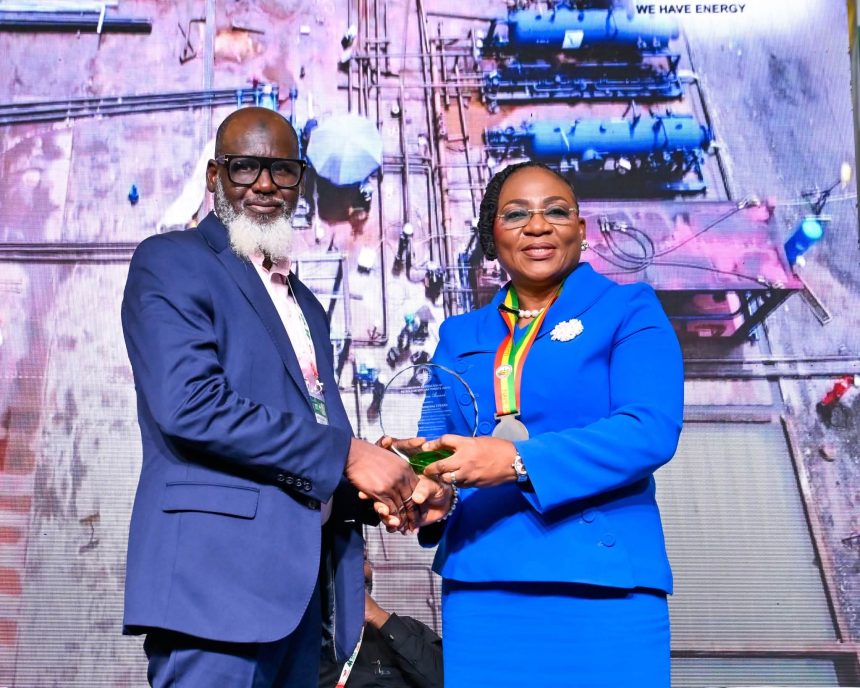
The Commission Chief Executive, Mrs Oritsemeyiwa Eyesan, disclosed these figures on Tuesday, November 10, 2026, during a presentation at the management session of the 44th Annual International Conference and Exhibition of the Nigerian Association of Petroleum Explorationists (NAPE) in Lagos.
The conference, which brought together industry stakeholders, policymakers, petroleum exploration experts and investors, was held under the theme: “Energy Security in an Era of Global Disruption: Positioning Nigeria for Resilience, Competitiveness, and Prosperity.”
Eyesan, who was represented at the session by the Deputy Director, Basinal Administration, NUPRC, Ahmad Abdullahi, said the approvals reflected the Commission’s determination to create an enabling regulatory environment that supports increased production, encourages investment and ensures the availability of energy resources.
According to her, the Commission approved approximately 39 Field Development Plans, 145 new well-drilling applications and 595 well re-entry operations year-to-date in 2026.
She explained that the approvals were part of deliberate regulatory interventions aimed at accelerating upstream petroleum activities and ensuring that operators could move projects forward without unnecessary administrative delays.
“Year to date, about 39 FDPs have been approved. About 145 new well-drilling approvals granted. Year to date, about 595 well re-entry approvals were granted,” she stated.
The NUPRC chief executive noted that the figures demonstrated significant improvements in the Commission’s approval processes, particularly in reducing the time required to obtain regulatory authorisations for petroleum operations.
She explained that faster approval processes would help reduce the financial burden on operators, especially costs associated with projects remaining idle while awaiting regulatory clearance.
According to her, prolonged approval timelines could increase operational expenses, delay production and discourage investments in the upstream sector.
She stressed that the Commission was committed to ensuring that regulatory procedures facilitated rather than hindered the development of Nigeria’s petroleum resources.
“From the regulator’s perspective, to ensure that our energy security is not threatened, we must ensure that we approve Field Development Plans and new well-drilling applications to meet our production targets and guarantee energy availability,” Eyesan said.
The approvals are particularly significant as Nigeria continues to pursue strategies to increase crude oil production, develop additional reserves and strengthen its position in the global energy market.
Field Development Plans provide the framework for developing discovered oil and gas resources into commercially productive assets. Their timely approval is therefore critical to the commencement of production, expansion of existing fields and deployment of investments in new projects.
Similarly, well re-entry operations provide opportunities for operators to return to previously drilled wells, assess their production potential and restore or improve output where technically and commercially viable.
The approval of 595 well re-entry operations, alongside 145 new drilling activities, therefore represents an important component of efforts to maximise existing petroleum assets while encouraging fresh exploration and development.
The disclosure also highlights the importance of regulatory efficiency in the upstream petroleum industry, where investment decisions are often influenced by the speed, transparency and predictability of government approval processes.
Industry operators require timely regulatory decisions to plan drilling programmes, deploy equipment, mobilise personnel and commit capital to exploration and production projects.
By reducing approval delays, the NUPRC is seeking to improve the operating environment and strengthen confidence among existing and prospective investors.
The Commission’s disclosure on Nigeria’s rig count further underscores the level of activity in the country’s upstream industry.
With the total rig count standing at 100 and 46 rigs currently active, the figures provide an indication of the equipment capacity available and the ongoing drilling activities across the petroleum sector.
However, the distinction between total and active rigs remains important, as the number of operational rigs directly reflects equipment currently engaged in drilling and related activities.
The Commission’s latest figures come amid growing concerns over global energy disruptions, changing investment patterns, geopolitical tensions and the need for oil-producing countries to strengthen domestic energy security.
For Nigeria, expanding upstream operations remains crucial to increasing government revenue, generating employment, supporting local oilfield service companies and improving the supply of crude oil and natural gas to domestic and international markets.
The NUPRC, as the regulator of the upstream petroleum industry, plays a central role in ensuring that exploration, development and production activities comply with established regulatory standards while supporting the Federal Government’s energy objectives.
The Commission’s focus on faster approvals and improved regulatory efficiency is also expected to complement broader efforts to unlock the country’s hydrocarbon potential, particularly in underdeveloped and previously unexplored petroleum basins.
Stakeholders at the NAPE conference are expected to examine strategies for positioning Nigeria as a competitive destination for oil and gas investments in an increasingly complex global energy environment.
The conference theme places particular emphasis on the need for resilience, competitiveness and prosperity, with energy security remaining a major consideration for Nigeria and other developing economies.
The latest approvals by the NUPRC signal the Commission’s commitment to accelerating upstream development, reducing operational bottlenecks and supporting the country’s ambition to achieve higher petroleum production levels.
With 39 Field Development Plans, 145 new drilling approvals and 595 well re-entry approvals recorded in 10 months, the Commission is positioning regulatory efficiency as a key instrument for unlocking investment, improving production and safeguarding Nigeria’s long-term energy security.