

By Julius Peter, Abuja
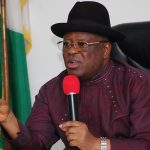
The newly appointed National Coordinator of the Obidient Movement Worldwide, Dr Moses Paul, has challenged the Minister of the Federal Capital Territory (FCT), Nyesom Wike, over his reported efforts to secure Abuja for President Bola Ahmed Tinubu and the All Progressives Congress (APC) in the 2027 general elections.
Paul, popularly known as Dr Mo in political circles, declared that the Obidient Movement would mobilise voters across the nation’s capital to resist any attempt to deliver the FCT to the ruling APC.
He made the declaration amid increasing political activities and realignments in Abuja ahead of the 2027 general elections.
The development comes barely days after the Obidient Movement announced Paul as its new national coordinator, replacing Yunusa Tanko, who was reassigned as Special Adviser to former Anambra State governor and leading opposition figure, Peter Obi, on Northern Nigeria.
According to reports, Paul warned Wike that the political battle for Abuja would be fiercely contested, insisting that residents of the FCT had the constitutional right to freely determine their political choices through the ballot.
The Obidient leader’s position also signals a renewed effort by the movement to strengthen its grassroots structures in Abuja and other parts of the country as political parties and support groups begin preparations for the 2027 presidential election.
Paul’s emergence as national coordinator has attracted attention because of his previous involvement in grassroots politics in the FCT. He was the African Democratic Congress (ADC) candidate for chairman of the Abuja Municipal Area Council (AMAC) in the 2026 Area Council election.
In that election, the APC candidate, Christopher Maikalangu, was declared winner by the electoral authorities, while Paul came second. Paul subsequently rejected the result, alleging irregularities including alleged alteration and mutilation of polling-unit results as well as vote buying.
His confrontation with the FCT political establishment is therefore not entirely new.
In the latest development, Paul is positioning the Obidient Movement for a more aggressive grassroots campaign ahead of the 2027 elections, particularly in Abuja, where Wike has openly aligned himself with President Tinubu’s re-election bid.
Wike had previously declared that it was his responsibility to ensure that candidates who did not support Tinubu would not win in the FCT council elections.
The minister has also continued to mobilise political support for the President within the FCT.
However, the Obidient Movement appears determined to challenge that political strategy, with Paul arguing that Abuja residents should be allowed to make their choices independently of political pressure.

The emerging political contest is significant because Abuja occupies a unique position in Nigeria’s political landscape. As the Federal Capital Territory and seat of the Federal Government, developments in the territory often attract national attention.
Wike, a former governor of Rivers State and a prominent political figure, has become one of the leading political actors supporting Tinubu’s second-term bid. His influence over the FCT administration and his extensive political network have made Abuja an important battleground ahead of the 2027 elections.
The minister has meanwhile continued to highlight the achievements of the FCT Administration under the Tinubu administration.
In his recent Independence Day message, Wike described Abuja as a symbol of national unity and said the FCT Administration was working to transform the territory through infrastructure, transportation, healthcare, education and security projects. He also urged residents to see civic participation as an important instrument for consolidating the development recorded in the territory.
The FCT Administration has also pointed to developments in land administration and infrastructure as part of its achievements. In August, Wike’s media aide disclosed that the administration had signed 26,272 Certificates of Occupancy in the first three years of the Tinubu administration.
But the Obidient Movement’s challenge suggests that political achievements by the administration may not automatically translate into electoral support for the APC.
Paul and his supporters are expected to focus their campaign on issues affecting ordinary residents, including the cost of living, employment, infrastructure, housing, security, transportation and access to basic services.
The political contest also reflects the broader realignment taking place ahead of the 2027 presidential election, with opposition forces seeking to build a coalition capable of challenging the APC.
The Obidient Movement has maintained a strong political presence since the 2023 general elections, when Peter Obi’s presidential campaign attracted significant support, particularly among young Nigerians and urban voters.
Paul’s appointment as national coordinator is therefore being viewed by supporters as an attempt to strengthen the movement’s organisational and grassroots structures as the next election approaches.
His latest warning to Wike is likely to further intensify the political contest in Abuja.
The FCT minister and his political allies are expected to continue their mobilisation for Tinubu, while the Obidient Movement and other opposition groups are expected to intensify efforts to win over voters.
The battle, however, will ultimately be decided by voters at the polling units in the 2027 general elections.
For now, Paul’s message to Wike is clear: the Obidient Movement intends to contest the political control of Abuja and will not concede the FCT to the APC without a fight.
The development sets the stage for what could become one of the closely watched political contests in the nation’s capital ahead of the 2027 elections.