
By Idris Ibrahim,Yola
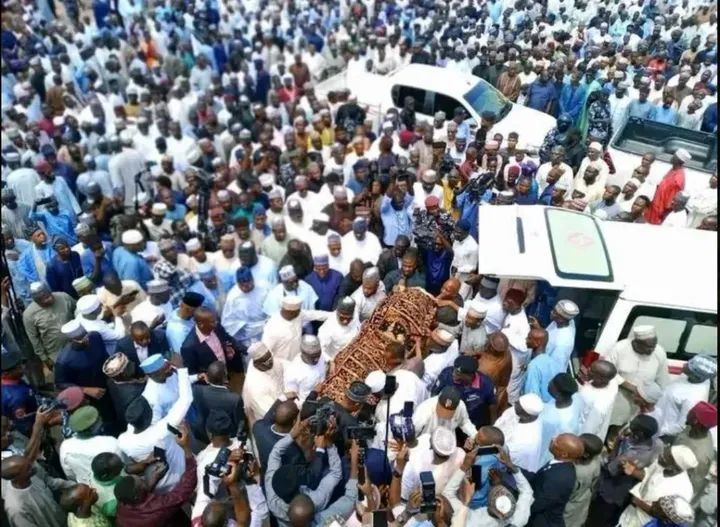
The remains of former National Chairman of the Peoples Democratic Party (PDP), Alhaji Bamanga Tukur, have been laid to rest in his hometown, Yola, Adamawa State.
The burial brought together family members, political associates, community leaders, friends and other dignitaries who gathered to pay their final respects to the former politician and elder statesman.
Tukur, who was a prominent figure in Nigerian politics and business, died after a long and distinguished public career during which he occupied several important positions.
His burial in Yola marked the final homecoming of one of Adamawa State’s notable sons, with mourners reflecting on his contributions to the political and economic development of the country.
Tukur was particularly known for his leadership role in the PDP, Nigeria’s major opposition party, where he served as national chairman. His tenure placed him at the centre of several major political developments and debates in the country.
Before his emergence as PDP national chairman, Tukur had established himself as a prominent businessman and public servant. He also served in various political and administrative capacities, contributing to national affairs over several decades.
His political career was closely associated with Adamawa State, where he remained an influential figure and an important voice in national politics.
The former PDP chairman’s death was subsequently followed by tributes from political associates, colleagues and members of the public, who described him as a veteran politician whose career spanned different phases of Nigeria’s political history.
At the burial in Yola, mourners prayed for the repose of his soul and consoled his family over the loss.
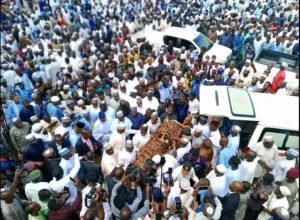
Speakers at the occasion were expected to reflect on Tukur’s political journey, his years of service to the country and his contributions to the development of the PDP.
His death represents the loss of a prominent member of Nigeria’s older political generation, whose activities cut across party politics, public administration and the private sector.
Tukur’s political experience also reflected the evolution of Nigeria’s democratic process, having been involved in national affairs during different political administrations.
As the remains of the former PDP national chairman were committed to the earth in Yola, tributes continued to pour in from those who knew and worked with him.
His final resting place in Adamawa brings to a close the public journey of a politician who played a significant role in the country’s political landscape and remained connected to his home state throughout his career.
Family members, political associates and sympathisers prayed for strength for his loved ones and urged Nigerians to remember his contributions to national life.
Tukur’s burial in Yola was therefore not only a farewell by his family and community but also a moment for political associates and other Nigerians to reflect on the legacy of a man who occupied prominent positions in the nation’s public and political life.