
By Julius Peter, Abuja
The Nigerian National Petroleum Company Limited (NNPC Ltd.) has announced plans to activate multiple pathways aimed at transforming Nigeria into a global gas hub, leveraging the country’s vast natural gas reserves to strengthen energy security, drive industrialisation and expand its presence in international gas markets.
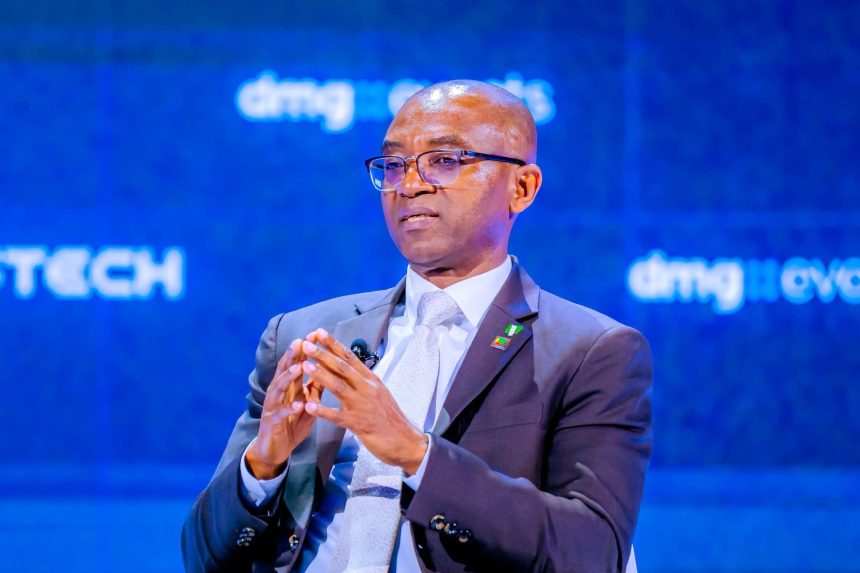
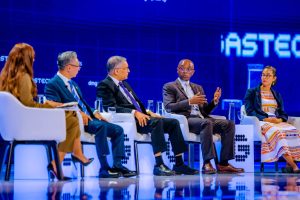
The company’s Executive Vice President, Gas, Power & New Energy, Olalekan Ogunleye, disclosed this on Monday while speaking at the 2026 Gas Technology & Exhibition Conference (GASTECH) in Bangkok, Thailand.
Ogunleye spoke during a panel session themed, “The New LNG Order: Leadership Strategies for Energy Security and Growth,” where he outlined Nigeria’s strategy for maximising its gas resources amid changing global energy dynamics.
According to him, geopolitical tensions, conflicts and other factors affecting global energy supply and demand have created both challenges and opportunities for gas-producing countries, with Nigeria strategically positioned to take advantage of the evolving market.
He said Nigeria was leveraging its more than 215 trillion cubic feet (tcf) of proven natural gas reserves to support domestic industrialisation while simultaneously expanding the country’s gas export capacity.
“Gas development and monetisation from Nigeria’s standpoint is a purely commercial play,” Ogunleye said, explaining that NNPC Ltd. was implementing a Gas Master Plan (GMP) designed as a “gap-to-potential” tool to move the country from its current reserve position of about 215 tcf to more than 600 tcf.
The NNPC executive said the company’s strategy was anchored on stronger coordination and alignment with key national policy frameworks, particularly the Petroleum Industry Act (PIA), the Decade of Gas Framework and the Gas Master Plan.
He disclosed that one of the immediate targets was to increase Nigeria’s national gas production to 10 billion standard cubic feet per day (Bcf/d) by 2027, before raising output further to 12 Bcf/d by 2030.
The planned increase, he explained, is expected to strengthen the supply of gas to domestic industries while also providing additional volumes for the international market.
Ogunleye also highlighted Nigeria’s existing position in the global liquefied natural gas (LNG) market, noting that the country has established itself as a reliable gas supplier with major expansion projects underway.
He cited Nigeria LNG’s existing Trains 1-6, which collectively produce about 22 million tonnes per annum (MTPA), adding that the facilities have exported more than 6,000 LNG cargoes since 1999.
He further said Train 7, another major expansion project, is expected to be completed in 2027, further strengthening Nigeria’s capacity to participate in the growing global LNG market.
According to Ogunleye, Nigeria’s strategic geographical location also gives the country a major advantage in the international gas market, particularly because of its position within reach of both the Atlantic Basin and Asian markets.
He said the country’s geographical advantage, combined with its large gas resource base and renewed national focus on gas development, places Nigeria in a strong position to become a major global gas supplier.
The NNPC executive stressed that the development of Nigeria’s domestic gas market and expansion of gas exports should not be viewed as competing priorities.
Rather, he said, Nigeria had adopted a dual pathway that would allow the country to maximise foreign exchange earnings from gas exports while simultaneously expanding domestic gas utilisation.
According to him, increased domestic gas utilisation would support industrial development, create employment opportunities, deepen energy security and contribute to improved economic wellbeing.
The strategy is particularly significant as Nigeria seeks to reduce energy supply constraints and provide more reliable gas feedstock for industries, power generation and other economic activities.
Ogunleye also sought to reassure prospective investors that Nigeria had taken steps to reduce the risks associated with developing new LNG projects.
He said the country had established a robust legal and regulatory framework, supported by fiscal incentives designed to make investment in the gas sector more attractive.
“With continued efforts towards stable security, competitive gas pricing and assured gas supply, there is no better time for investors and financiers to confidently participate in the development of Nigeria’s LNG projects,” he said.
The NNPC position comes as global energy markets continue to evolve, with natural gas and LNG increasingly playing a major role in discussions around energy security, industrial development and the transition towards lower-carbon energy systems.
The 2026 GASTECH conference in Bangkok, described as the world’s largest exhibition and conference focused on natural gas, LNG, hydrogen and low-carbon solutions, is bringing together energy experts, chief executives, policymakers, investors and technology leaders from around the world.
The 54th edition of the conference is expected to attract about 50,000 participants from more than 150 countries, with discussions focusing on energy security, LNG supply, infrastructure investment, technology and decarbonisation.
For Nigeria, the NNPC strategy represents an attempt to move beyond the traditional role of exporting raw energy resources by using natural gas as a catalyst for wider economic development.
The proposed expansion of gas production from 10 Bcf/d by 2027 to 12 Bcf/d by 2030, coupled with efforts to expand LNG infrastructure and domestic utilisation, is expected to place greater emphasis on infrastructure development, investment mobilisation and reliable gas supply.
NNPC Ltd. said the ultimate objective is to create a more commercially viable gas industry capable of serving both domestic and international markets, while helping Nigeria unlock greater value from its enormous gas resources.
The company maintains that with appropriate investment, improved security, competitive pricing, regulatory certainty and assured gas supply, Nigeria can strengthen its position as a major player in the global gas economy and progressively transform the country into a recognised global gas.