

By Julius Peter, Abuja
The Nigeria Customs Service (NCS) has reaffirmed its commitment to protecting Nigerian farmers, manufacturers and businesses from the adverse effects of prohibited imports, false declarations and other trade practices capable of undermining domestic production and job creation.
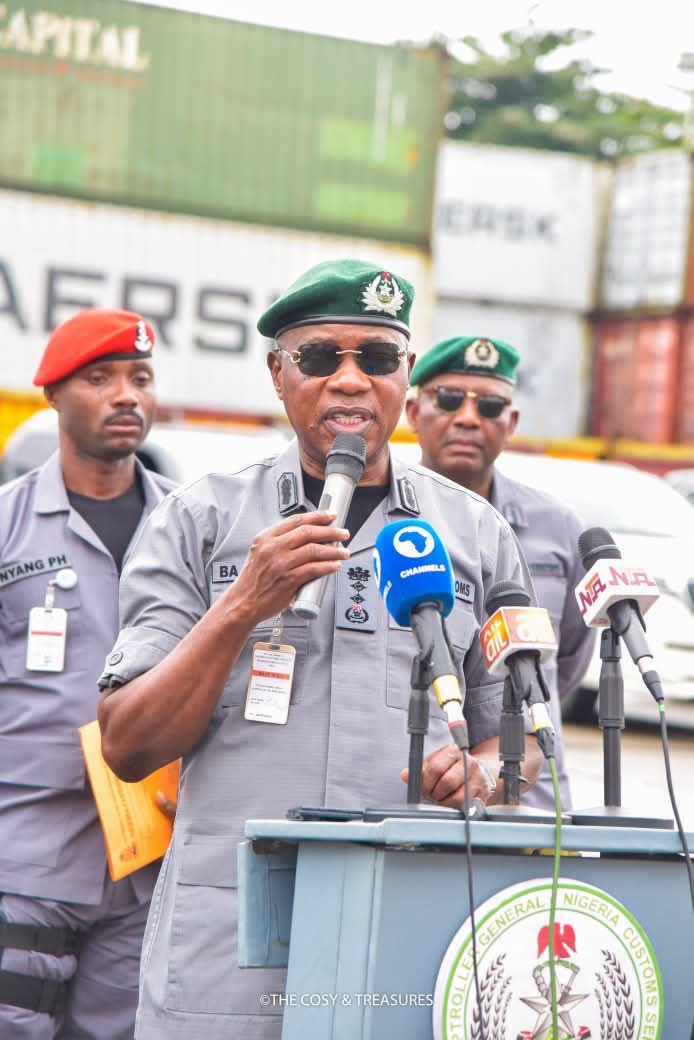
The Comptroller-General of Customs, Adewale Adeniyi, made this known on Tuesday, September 15, 2026, while announcing the interception of 56 containers laden with prohibited goods with a combined duty paid value (DPV) of N5.53 billion.
Adeniyi disclosed the seizures while briefing newsmen at the Port Harcourt II Area Command of the NCS in Onne, Rivers State, stressing that the interceptions were the outcome of intelligence-driven and risk-based enforcement operations.
According to the Comptroller-General, the intervention was aimed at preventing prohibited, restricted and improperly declared consignments from entering the Nigerian market and creating unfair competition for locally produced goods.
He said unchecked importation of commodities that could be produced or processed within Nigeria places additional pressure on local farmers, manufacturers and other domestic producers.
He explained that such practices could weaken demand for locally manufactured and processed products, discourage investment and negatively affect employment opportunities across domestic value chains.
Adeniyi said the economic implications were particularly significant for the agricultural and manufacturing sectors, noting that large-scale importation of products that Nigeria has the capacity to produce or process could undermine government efforts to strengthen food security, promote local industries, create jobs and diversify the economy.
“The intervention formed part of intelligence-driven and risk-based operations aimed at preventing prohibited, restricted and improperly declared consignments from entering the Nigerian market, thereby crippling the overall productivity of our local businesses,” he said.
The Comptroller-General stressed that the Customs Service’s enforcement activities were not intended to frustrate legitimate businesses or impede lawful international trade.
Rather, he said, the objective was to ensure that compliant businesses and Nigerians operating within the legal framework enjoyed a fair, secure and predictable trading environment.
He explained that the Service’s risk-based approach enabled Customs officers to facilitate legitimate cargo while applying enhanced scrutiny to consignments considered to be high-risk.
Under the latest operation, the seized consignments comprised 45 20-foot containers of foreign vegetable oil, nine 40-foot containers of used clothing and two 20-foot containers of Channy tomato paste.
The seizures, according to the Customs boss, were consistent with the Federal Government’s broader economic objectives and policies designed to promote made-in-Nigeria products and strengthen domestic productive capacity.
Adeniyi noted that protecting local production required effective enforcement of import regulations, particularly where imported goods were prohibited, improperly declared or otherwise capable of distorting the domestic market.
He further warned importers and other stakeholders to familiarise themselves with the admissibility requirements governing their intended imports before commencing transactions.
The Comptroller-General advised importers to ensure that all declarations made to the Customs Service accurately reflected the description, quantity, value, origin and classification of their goods.
He said accurate declarations would not only promote compliance with customs regulations but also help legitimate traders avoid unnecessary delays, penalties and possible seizure of their consignments.
Adeniyi also commended the Customs Area Controller, Port Harcourt II Area Command, Comptroller Aliyu Alkali, and officers of the command for their role in the interception of the consignments.
He said the outcome demonstrated the importance of intelligence gathering, risk management and effective enforcement in securing Nigeria’s borders and protecting the nation’s economic interests.
The seizures also come against the backdrop of the Federal Government’s continuing emphasis on strengthening domestic production and reducing dependence on imported goods that can be produced locally.
For local manufacturers and farmers, Customs enforcement against prohibited and improperly declared imports is intended to help create a more level playing field by ensuring that businesses operating legally are not placed at a disadvantage by illicit or non-compliant imports.
The development further highlights the strategic role of the Nigeria Customs Service in balancing trade facilitation with enforcement of Nigeria’s import regulations.
While the Service continues to facilitate legitimate cargo and international commerce, the latest action indicates that consignments identified as prohibited, restricted or improperly declared will remain subject to heightened scrutiny.
The Comptroller-General therefore urged importers, customs agents and other stakeholders to familiarise themselves with applicable trade regulations and ensure full compliance before shipping goods into the country.
He reiterated that the NCS would continue to employ intelligence-led and risk-based strategies to intercept prohibited imports, safeguard legitimate businesses and support government policies aimed at strengthening Nigeria’s productive capacity.
The interception of the 56 containers, valued at N5.53 billion in duty paid terms, according to the NCS, underscores the Service’s ongoing role in protecting the domestic market while ensuring compliance with the country’s trade laws.