

By Roseline Okafor,Karu ,Nasarawa state
The Social Democratic Party (SDP) in Nasarawa State is facing internal pressure over its proposed choice of a running mate for the 2027 governorship election, with a group within the party urging the leadership to reconsider the decision and zone the deputy governorship slot to Karu Local Government Area.
The Nasarawa SDP Concern Group, in a statement issued on Wednesday, described the proposed selection of Engr. Laurence, a Gwandara from Kokona Local Government Area, as the party’s deputy governorship candidate as a potential political miscalculation that could affect the party’s electoral prospects.
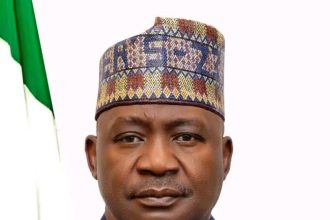
The group said the SDP had already settled for retired Inspector-General of Police, Mohammed Abubakar Adamu, as its governorship candidate, but argued that the choice of running mate should be guided by a combination of competence, political reach, numerical strength, inclusivity and strategic balance across the state.
According to the group, there is already a significant concentration of political opportunities among Gwandara politicians across several political parties in the state.
It cited Abu Giza of the Zenith Labour Party as a governorship candidate, Danbala Almakura and Daniel Ogazi of the All Progressives Congress (APC) as House of Representatives candidates, Danlami Awaje of the Peoples Democratic Party (PDP) as another House of Representatives candidate, while identifying Engr. Laurence as the proposed SDP deputy governorship candidate.
The group also referenced the SDP House of Assembly representation in Kokona as part of what it described as the concentration of political opportunities within the same bloc.
It questioned whether the Gwandara voting bloc could effectively support candidates across several political parties without its votes becoming fragmented during the 2027 elections.
The group argued that if Gwandara voters are divided among candidates contesting under different political platforms, the SDP may not derive the expected electoral advantage from selecting a deputy governorship candidate primarily on the basis of the ethnic bloc.
“The best move for SDP is to pick a popular Christian stakeholder from Karu – either a former House member, former chairman, commissioners, special advisers or business person who can match Gaza’s structure polling unit by polling unit,” the group said.
The Concern Group maintained that Karu Local Government Area presents a significant electoral opportunity for the SDP, arguing that the area’s voting strength could provide substantial support to the party’s governorship ticket.
It further claimed that Karu had already been denied both the House of Representatives and Senate tickets, which, according to the group, were allocated to Keffi, thereby strengthening its argument that the deputy governorship slot should be considered for the local government.
The group said the choice of a running mate from Karu would not only address what it described as an imbalance in the distribution of political opportunities but could also broaden the SDP’s appeal in Nasarawa West Senatorial District.
It suggested that the party could consider a respected Christian stakeholder from Karu with sufficient grassroots structures and political experience to complement the governorship candidate’s political network.
Beyond Karu, the group called for broader consideration of other major population blocs in Nasarawa West, including the Gbagyi communities in Karu, Nasarawa and Toto; Mada communities in Kokona, Akwanga and Karu; and Koro communities in Karu, Lafia and Obi.
The group argued that such an approach would enable the SDP to build a wider coalition rather than concentrating its calculations around a single ethnic group.
It also alleged that the SDP had previously pressured Giza to accept the deputy governorship position but that he declined the offer because of his assessment of Karu’s electoral strength.
However, the group stressed that its position was not based solely on ethnic considerations, noting that competence, capacity, experience and religious balance should remain important considerations in choosing candidates.
“Competence, capacity, experience and religious balance supersede tribe,” the group said, while adding that political calculation could not be ignored in a state with diverse ethnic and political interests such as Nasarawa.
The group therefore appealed to the SDP leadership and the Director-General of the campaign to review the proposed deputy governorship arrangement before the party proceeds further with its 2027 campaign structure.
It maintained that selecting a running mate from Karu could strengthen the party’s electoral coalition, particularly if the candidate has an established grassroots structure capable of mobilising voters across polling units.
The group concluded that awarding the deputy governorship slot to Kokona principally on the basis of the Gwandara ethnic factor, rather than broader considerations of political strength, numerical reach and strategic balance, could weaken the credibility and electoral appeal of the SDP ticket.
As the 2027 election approaches, the debate highlights the importance of internal consensus, geographical representation, grassroots mobilisation and coalition-building in determining the composition of political tickets in Nasarawa State.