

By Julius Peter
The Nigeria Customs Service (NCS) generated N4.30 trillion in revenue between January and June 2026, representing 36.4 per cent of its annual revenue target of N11.074 trillion, the Service has disclosed.
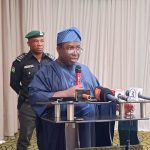
The figure was announced at the 65th Regular Meeting of the Nigeria Customs Service Board, chaired by the Minister of Finance and Coordinating Minister of the Economy, Professor Taiwo Oyedele.
The revenue performance highlights the Customs Service’s continued focus on strengthening collection, improving compliance and deploying technology to enhance efficiency across Nigeria’s borders and ports.
At the meeting, the Board said the improvement in revenue collection had been supported by a combination of digitalisation, expanded audit activities, the use of geospatial technology, joint border patrols and sustained engagement with members of the trading community.
The Service’s N4.30 trillion collection in the first half of the year amounts to more than one-third of its N11.074 trillion target for the full year, underscoring the importance of the measures being implemented by the agency as it seeks to maximise revenue from international trade.
Digitalisation DrA major component of the Customs Service’s strategy is the deployment of the B’Odogwu digital system, which the Service identified as one of the measures supporting improved revenue collection.
The digital system is part of broader efforts to modernise Customs operations, reduce inefficiencies and improve transparency in the processing of trade transactions.
The Service is also expanding its audit activities as part of efforts to strengthen compliance and ensure that appropriate duties and other applicable charges are collected.
The increased use of technology and audit mechanisms is expected to give Customs greater capacity to identify discrepancies, monitor transactions and address areas where revenue may otherwise be lost.
The Board also cited the deployment of geospatial technology as another measure contributing to improved operations.
Geospatial tools can provide Customs authorities with enhanced capabilities for monitoring locations and activities within areas under their operational jurisdiction, particularly in the context of border management and enforcement.
The Customs Service also attributed part of its improved revenue mobilisation efforts to joint border patrols.
The approach is aimed at strengthening enforcement and improving coordination in border areas, where illicit trade and smuggling activities can undermine legitimate commerce and deprive the government of revenue.
The Board further highlighted continued engagement with the trading community as an important part of its strategy.
Closer engagement between Customs officials and legitimate traders can help address operational challenges, improve understanding of regulatory requirements and encourage compliance with import and export procedures.
The combination of enforcement, technology, audit and stakeholder engagement reflects the Service’s broader attempt to balance revenue collection with the facilitation of legitimate trade.
Beyond revenue performance, the Board approved the upgrade of the Customs Medical Corps to a sub-department.
The decision is expected to strengthen the institutional structure of medical services within the Nigeria Customs Service and provide a more defined administrative framework for the Corps.
The Board also approved the De-Minimis Regulation 2025, a policy measure relating to the treatment of qualifying low-value consignments within the customs framework.
The approval forms part of the Board’s broader consideration of measures aimed at improving the efficiency of customs administration and facilitating trade while maintaining appropriate regulatory and revenue controls.
The ongoing recruitment exercise of the Nigeria Customs Service also came under review at the meeting.
The review is significant as the Service continues to strengthen its human-resource capacity in response to the growing demands of customs administration, border management, enforcement and trade facilitation.
The Board’s consideration of the recruitment process indicates the importance being attached to ensuring that the Service has the personnel required to effectively implement its responsibilities.
The measures considered and approved at the meeting are part of the Customs Service’s wider effort to strengthen institutional efficiency, accountability and revenue mobilisation.
The N4.30 trillion collected in the first six months of 2026 provides an important indicator of the Service’s performance against its full-year target.
However, with the annual target standing at N11.074 trillion, the Service still has a substantial amount to generate during the remaining months of the year.
The continued deployment of digital systems, wider audits, improved border surveillance and engagement with stakeholders is therefore expected to remain central to Customs’ revenue strategy.
The Board’s decisions also point to an approach that combines revenue mobilisation with institutional reforms.
By strengthening digital processes, enhancing enforcement capabilities and reviewing internal structures, the Service is seeking to improve the way it administers customs procedures while ensuring that government revenue due from international trade is properly collected.
The Nigeria Customs Service is a major revenue-generating agency of the Federal Government, with responsibilities extending beyond revenue collection to include trade facilitation, border security and enforcement of relevant customs laws and regulations.
The Board’s 65th Regular Meeting consequently provided an opportunity to assess the Service’s performance in the first half of 2026 while approving measures intended to sustain its operational momentum.
With N4.30 trillion already generated between January and June, attention will now turn to how effectively the Service can sustain the pace of collection and bridge the gap towards its N11.074 trillion target by the end of the year.
The Service’s emphasis on technology, audit, border operations and engagement with traders suggests that the drive for higher revenue is being pursued alongside efforts to make customs administration more efficient, accountable and responsive to the needs of legitimate businesses.