

By Julius Peter, Abuja
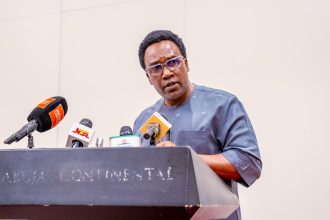
Nigeria’s Minister of Finance and Coordinating Minister of the Economy, Taiwo Oyedele, has raised concerns over the high cost of borrowing and limited access to affordable long-term financing, saying the situation is constraining Africa’s ability to fund critical infrastructure and meet its development needs.
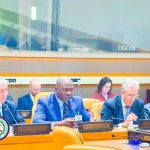
Oyedele made the remarks at the United Nations Dialogue on Solutions to Climate Finance, held on the margins of the 81st Session of the United Nations General Assembly in New York.
According to the Minister, Africa’s development ambitions, particularly in the energy sector, are being undermined by high financing costs, currency risks and the continent’s limited access to affordable long-term capital.
He also pointed to additional risk premiums attached to African borrowers as one of the factors discouraging investment in infrastructure and other productive sectors.
Oyedele said the financing challenge goes beyond the availability of money, noting that the terms under which capital is provided are equally important to the continent’s ability to execute long-term development projects.
The Minister’s position reflects concerns he has previously raised about the structure of the global financial system, which he said places African economies at a disadvantage through higher borrowing costs and restrictive financing conditions.
He has advocated greater mobilisation of Africa’s domestic savings, including pension and other institutional funds, alongside efforts to attract private capital into productive sectors.
Oyedele also stressed the need for African countries to strengthen governance, ensure policy stability, respect contracts and the rule of law, and deepen regional integration to make the continent more attractive to long-term investors.
He said the focus of financing should increasingly shift towards infrastructure, value addition, skills development, technology, innovation and regional value chains rather than short-term interventions and the extraction of raw materials.
The Minister’s intervention comes amid broader efforts by African governments and development institutions to mobilise financing for energy, transportation, housing, digital infrastructure and other projects needed to support economic transformation.
For Nigeria, the issue is particularly significant as the Federal Government continues to pursue infrastructure development while managing debt-servicing costs and seeking to maintain macroeconomic stability.
Oyedele has previously said the Federal Government was developing a framework aimed at reducing the cost of capital without introducing new subsidies, while complementing monetary authorities’ efforts to control inflation.
He has maintained that improving Africa’s access to affordable capital would help unlock private investment, support industrialisation and reduce dependence on expensive external borrowing.
The Minister’s latest position therefore places affordable infrastructure financing at the centre of the broader debate over reform of the international financial architecture, domestic capital mobilisation and Africa’s long-term development strategy.
He stressed that addressing the continent’s infrastructure deficit would require a financing framework capable of providing affordable, long-term capital while reducing the risk premiums attached to African economies.
Oyedele’s intervention adds to growing calls for reforms that would enable African countries to access capital on terms that better reflect their development potential and investment opportunities.