
By Julius Peter, Abuja
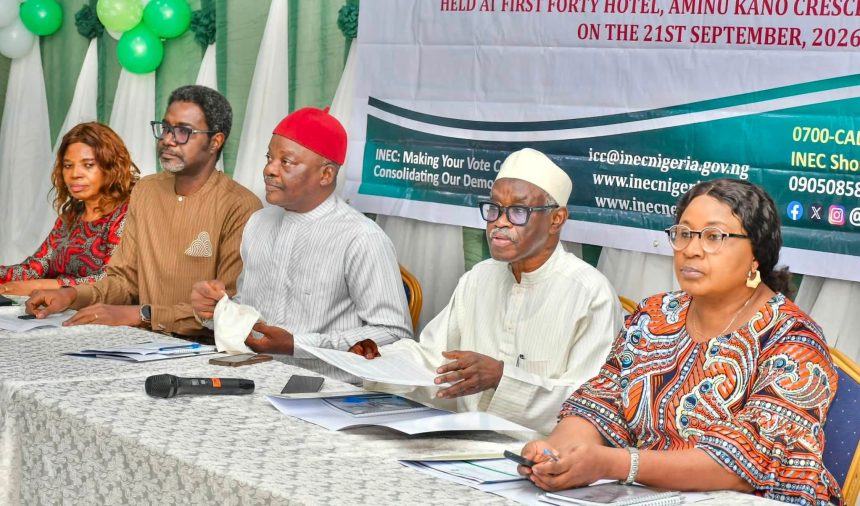
The Independent National Electoral Commission (INEC) has commenced a capacity-building workshop for its Public Affairs Officers (PAOs), as part of efforts to strengthen credible, verified and responsible election communication ahead of the 2027 General Election.
The workshop, themed “Strengthening PAOs Capacity for Credible, Verified and Responsible Election Communication Towards 2027,” is aimed at equipping the Commission’s communication personnel with practical skills to effectively engage the media, respond to emerging information challenges and enhance public understanding of electoral activities at the state level.
The initiative comes against the backdrop of an increasingly complex information environment, characterised by the rapid spread of information through social media, the proliferation of misinformation and disinformation, and the growing use of generative artificial intelligence.
Declaring the workshop open, the National Commissioner and Chairman of INEC’s Information and Voter Education Committee (IVEC), Mohammed Kudu Haruna, described Public Affairs Officers as critical frontline communicators whose work directly affects how the Commission’s activities are understood by the public.
Haruna said PAOs constituted an important link between INEC and the electorate through the statements they prepare, enquiries they respond to and the communication support they provide to Resident Electoral Commissioners (RECs) and Heads of Department, Voter Education and Publicity.
According to him, the credibility of INEC’s communication begins, to a significant extent, with the quality, accuracy and timeliness of the work undertaken by its public affairs personnel.
He noted that with the growing influence of digital platforms and the emergence of generative artificial intelligence, election management bodies now operate in an information environment that requires greater vigilance, professionalism and verification.
Haruna referenced recent remarks by the INEC Chairman, Prof. Joash Amupitan, SAN, at the 13th Annual International Conference of the Association of Communication Scholars and Professionals of Nigeria, where the Chairman emphasised the relationship between electoral technology and electoral communication in building confidence in the electoral process.
He said the Commission considered the workshop necessary to prepare its communication officers to identify, verify and appropriately respond to misinformation and disinformation as preparations for the 2027 elections intensify.
The National Commissioner stressed the need for PAOs to ensure that information released on behalf of the Commission is accurate, properly verified and communicated through appropriate channels.
Earlier, the Director of Voter Education and Publicity, Mrs. Victoria Eta-Messi, described the workshop as timely, saying the responsibilities of Publicity Desk Officers would become increasingly demanding as the 2027 General Election draws closer.
Eta-Messi described PAOs as the first point of contact between INEC and the public, noting that members of the public often form their impressions of the Commission, its activities and the reliability of its information based on the communication they receive from its officers.
She urged participants to approach their responsibilities with professionalism, consistency and credibility, stressing that PAOs provide critical support to their respective Heads of Department and, by extension, Resident Electoral Commissioners.
The Director disclosed that the workshop was not designed as a one-off intervention, explaining that additional capacity-building programmes were already at advanced stages of planning with the support of development partners.
She said continuous training had become necessary because INEC operates under intense public scrutiny and is frequently confronted with attempts to misrepresent its activities and undermine public confidence in the electoral process.
Presenting the objectives and expected outcomes of the workshop, the Deputy Director, Information and Publicity, Wilfred Ifogah, said the programme was designed to strengthen the practical communication skills required by Public Affairs Officers in their daily duties and in preparation for the 2027 elections.
He identified the objectives of the workshop to include providing participants with a clearer understanding of their roles as frontline communicators; strengthening their ability to support media and public engagements; improving their writing skills across press statements, talking points and social media platforms; enhancing their capacity to monitor and verify information; and introducing them to the responsible use of artificial intelligence in communication work.
Ifogah said participants were expected to leave the programme with practical tools that could be immediately deployed in their respective states, as well as a stronger understanding of how to identify, verify and respond to emerging information challenges.
The participants were also introduced to basic principles of strategic communication, including the importance of understanding the audience, defining the purpose of communication, developing clear messages, choosing appropriate timing and selecting effective communication channels.
Resource persons at the workshop included Dr. Chukwuemeka Ugbaoja, a former Deputy Director of Publicity, Dr. O. Silas, and Mr. Mazi Ozurumba, who contributed to the sessions on communication, information management and related issues.
The practical component of the programme featured group exercises designed to expose participants to realistic communication challenges that could arise during the electoral process.
Participants worked through scenarios involving the monitoring and verification of information, escalation procedures and the development of recommendations for appropriate responses.
A major component of the programme was an integrated 2027 Election Communication Simulation, which was designed to provide participants with practical experience in applying the communication principles, procedures and tools discussed during the workshop.
The simulation provided an opportunity for the Public Affairs Officers to test their ability to respond to emerging information situations, verify claims before dissemination and determine appropriate communication channels and escalation procedures.
The workshop underscores the increasing importance of effective public communication in the management of elections, particularly as voters now receive electoral information from multiple traditional and digital sources.
For INEC, strengthening the capacity of its frontline communication personnel is expected to improve the consistency and accuracy of official information reaching the public, while enabling the Commission to respond more effectively to emerging narratives and information challenges ahead of the 2027 General Election.
The Commission’s emphasis on verification and responsible communication also reflects the broader challenge faced by election stakeholders in an era where information can spread rapidly across social media platforms before its authenticity is established.
As preparations for the 2027 elections continue, the capacity of INEC’s Public Affairs Officers to provide timely, accurate and accessible information will remain an important component of the Commission’s engagement with voters, the media and other stakeholders.