

By Julius Peter, Abuja
The Nigerian Upstream Petroleum Regulatory Commission (NUPRC) has projected an additional 250,000 barrels of oil per day from 22 newly awarded Petroleum Prospecting Licence (PPL) holders within the next five years, as part of efforts to boost Nigeria’s crude oil production and achieve the national target of three million barrels per day by 2030.
The Commission also pledged to provide the necessary guidance and regulatory support to the new licence holders to accelerate the development of their respective oil and gas assets and translate the awards into actual production.
The Commission Chief Executive, Mrs Oritsemeyiwa Eyesan, disclosed this on Tuesday, October 20, 2026, in Lagos, during a two-day onboarding workshop organised for beneficiaries of the 2022/2023 and 2024 Petroleum Licensing Rounds.
The workshop, themed “From Award to Production: Delivering Nigeria’s Upstream Potential Under the Petroleum Industry Act, 2021,” was designed to prepare the new licence holders for the technical, operational and regulatory requirements involved in moving from licence acquisition to commercial production.
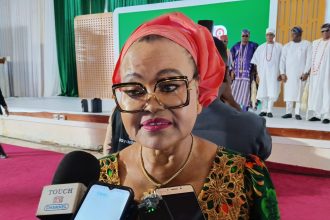
Speaking with journalists on the sidelines of the event, Eyesan said the Commission expected the 22 awardees to make a substantial contribution to Nigeria’s oil production within the next five years.
“For this set of awardees, we are expecting nothing less than 250,000 barrels per day in the next five years at least from the 22 awards,” she said.
Eyesan added that Nigeria remained on course to achieve its target of producing three million barrels of oil per day by 2030, stressing the importance of bringing newly awarded oil assets into production.
She explained that the onboarding programme was organised to guide the awardees through the processes required to develop their assets successfully and avoid delays that could undermine the country’s production ambitions.
The Commission’s intervention is expected to help the new licence holders understand their obligations under the Petroleum Industry Act (PIA) 2021, including the technical, commercial and regulatory milestones that must be met before production can commence.
The NUPRC chief advised the new licence holders to study the experiences of previous beneficiaries of oil licensing rounds, particularly their successes and mistakes, to improve their chances of delivering projects within the expected timelines.

She emphasised the importance of learning from past experiences as the awardees begin the process of translating their licences into viable oil and gas operations.
According to her, the transition from licence award to production requires careful planning, effective project execution and compliance with established regulatory requirements.
The advice comes amid the Federal Government’s renewed efforts to strengthen Nigeria’s upstream petroleum sector, increase crude oil production, attract investment and maximise the economic benefits of the country’s hydrocarbon resources.
The success of the new licence holders will depend on their ability to progress from exploration and appraisal activities to field development and eventual production.
The Commission’s expectation of at least 250,000 barrels per day from the 22 awardees therefore places considerable responsibility on the beneficiaries to demonstrate the technical and financial capacity required to develop their assets.
Eyesan also reiterated the October 31, 2026 deadline for the revocation of idle oil and gas licences under the drill-or-drop provision of the Petroleum Industry Act.
The provision is designed to discourage licence holders from retaining petroleum assets without undertaking the required exploration and development activities.
Under the regulatory framework, holders of relevant licences are expected to fulfil their stipulated work obligations or risk losing their rights to the assets.
The Commission’s position signals its determination to ensure that petroleum licences are used for productive activities rather than held without meaningful progress.
The deadline also reinforces the importance of accountability among operators in the upstream sector, particularly as Nigeria seeks to increase production and improve the utilisation of its petroleum resources.
For prospective investors and existing licence holders, the enforcement of the drill-or-drop provision underscores the need to commit the necessary resources to exploration and development within the prescribed timelines.
The policy is also expected to create opportunities for more serious investors where licences are revoked in accordance with the law and subsequently made available through appropriate regulatory processes.
Nigeria’s ambition to achieve three million barrels of oil per day by 2030 requires sustained investment in exploration, field development, infrastructure and production operations.
The projected contribution of 250,000 barrels per day from the 22 new PPL holders represents a significant component of the country’s broader effort to expand output.
However, translating the licences into actual production will require the awardees to overcome several project-development challenges, including securing financing, conducting exploration and appraisal activities, establishing the commercial viability of discoveries and developing the infrastructure needed to bring oil to market.
The pace at which these activities are completed will be critical to determining whether the projected production contribution can be achieved within the five-year timeframe.
Effective collaboration between the regulator and licence holders will also be important in addressing technical and administrative bottlenecks while ensuring compliance with applicable petroleum laws and regulations.
The onboarding workshop therefore provides a platform for the Commission to clarify regulatory expectations and help the awardees understand the steps required to progress from licence ownership to production.
Petroleum Industry Act and Regulatory Accountability
The Petroleum Industry Act, enacted in 2021, provides the legal and institutional framework for regulating Nigeria’s petroleum industry, including the management of upstream petroleum operations.

The NUPRC is responsible for regulating technical and commercial activities in the upstream sector, with a mandate that includes promoting efficient operations, ensuring compliance with applicable laws and supporting the sustainable development of petroleum resources.
By combining support for new investors with the enforcement of licence obligations, the Commission is seeking to encourage a more productive and accountable upstream operating environment.
The approach reflects the need to balance investment facilitation with the responsibility of ensuring that petroleum assets contribute meaningfully to national economic objectives.
For the 22 new licence holders, the immediate task is to convert their awards into workable development plans and progress towards production in line with regulatory requirements.
Their performance over the next five years will be an important measure of the effectiveness of the licensing rounds and the Commission’s efforts to expand Nigeria’s upstream production base.
As the October 31 deadline for idle licences approaches, the NUPRC is maintaining pressure on existing licence holders to meet their obligations while offering guidance to the new awardees.
The Commission’s projected contribution of 250,000 barrels per day, alongside the national target of three million barrels per day by 2030, places the new beneficiaries at the centre of Nigeria’s drive to increase crude oil production and strengthen the performance of its petroleum industry.