
By Julius Peter
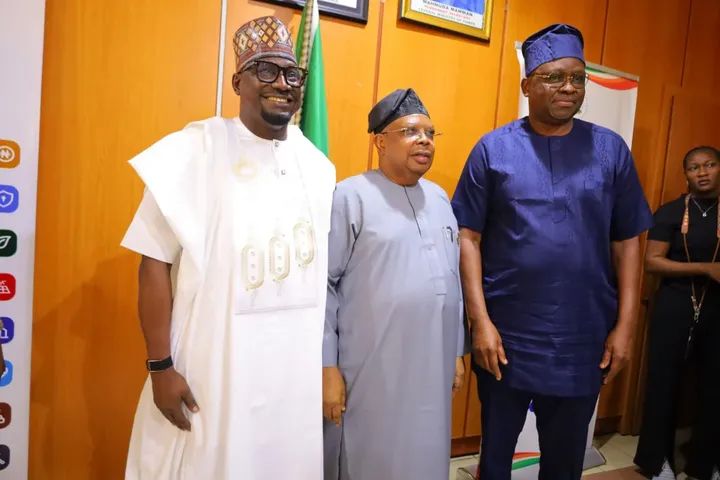
The Minister of Power, Mr. Joseph Olasunkanmi Tegbe, has inaugurated the newly constituted Governing Board of the Rural Electrification Agency (REA), charging its members to place the needs and welfare of ordinary Nigerians at the centre of their decisions.
The inauguration, which took place on Friday, August 7, 2026, at the Ministry of Power in Maitama, Abuja, marked the formal commencement of the new board’s mandate under the leadership of former Ekiti State Governor, Mr. Ayodele Fayose, who was appointed Chairman by President Bola Ahmed Tinubu.
Fayose was inaugurated alongside other members of the seven-member governing board, while the Managing Director of the REA, Mr. Abba Abubakar Aliyu, also formally assumed his responsibilities as a member of the board.
Among those inaugurated were Alhaji Ahmadu Abubakar and Mr. Ilyasu Ibrahim Makinta, alongside other non-executive directors.
Speaking at the ceremony, Minister Tegbe urged the new board to approach its responsibilities with a strong sense of public service, stressing that decisions taken by the REA must ultimately translate into measurable improvements in the lives and livelihoods of Nigerians.
The minister emphasised the importance of ensuring that the agency’s programmes and interventions deliver tangible benefits to communities, particularly Nigerians living in rural and underserved areas.
According to him, the success of the REA should not be measured merely by policies, projects or administrative activities, but by the real impact of electrification programmes on households, businesses and communities.
Tegbe therefore charged the board members to provide effective leadership and ensure that resources committed to rural electrification are deployed efficiently to achieve maximum impact.
The inauguration comes at a critical period in Nigeria’s electricity sector, as the Federal Government intensifies efforts to expand electricity access, particularly through renewable energy solutions, mini-grids and other interventions targeted at communities that remain underserved by conventional electricity infrastructure.
The REA plays a central role in the Federal Government’s efforts to increase electricity access in rural and remote communities, making the effectiveness of its governing board important to the success of Nigeria’s broader energy-access agenda.
Speaking after his inauguration, the new REA Chairman, Ayodele Fayose, expressed appreciation to President Tinubu for finding him and other members of the board worthy of serving the country.
Fayose pledged to bring the necessary political will and leadership required to move the agency to greater heights.
He said his mission was to ensure that the REA achieved unprecedented results by strengthening support for its programmes and working to secure the funding required to execute its mandate.
The former governor also indicated that the board would focus on creating an enabling environment for the agency’s programmes to succeed, particularly in communities where access to reliable electricity remains a major challenge.
Fayose’s appointment places the former Ekiti governor at the helm of an agency with a significant role in the Federal Government’s drive to expand electricity access and support economic development in rural communities.
The new board is expected to provide strategic direction for the REA as the Federal Government continues to pursue broader reforms in the power sector.
Rural electrification remains critical to Nigeria’s economic development, particularly because inadequate electricity supply has continued to affect small businesses, agricultural activities, healthcare delivery, education and other essential services in many rural communities.
Through the REA, the government has increasingly promoted alternative approaches, including solar-powered mini-grids and other decentralised energy solutions, to reach communities that are difficult or costly to connect to the national grid.
The new governing board will therefore be expected to strengthen oversight, improve coordination, attract investment and ensure that rural electrification projects are implemented transparently and sustainably.
The board will also be expected to work closely with the Ministry of Power, development partners, private-sector investors, state governments and other stakeholders to accelerate the delivery of electricity infrastructure to underserved communities.
The inauguration is also viewed as part of the Tinubu administration’s broader efforts to reform Nigeria’s power sector and imp
rove electricity access across the country.