
By Julius Peter, Abuja
Nigeria has called on African countries to strengthen their strategic autonomy, develop indigenous defence capabilities and reduce dependence on foreign military equipment and technology, saying the continent must move beyond being a theatre of external geopolitical competition to become an influential player in global security decision-making.
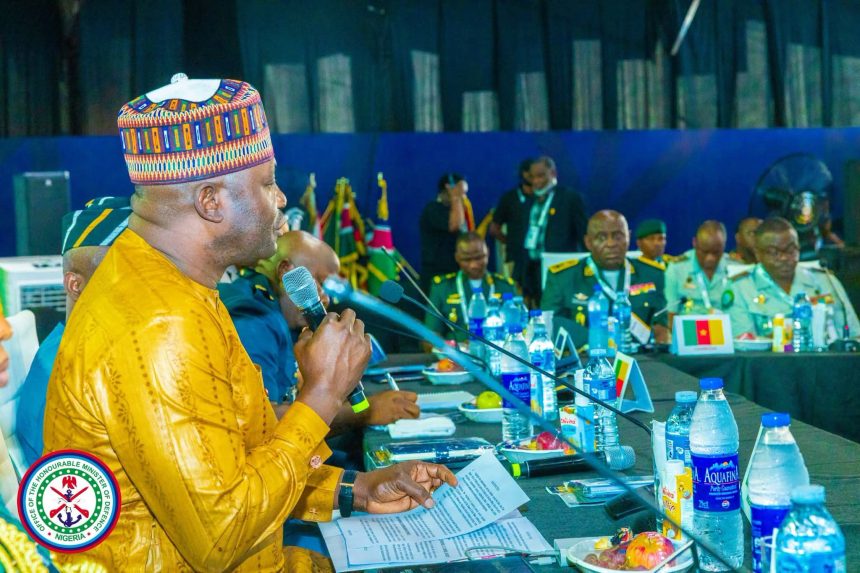
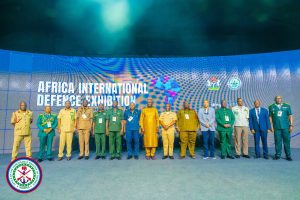
The Minister of Defence, General Christopher Gwabin Musa (Rtd), OFR, made the call during a strategic engagement with visiting African ministers of defence and chiefs of defence staff at the African Defence Exhibition and Conference (AFRIDEX 2026), which concluded in Lagos.
According to a statement issued on Thursday by Leah Katung-Babatunde, Special Assistant (Media) to the Minister of Defence, General Musa reaffirmed Nigeria’s commitment to continental solidarity, collective security and the accelerated development of homegrown defence capabilities.
The minister stressed that Africa must adopt a unified approach to addressing emerging security challenges, particularly amid growing geopolitical competition and external interference that could undermine the sovereignty and strategic interests of African nations.
He maintained that defence partnerships with foreign countries and international organisations must be guided by priorities defined by African nations themselves, rather than arrangements that perpetuate strategic dependence or compromise national sovereignty.
Musa said the continent needed to make deliberate choices that would enable African countries to exercise greater control over their security priorities, military capabilities and defence-related decisions.
He also underscored the importance of strengthening the African Union Peace and Security Architecture (AU-PSA), calling for more effective coordination among national governments, regional organisations and continental institutions.
According to him, stronger African representation in global security decision-making is essential to ensuring that the continent’s interests are adequately reflected in international responses to conflicts, terrorism and other emerging threats.
Addressing the security situation across the Sahel, Lake Chad Basin, the Horn of Africa and parts of Central and Southern Africa, the defence minister warned that terrorism, violent extremism and organised crime could not be effectively tackled through isolated national responses.
He argued that the transnational nature of these threats requires coordinated intelligence-sharing, joint operations and sustained diplomatic engagement among African countries.
As part of efforts to strengthen regional security, Musa reaffirmed Nigeria’s commitment to cross-regional cooperation between member states of the Economic Community of West African States (ECOWAS) and the Alliance of Sahel States (AES).
He also called for stronger diplomatic and peacebuilding initiatives to address prolonged conflicts in Sudan and the eastern Democratic Republic of the Congo, where continuing instability has created significant humanitarian and security concerns.
The minister further advocated integrated governance models that would address the underlying causes of insecurity, protect civilians and promote long-term stability across the continent.
He stressed that sustainable peace would require more than military operations, noting the importance of governance, coordinated regional engagement and measures to tackle the conditions that allow violent groups and organised criminal networks to thrive.
The minister identified Africa’s long-standing dependence on foreign suppliers for military equipment, spare parts, technical expertise and maintenance services as a major vulnerability to the continent’s security preparedness.
He called for a decisive transition towards indigenous defence production, technology transfer and joint maintenance ventures among African countries.
According to him, developing local defence industries would strengthen military readiness, reduce supply-chain vulnerabilities and improve the continent’s ability to respond independently to security emergencies.
The proposed approach would also encourage cooperation among African defence institutions and industrial stakeholders, allowing countries to share technical expertise, pool resources and develop capabilities suited to their respective security needs.
Musa’s position reflects Nigeria’s broader call for African countries to move beyond reliance on imported military hardware towards greater domestic production and sustainable defence-industrial development.
He emphasised that strategic autonomy would remain difficult to achieve if African armed forces continued to depend heavily on external suppliers for essential equipment, servicing and operational support.
The minister therefore urged African governments to make defence-industrial cooperation a central component of their security policies and continental integration efforts.
Musa also called for the transformation of the African Standby Force (ASF) into a fully operational, rapidly deployable and strategically mobile capability capable of responding effectively to security emergencies across the continent.
He stressed that achieving this objective would require sustainable financing, improved operational readiness and stronger coordination among participating countries.
The African Standby Force is designed to support the African Union’s peace support operations and crisis-response efforts. However, its effectiveness depends on the readiness of participating forces, adequate logistics, funding and the ability to deploy personnel and equipment when required.
The minister’s call highlighted the need for African countries to strengthen the institutional and operational arrangements necessary to respond collectively to conflicts and other threats to continental peace and security.
He also advocated enhanced maritime domain awareness and coordinated naval exercises to protect strategic sea lines of communication in the Gulf of Guinea and the Red Sea.
According to him, improved maritime cooperation would help African countries respond more effectively to threats affecting their territorial waters, commercial shipping routes and broader maritime interests.
The Gulf of Guinea remains strategically important to West African trade and maritime security, while the Red Sea serves as a critical international shipping corridor linking major commercial routes.
Strengthening maritime surveillance, information-sharing and joint naval preparedness would therefore contribute to protecting economic interests and improving regional security.
To ensure that the commitments made at AFRIDEX 2026 translate into practical results, the minister proposed a structured follow-up mechanism involving participating defence institutions.
The proposed mechanism would oversee cooperation in joint military training, intelligence fusion and defence-industrial joint ventures.
It is intended to provide a framework for sustained engagement among participating countries and help ensure that discussions on continental security produce measurable outcomes.
The proposal also underscores the importance of implementation, coordination and accountability in advancing Africa’s collective defence objectives.
Rather than allowing resolutions to remain declarations of intent, Musa urged participating institutions to pursue practical initiatives that would strengthen military cooperation, improve operational capabilities and promote self-reliance.
He maintained that the effectiveness of Africa’s collective security efforts would depend on the willingness of governments and defence institutions to translate shared commitments into concrete programmes.
Reiterating Nigeria’s readiness to work with other African countries, the minister said the continent’s security future must be determined by the collective resolve, capabilities and strategic choices of its nations.
“Africa’s security future must ultimately be determined by the collective resolve, capabilities, and strategic choices of African nations. Nigeria stands ready to work shoulder-to-shoulder with all partners toward a secure, united, and self-reliant continent,” he said.
The meeting, according to the Defence Ministry, congratulated Nigeria on organising what it described as the first African Defence Exhibition, while expressing commitment to ensuring the sustainability of the initiative as part of efforts to achieve security sovereignty.
The commendation represents an important endorsement of Nigeria’s efforts to provide a platform for African defence stakeholders to exchange ideas, explore partnerships and discuss practical approaches to addressing the continent’s security challenges.
AFRIDEX 2026 brought defence and security considerations into focus, particularly the need for African countries to strengthen cooperation, improve military preparedness and expand indigenous industrial capabilities.
The conference’s emphasis on strategic autonomy also highlighted the relationship between security, technology, industrial development and national sovereignty.
For Nigeria and its continental partners, the challenge ahead will be to convert the positions advanced at the gathering into sustained cooperation, adequate financing, effective regional responses and tangible investments in African defence capabilities.
As the continent continues to confront terrorism, violent extremism, organised crime and protracted conflicts, the Nigerian government has reiterated its position that a more secure Africa will depend on stronger partnerships among African nations and their ability to develop the capabilities required to protect their own interests.
The Defence Ministry said Nigeria remained committed to working with other African countries towards a united, secure and self-reliant continent.